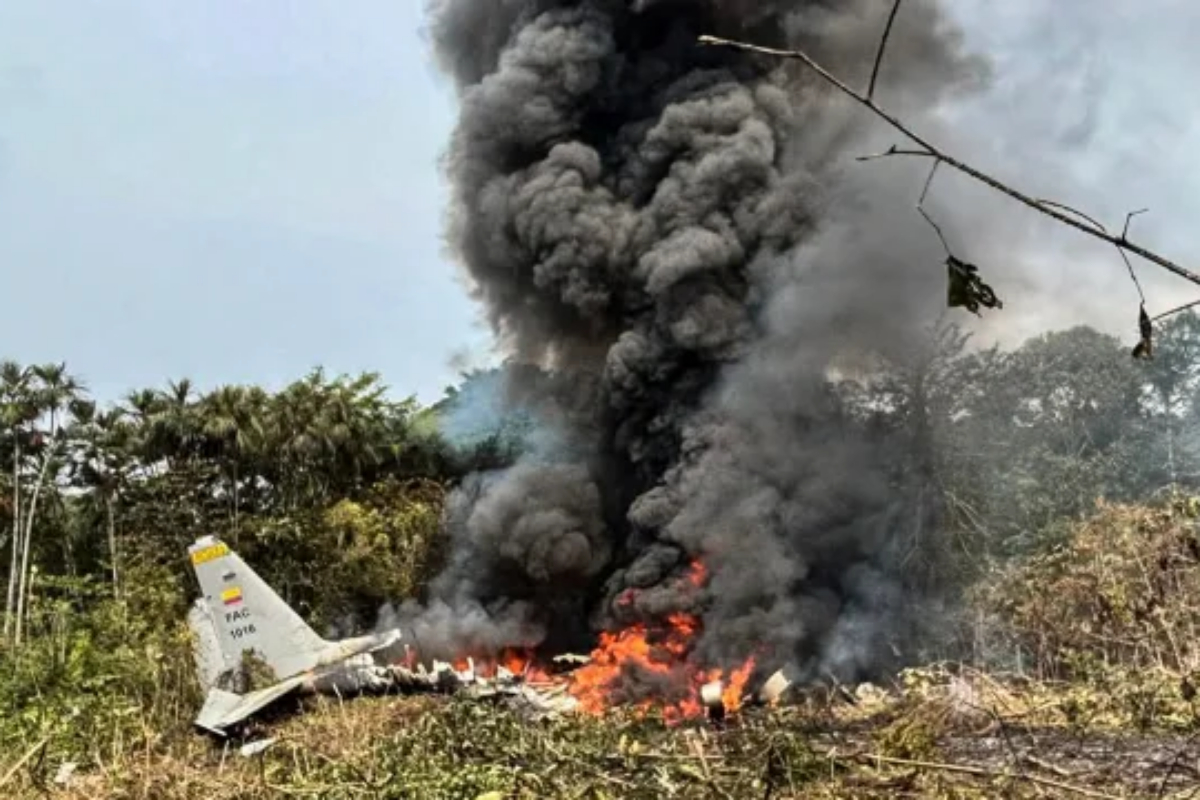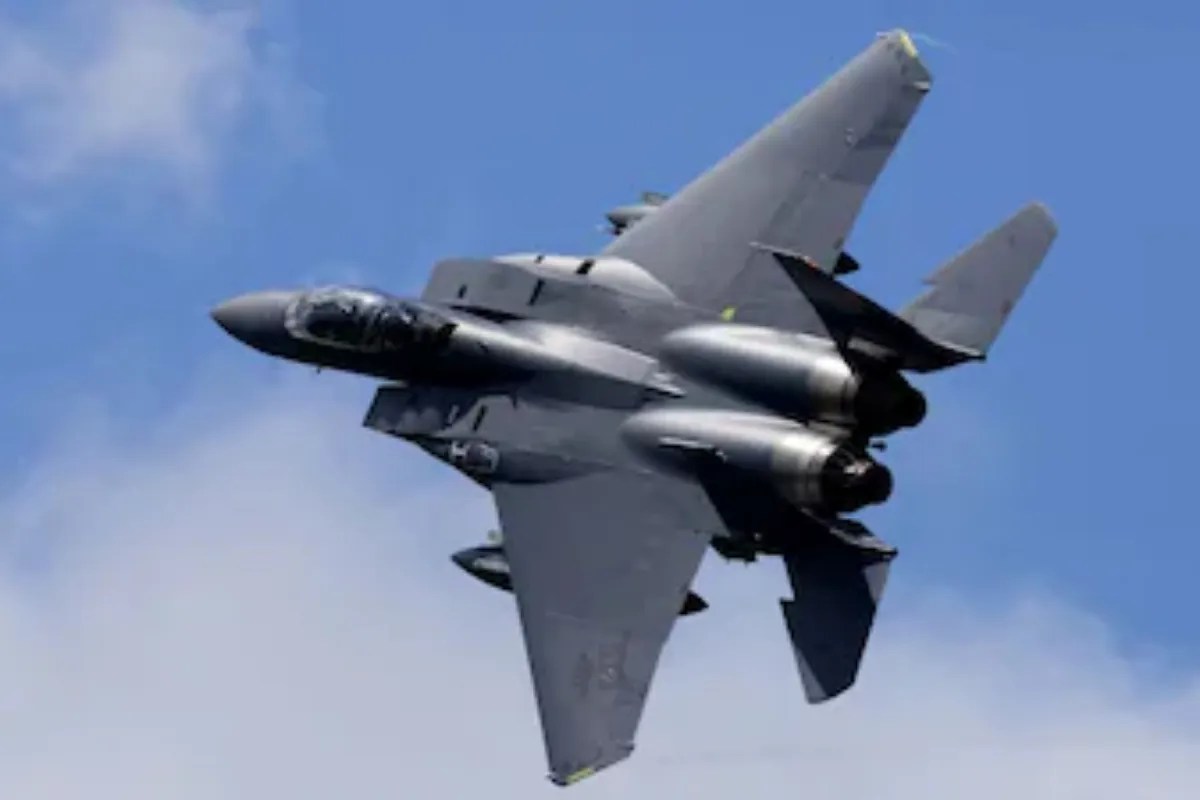
The fog of war in the Middle East has moved from the desert sands to the digital ether, and the latest skirmish involves claims that Iranian defense systems successfully engaged U.S. fighter jets. To be blunt, the reports of American wreckage at the bottom of the Gulf are fiction. However, dismissing these claims as mere "fake news" ignores a much more dangerous reality regarding electronic warfare and the shifting theater of regional brinkmanship.
The Pentagon has remained uncharacteristically silent on specific flight paths, yet they have been firm in their denial of any airframe losses. When a multi-million dollar jet goes down, the signatures are impossible to hide. Satellite telemetry, thermal plumes, and the sudden absence of a transponder signal create a digital fingerprint that the entire world can see. There is no such fingerprint here. But the question isn't whether a plane fell out of the sky. The real question is why the narrative of a shoot-down has gained such sudden, aggressive traction.
Hardware versus Perception in Modern Conflict
In the hardware-heavy days of the Cold War, a shoot-down was a binary event. You either had the debris or you didn't. Today, the battlefield is defined by integrated air defense systems (IADS) and the ability to "paint" a target without ever pulling a trigger. Iran’s military posture has shifted toward what analysts call "A2/AD" or Anti-Access/Area Denial. They don't need to win a dogfight against an F-35. They only need to make the cost of entry—both political and physical—prohibitively high.
When Iranian state-linked media outlets hint at "successful engagements," they are often referring to electronic locks or the forcing of a maneuver. If an Iranian S-300 or Khordad-15 system tracks a U.S. asset and forces it to change course or deploy countermeasures, Tehran interprets that as a tactical victory. In the world of psychological operations, "forcing a retreat" easily translates to "downing a jet" for a domestic audience hungry for defiance.
The U.S. Air Force operates on a doctrine of total air superiority. This relies on stealth and Electronic Warfare (EW) suites that jam enemy radar before the pilot even knows they are being watched. If Iran has indeed upgraded its tracking capabilities through Russian or Chinese technology transfers, the "invisibility" of American jets is no longer a given. This creates a friction point where even a routine intercept can be spun as a near-death experience for the world's most advanced air force.
The Technology of a Non Event
To understand how these rumors start, we have to look at the Bavar-373 and the S-400 ecosystem. These aren't just missile launchers. They are massive data-processing hubs. When a U.S. fighter operates near Iranian airspace, it isn't just flying; it is emitting a spectrum of signals.
- Radar Cross Section (RCS) Management: A stealth jet's goal is to keep its RCS smaller than a bird.
- Passive Detection: Iranian sensors look for the "hole" in the background radiation rather than the plane itself.
- Electronic Spoofing: Both sides are constantly trying to feed the other "ghost" targets.
Sometimes, a report of a shoot-down is actually the result of a successful spoofing operation. If Iranian radar operators see a target "disappear" or "shatter" on their screens due to electronic interference, they might genuinely believe they have scored a hit. Conversely, U.S. pilots may use "digital decoys" to test Iranian reaction times. When the decoy vanishes, the propaganda machine starts turning.
This creates a dangerous feedback loop. The more advanced the technology gets, the harder it is for observers to know what is actually happening in the physical world. We are entering an era where a kinetic strike—an actual missile hitting a wing—is almost less important than the data war that precedes it.
The Role of Drone Misidentification
A significant factor in the "lost jet" narrative is the ubiquity of Unmanned Aerial Vehicles (UAVs). Iran has become a global powerhouse in low-cost drone production. These drones are often used to swarm or harass more expensive manned assets.
During high-tension periods, it is common for drones to be lost to mechanical failure or electronic jamming. When a drone goes down, it is small, cheap, and easily replaced. However, to an untrained eye or a biased news agency, the smoke trail of a downed drone is indistinguishable from that of a fighter jet. Tehran has mastered the art of "upscaling" these minor losses into major geopolitical statements. By claiming they hit a manned fighter when they actually took down a small reconnaissance drone, they inflate their defensive credentials without the risk of an all-out war that would follow the death of a U.S. pilot.
Why the Pentagon Denies Everything
The American military’s refusal to engage in a point-by-point rebuttal is a calculated move. In intelligence circles, it is known as "denying the enemy a BDA"—Battle Damage Assessment. If the U.S. confirms exactly which plane was where and what happened to it, they are giving the Iranian military a free lesson in how effective their radar actually was.
Silence is a weapon. By refusing to validate the claims, the U.S. forces Iran to guess. Did they actually track the F-22, or were they looking at a shadow? Did their jamming work, or did the pilot simply turn off his transponder? By staying quiet, the U.S. maintains the aura of invincibility that is central to its deterrent strategy.
However, this silence also creates a vacuum. In that vacuum, disinformation thrives. Social media accounts with millions of followers can share grainy footage of old crashes—some from as far back as the Iran-Iraq war or the conflict in Yemen—and claim they are "breaking news" from the Persian Gulf. By the time the truth catches up, the emotional impact of the "defeat" has already been felt by millions.
The Logistics of a Real Crash
If a U.S. fighter jet were actually shot down, the aftermath would look nothing like what we are currently seeing. There are specific protocols that cannot be faked or hidden.
- Search and Rescue (SAR): Within minutes of a pilot ejecting, a massive SAR operation would launch. We would see V-22 Ospreys and carrier-based helicopters swarming the area. There has been no such movement reported by maritime trackers or local witnesses.
- Diplomatic Backchannels: A downed pilot is a massive political pawn. If Iran had a U.S. pilot in custody, they wouldn't just hint at it on Twitter. They would be using it as leverage in every ongoing negotiation from nuclear enrichment to sanctions relief.
- The Insurance of Visibility: High-end military assets are tracked by allies and adversaries alike. The absence of a carrier-based jet from its deck would be noted by commercial satellite providers within 24 hours.
The lack of these markers confirms that the current "crisis" is one of words, not of wings.
The Geography of Tension
The Strait of Hormuz is a narrow, claustrophobic corridor. It is one of the few places on earth where a superpower's most advanced tech is forced to operate within visual range of its primary rival’s coastal batteries. This proximity makes every flight a high-stakes game of chicken.
The Iranian military uses this geography to its advantage. They know that even if they can't shoot down a jet, they can create "engagement zones" where U.S. pilots have to be perfect 100% of the time. The Iranians only have to be lucky once. This persistent pressure is designed to wear down the operational readiness of the U.S. Fifth Fleet. It is a war of attrition where the "damage" isn't measured in scrap metal, but in pilot fatigue and the depletion of electronic countermeasures.
Beyond the Headlines
We have to look at who benefits from the rumor of a downed jet. For the Iranian leadership, it is a powerful tool for domestic unity. It paints the image of a "David" standing up to the "Goliath" of Western air power. For certain regional actors, it serves as a warning that the U.S. security umbrella might have holes in it.
But for the analyst, the real story is the narrowing gap between Western and Eastern military tech. While this specific claim of a shoot-down is false, the fact that it is even plausible enough to warrant a news cycle tells us everything we need to know about the current state of air defense. The days of uncontested skies are over.
Military hardware is becoming increasingly "attritable." This means that in a future conflict, losing a jet might not be the catastrophic, era-defining event it once was. We are moving toward a period where the loss of an unmanned, AI-driven wingman will be a weekly occurrence. The public's sensitivity to these losses hasn't caught up to the reality of 21st-century warfare.
The current disinformation campaign is a dry run for a future where truth is the first casualty of any electronic pulse. The next time you see a headline claiming a major power has lost a flagship asset, look for the rescue crews, look for the satellite gaps, and look for the leverage. If you don't see those, you aren't looking at a war—you're looking at a script.
Verify the presence of Search and Rescue transponders on public flight tracking software the next time a regional flare-up occurs.