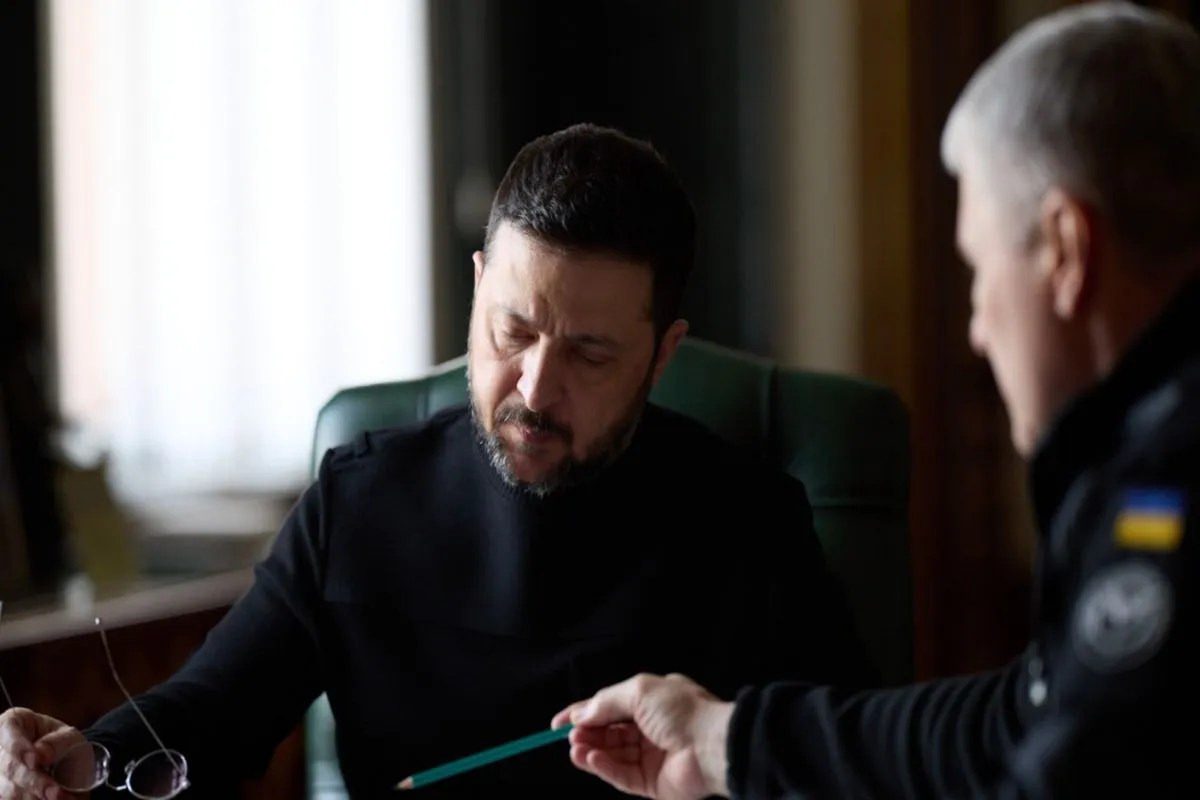
Volodymyr Zelenskyy is sounding the alarm again. The claims are familiar: Iranian drones, Russian assembly lines, and the "undeniable proof" that Tehran is the silent engine behind Moscow’s winter campaign. The media eats it up. It makes for a clean narrative—good vs. evil, with a side of rogue-state axis.
But the obsession with proving Iran’s involvement is a strategic dead end.
If you’re still debating whether Iranian Shahed drones are hitting Kyiv, you’re looking at the smoke while the building is burning. We’ve known about the Shahed-136 since 2022. We’ve seen the wreckage. We’ve mapped the flight paths. Proving it "one more time" isn't a masterstroke of intelligence; it’s a symptom of a desperate PR strategy designed to guilt the West into faster deliveries.
The real story isn't that Iran is helping Russia. The real story is that Russia has successfully commoditized high-end destruction using low-end tech, and the West’s multi-million dollar defense systems are failing the math test.
The Shahed is a Math Problem, Not a Tech Marvel
The military-industrial complex loves a shiny object. They want to talk about stealth, AI-driven targeting, and hypersonic speeds. The Shahed-136 is none of those things. It’s essentially a lawnmower engine strapped to a wooden frame with a GPS chip.
I’ve seen defense contractors try to pitch $2 million interceptors to stop a drone that costs $20,000 to build. That isn't a victory; it's a slow-motion bankruptcy.
When Zelenskyy presents evidence of Iranian involvement, he’s trying to trigger sanctions. But sanctions are a 20th-century tool being used against a 21st-century decentralized supply chain. You cannot sanction a hobbyist-grade engine or a generic microchip available on any grey market in Dubai or Shenzhen.
- The Cost Asymmetry: A single Patriot missile costs roughly $4 million. For that price, Russia can launch 200 drones. Even if you shoot down 190 of them, the 10 that hit their targets cause millions in infrastructure damage. Russia wins the exchange every single time.
- The Component Myth: We keep hearing that these drones are "Iranian." In reality, they are global. They contain components from the US, Japan, and Germany. Calling them "Iranian" is a political convenience that ignores how easy it is to bypass export controls in a globalized economy.
Why Evidence is a Weak Weapon
The Ukrainian leadership spends an exhausted amount of political capital proving what everyone already knows. This "evidence" is meant to catalyze a tougher stance from the G7. It won't work.
Geopolitics doesn't run on "gotcha" moments. Every intelligence agency from Langley to Tel Aviv has the same photos Zelenskyy is holding. If they haven't "acted" to the extent Ukraine wants, it’s not because they lack evidence. It’s because the escalation ladder is a structural reality, not a lack of information.
The obsession with the source of the hardware ignores the utility of the hardware. Whether the drone is made in Isfahan or a repurposed factory in Tatarstan is irrelevant to the soldier in a trench. What matters is the saturation of the airspace.
The Logistics of the "New" Russia
We were told Russia would run out of precision missiles by May 2022. Then by Christmas. Then by the following spring.
They didn't run out because they pivoted. They accepted that "smart" weapons are too expensive and slow to produce. By integrating Iranian designs and mass-producing them domestically—likely under the "Geran-2" label—Russia has moved from a boutique military to a high-volume, low-margin attrition machine.
This is the nuance the "evidence" claims miss: Russia isn't just buying drones; they are importing a philosophy of cheap, disposable warfare.
The Reality of Modern Attrition
- Volume over Precision: If you fire enough "dumb" drones, you don't need a "smart" missile.
- Psychological Saturation: The goal isn't just to blow up a power plant. It’s to keep the air-raid sirens going 24/7, exhausting the civilian population and draining the battery of every Western-supplied SAM battery.
- Industrial Mimicry: Russia is now building these drones on their own soil. The "Iranian evidence" is becoming historical trivia. You can't stop a factory in central Russia by complaining to the UN about Tehran.
The Sanctions Delusion
"We need more sanctions on Iran," is the rallying cry every time a new drone fragment is found. It’s a lazy consensus. Iran has been the most sanctioned country on earth for decades, yet they developed a drone program that is currently reshaping European security.
Sanctions are not a wall; they are a tax. They make things more expensive and slower to acquire, but they never stop a determined state actor. If you want to stop the drones, you don't target the seller; you disrupt the physics of the delivery.
Instead of hunting for "evidence" to show the world, the focus should be on the brutal reality of electronic warfare (EW). The only way to win the drone war is to make the GPS signal irrelevant. But EW isn't as sexy as a press conference with a piece of charred wing. It doesn't make for a good headline. It just wins wars.
Stop Asking for Evidence, Start Asking for Jamming
The "People Also Ask" sections of the internet are filled with queries like "How is Iran getting parts?" and "Is Russia out of missiles?" These are the wrong questions.
The right question is: "Why is the West still trying to fight a $20,000 drone with a $4,000,000 missile?"
We are witnessing the democratization of air power. For the last 30 years, the US and its allies owned the skies because nobody else could afford a fighter jet. Now, anyone with a credit card and a 3D printer can challenge that hegemony. Ukraine is the laboratory for this new reality, and the results are grim for traditional military thinking.
Zelenskyy’s "evidence" is a plea for a world that no longer exists—a world where international law and "proof of wrongdoing" actually dictate the flow of a conflict. In the current landscape, the only thing that matters is the industrial capacity to produce 10,001 drones when your opponent only has 10,000 interceptors.
The Failure of Western Response
The West’s response has been a series of reactive, expensive band-aids. Every time a new "proof" of Iranian involvement surface, we get another round of symbolic sanctions. It’s theater.
If I were advising a startup in the defense space, I’d tell them to ignore the "Iranian drone" headlines. That’s a distraction. The real opportunity is in low-cost, high-volume kinetic interception. We need the "Anti-Shahed"—a drone that costs $5,000 and can take out the $20,000 Shahed.
Until that exists, Russia and Iran are winning the economic war, regardless of how many photos of serial numbers are shown to the press.
We are seeing a fundamental shift in the cost of kinetic force. Russia has learned this. Iran has known it for years. The West is still trying to find the "proof" while the math is already settled.
Burn the evidence. Build the jammers. Change the math. Anything else is just noise.
Would you like me to analyze the specific electronic warfare systems currently being deployed to counter the Geran-2 production lines?