Naval deployments do not fix broken supply chains.
The standard media narrative is comforting. It goes like this: maritime chokepoints get sketchy, a nation sends a fleet of destroyers and frigates, and trade lanes magically stabilize. Freight rates drop. Insurance premiums normalize. Everyone sleeps better knowing steel hulls are riding shotgun for merchant vessels.
It is a beautiful fairy tale. It is also completely wrong.
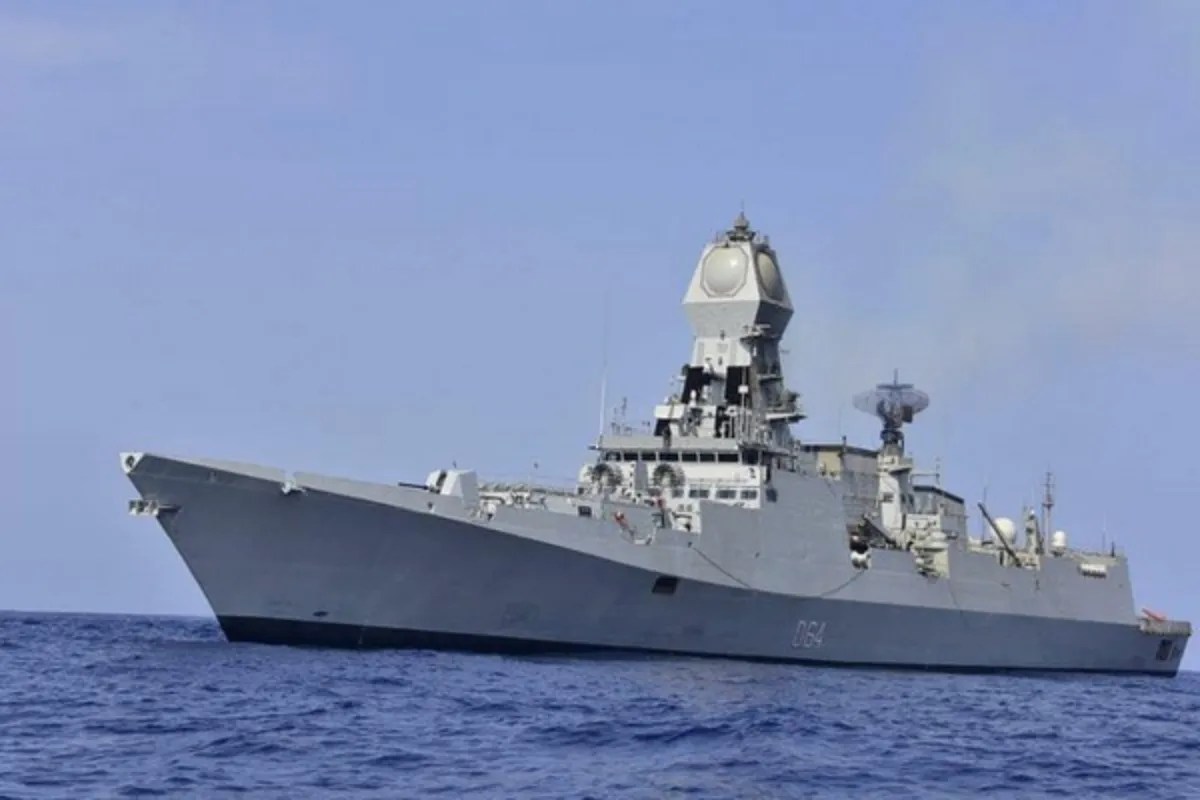
When governments deploy half a dozen warships to the Gulf or the Red Sea, they are not solving a commercial problem. They are treating a symptom of geopolitical friction with an incredibly expensive, unsustainable bandage. Having watched maritime logistics operations burn through millions of dollars chasing false security, I can tell you the reality on the water looks nothing like the press releases.
True maritime security is not about how many guns you park in a strait. It is about the cold, hard math of risk asymmetry. And right now, the math is heavily stacked against conventional navies.
The Fatal Math of Asymmetric Maritime Warfare
Here is what the standard news coverage misses: the cost-to-kill ratio is upside down.
When a state actor or a non-state militia decides to disrupt shipping, they do not need a rival navy. They use off-the-shelf drones, cheap ballistic missiles, and sea-skimming loitering munitions. A drone might cost $20,000. The interceptor missile fired from a modern destroyer to knock it down can cost between $1 million and $3 million.
You do not need a degree in advanced mathematics to see where this goes.
- The Drone: $20,000
- The Interceptor: $2,000,000
- The Result: A net financial bleed for the defending navy.
Naval forces cannot win a war of attrition where the enemy spends pennies and they spend gold bars. In actual theater operations, ships run out of interceptors long before adversaries run out of cheap drones. When a warship burns through its vertical launch system (VLS) cells, it cannot just reload at sea. It has to pull out of the hot zone, find a friendly deep-water port, and spend days cranes-up reloading.
While that warship is off-station reloading, the merchant ships it was supposed to protect are sitting ducks.
What People Also Ask: "Are Indian ships safe now?"
People are asking if national flag vessels are finally safe because of these deployments. The honest, brutal answer is no.
The premise of the question is flawed. It assumes that flags on a stern dictate who gets targeted. In modern shipping, ownership is opaque. A ship might be Greek-owned, fly a Liberian flag, be managed by a British firm, and carry cargo owned by a Swiss multinational. To a militant group sitting on a coastline with a radar screen, a ship is just a blip. They do not check the maritime registry before pulling the trigger.
Putting naval ships in the area creates a target-rich environment. It does not create a bubble of absolute safety. If anything, the presence of heavy naval assets can escalate the tension, turning a commercial transit route into an active combat zone.
The Insurance Market Does Not Care About Your Navy
The biggest misconception is that warships calm the commercial markets.
Ask any maritime insurer how they price War Risk premiums. They do not look at how many destroyers are patrolling the Gulf and say, "Great, let's drop the rates."
They look at the probability of an incident.
The moment a region becomes militarized enough to require a multi-ship task force, insurance underwriters do one thing: they hike the rates. The very presence of a heavy naval response is the ultimate validation to the insurance market that the area is incredibly dangerous.
The Real Cost Spiral
When a zone is declared a war risk area, several things happen simultaneously:
- War Risk Premiums Spike: Ships pay a percentage of the total hull value just to enter the zone for a single week.
- Seafarer Hazard Pay: Crews demand double pay for transiting the area.
- Rerouting Costs: If operators decide the naval protection is not enough, they bypass the route entirely. Diverting a mega-container ship around the Cape of Good Hope adds 10 to 14 days of sailing. That burns massive amounts of fuel, ties up inventory, and wrecks port schedules globally.
When you see headlines cheering on naval deployments to "save trade," understand that the shipping lines have already passed these costs down the line. You pay for it at the gas pump and the retail checkout counter. The navy is not stopping the economic bleeding; it is just witnessing it from a closer vantage point.
Stop Guarding Cargo: The Hard Pivot Forward
If you are a cargo owner or a supply chain officer, stop praying that your navy will bail out your transit times. They cannot. Instead of relying on brute force projection, smart operators are completely dismantling how they approach volatile shipping lanes.
If you want to survive the next decade of maritime chaos, you have to adopt a posture of calculated paranoia.
1. Decouple from Single-Route Chokepoints
If your entire business relies on goods flowing through a single narrow body of water, your business model is defective.
The traditional procurement playbook was to find the absolute cheapest manufacturing hub and ship everything via the most direct ocean route. That playbook is dead. You must build redundancy.
- Near-shoring: It is expensive upfront, but it eliminates maritime transit risk.
- Multi-Modal Routing: If the ocean is blocked, do you have air-rail or overland trucking alternatives locked in? Yes, rail freight from Asia to Europe across land is complex, but when ocean freight rates quadruple overnight, rail suddenly looks cheap and fast.
2. Radical Transparency in the Charter Market
Stop blindly trusting standard freight contracts. Read the force majeure clauses. Most shippers do not realize that their carriers can dump their cargo at an alternate port thousands of miles away if a route gets too hot.
You need to negotiate specific routing contingency clauses. If a carrier decides to reroute around Africa instead of braving the Gulf, who eats the extra fuel cost? If you do not define this in your contract before the missiles fly, you will eat it.
3. Acceptance of the Friction
Here is the bitter pill that no industry cheerleader wants to admit: trade is getting slower and more expensive.
The era of ultra-efficient, just-in-time logistics is over. We are entering the era of just-in-case. This means holding buffer inventory. It means working capital is tied up in warehouses rather than moving on the water. It is inefficient, it eats margins, and it is the only way to prevent your assembly lines from shutting down when a drone hits a tanker.
The Illusion of Absolute Control
Let's do a quick thought experiment. Imagine you are running a fleet of five destroyers. Your job is to protect an area of ocean spanning thousands of square miles. Hundreds of merchant ships pass through every week.
How do you protect them?
You can try the convoy system. You gather twenty merchant ships and escort them in a line. It worked in World War II. But today, if you group twenty slow-moving tankers together, you have just created a massive, easy-to-hit target for a saturation missile attack.
If you do not use convoys, you have to scatter your warships across the horizon, hoping you are close enough to shoot down a missile when it appears on radar. Radar horizons are limited by the curvature of the earth. A low-flying cruise missile might only be visible for a few seconds before impact.
Navies are built to fight other navies. They are not built to act as bodyguards for every commercial barge carrying cheap sneakers and grain.
The Flaw in the Heavy Metal Strategy
To be brutally honest, my own contrarian view has a massive downside. Building alternative supply chains and near-shoring takes years. It requires billions in capital expenditure. Shifting away from reliance on ocean chokepoints is a slow, painful process. In the short term, businesses will suffer margin compression.
But the alternative is worse. The alternative is doing nothing, keeping your fingers crossed, and hoping a naval task force can defy the laws of physics and economics.
Governments deploy ships because it is the only lever they have. It looks good on the evening news. It projects strength. But do not confuse optics with operational efficiency. A warship is a weapon of war, not a logistics panacea.
If your cargo is on a ship in a volatile strait, understand that you are gambling. No amount of naval steel can change the fundamental reality that modern sea lanes are violently shifting. The businesses that survive are not those cheering for more warships. They are the ones who accepted that the old trade routes are permanently cracked, and began building their own bridges.