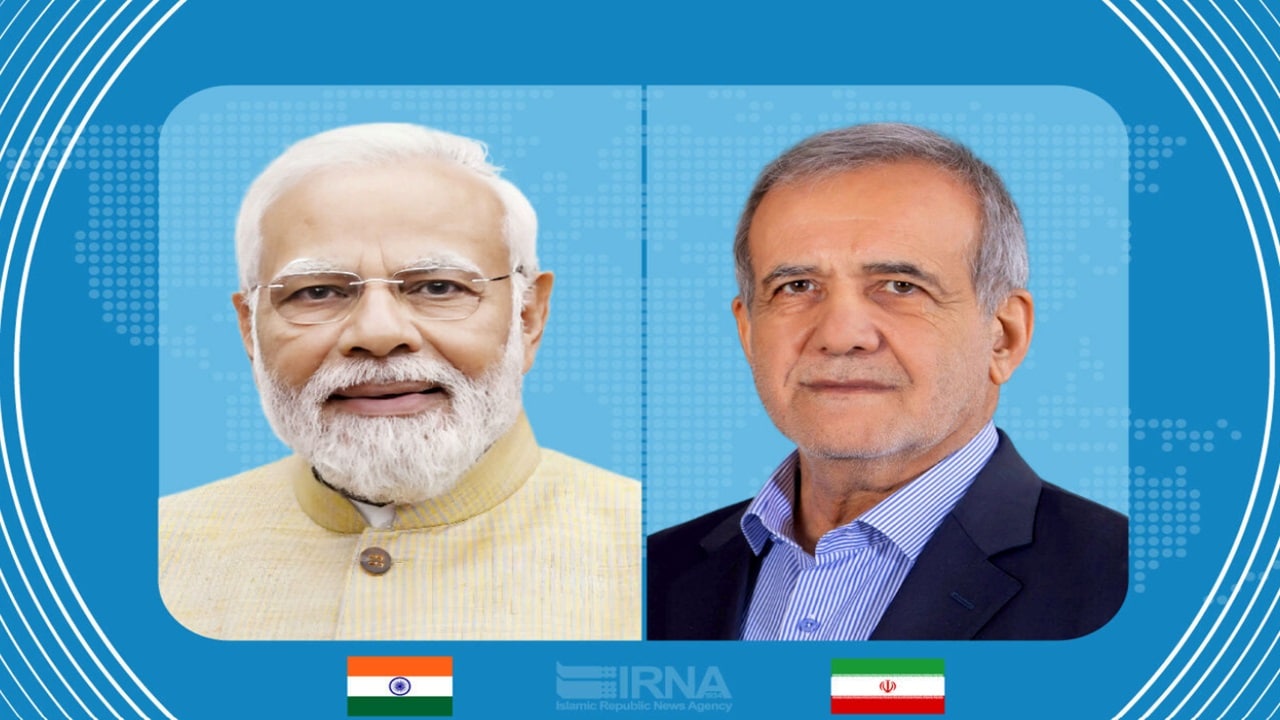
Diplomatic phone calls are the white noise of international relations. They are scripted, sanitized, and almost entirely devoid of structural change. When the Iranian President picks up the phone to propose a "West Asia security framework" to New Delhi, the media treats it like a tectonic shift. It isn't. It is a desperate sales pitch for a product that has no buyers, no infrastructure, and no foundation in reality.
The consensus view—the one you’ll read in every vanilla op-ed—is that we are witnessing the birth of a new multipolar order where Middle Eastern stability is managed by regional players and their BRICS allies. This narrative is comfortable. It suggests a logical transition away from Western hegemony. It is also completely wrong.
The Myth of Regional Autonomy
The fundamental flaw in the Iranian proposal is the assumption that "regional security" is a shared goal. It isn't. In West Asia, security for one actor is an existential threat to another. You cannot build a "framework" when the participants are engaged in a zero-sum game of proxy wars, maritime interdictions, and nuclear hedging.
Tehran’s outreach to India isn't about peace; it’s about bypass surgery. Iran is suffocating under a sanctions regime that has effectively severed its primary arteries to the global financial system. By pitching a security framework to Modi, Iran is trying to bribe India with the promise of stability in exchange for investment in the Chabahar Port and a workaround for the petrodollar.
I have seen diplomats spend decades chasing these "regional solutions." They fail because they ignore the hardware of power. Security isn't a handshake; it is the ability to guarantee safe passage through the Strait of Hormuz and the Bab al-Mandab. Currently, that guarantee is backed by the U.S. Fifth Fleet. Neither India nor Iran, nor any combination of BRICS nations, has the naval tonnage or the integrated command structure to replace that insurance policy.
Why India Isn't Buying What Tehran is Selling
The "People Also Ask" sections of the internet are currently obsessed with whether India will ditch the West for a BRICS-led Middle East strategy. Let’s dismantle that premise.
India’s foreign policy is built on "strategic autonomy," which is a polite way of saying they will take everyone’s lunch money and promise nothing in return. India needs Iranian energy and the transit route to Central Asia via Chabahar. However, India also needs the I2U2 partnership (India, Israel, UAE, USA) and the India-Middle East-Europe Economic Corridor (IMEC).
For New Delhi, joining an Iranian-led security framework would be a catastrophic strategic error. It would alienate Riyadh and Abu Dhabi—India’s two largest trading partners in the region—and poison the well with Washington. Modi isn't looking to lead a new bloc; he’s looking to extract maximum utility from every existing one. The Iranian proposal is a distraction from the fact that the real power in West Asia is shifting toward a Gulf-Israeli axis, not a Tehran-Moscow-Delhi triangle.
The BRICS Delusion
The mention of BRICS in these high-level calls is the ultimate red herring. BRICS is not a security alliance. It’s an alphabetical grievance group.
To suggest that BRICS can provide a security framework for West Asia is to ignore the internal contradictions of the group itself. China and India are currently staring each other down across the Line of Actual Control. Egypt and Ethiopia are at odds over the Grand Ethiopian Renaissance Dam. These are not the building blocks of a cohesive security architecture.
When Iran asks for a "BRICS role" in regional security, they are asking for a shield against Western intervention. But China, the heavyweight of the group, has shown zero appetite for getting its hands dirty in Middle Eastern security. Beijing wants the oil to flow and the belts to be strapped to the roads. It has no interest in patrolling the Persian Gulf or mediating the sectarian rift between Shias and Sunnis.
The Cost of Realism
Let’s talk about the data that the "security framework" proponents ignore.
- Naval Capability Gap: To secure the region's sea lines of communication ($SLOC$), a force must possess advanced Anti-Submarine Warfare ($ASW$) and Integrated Air and Missile Defense ($IAMD$) capabilities. Iran’s navy is largely a "green-water" force focused on asymmetric swarm tactics. It cannot protect trade; it can only threaten it.
- Trade Realignment: Over 60% of India’s remittances come from the Gulf Cooperation Council ($GCC$) countries. The economic gravity of the region is firmly on the side of the Abraham Accords and the status quo, not the Iranian resistance axis.
- The Nuclear Shadow: No security framework survives the introduction of a new nuclear state. If Iran moves toward a weapon, the "framework" dissolves instantly as Saudi Arabia and Turkey seek their own deterrents.
Stop Chasing the Multipolar Ghost
The "lazy consensus" tells you that the U.S. is leaving the Middle East and a vacuum is opening. This is a half-truth. The U.S. is footprint-light, but it remains the only power capable of force projection.
If you are an investor or a policy analyst, don't bet on a "West Asia security framework." It is a rhetorical device designed to project strength where there is only isolation. The real movement is in the fragmentation of the region into smaller, functional hubs of trade and security—mini-lateralism. Think of the UAE-India CEPA or the Israel-India tech pipeline.
The Iranian president's proposal is a ghost ship. It looks impressive on the horizon, but there’s nobody at the helm and the hull is full of holes.
India will continue to take the calls. They will continue to sign "memorandums of understanding" that mean absolutely nothing. They will continue to nod politely while Iran talks about regional solidarity. But when the meeting ends, New Delhi will go back to the real work: balancing the Americans, the Saudis, and the Israelis to ensure that Indian energy needs are met and its diaspora is protected.
The security of West Asia will not be decided in a BRICS committee or a bilateral phone call between Tehran and Delhi. It will be decided by who controls the choke points and who has the deepest pockets. Right now, and for the foreseeable future, that isn't Iran.
If you want to understand the future of the Middle East, stop reading diplomatic readouts. Start tracking deep-water port contracts and missile defense integration. The rest is just theater.
Stop waiting for the "New World Order" to arrive in a press release. It's already here, and it looks nothing like the framework being pitched from Tehran.
Get real or get left behind.