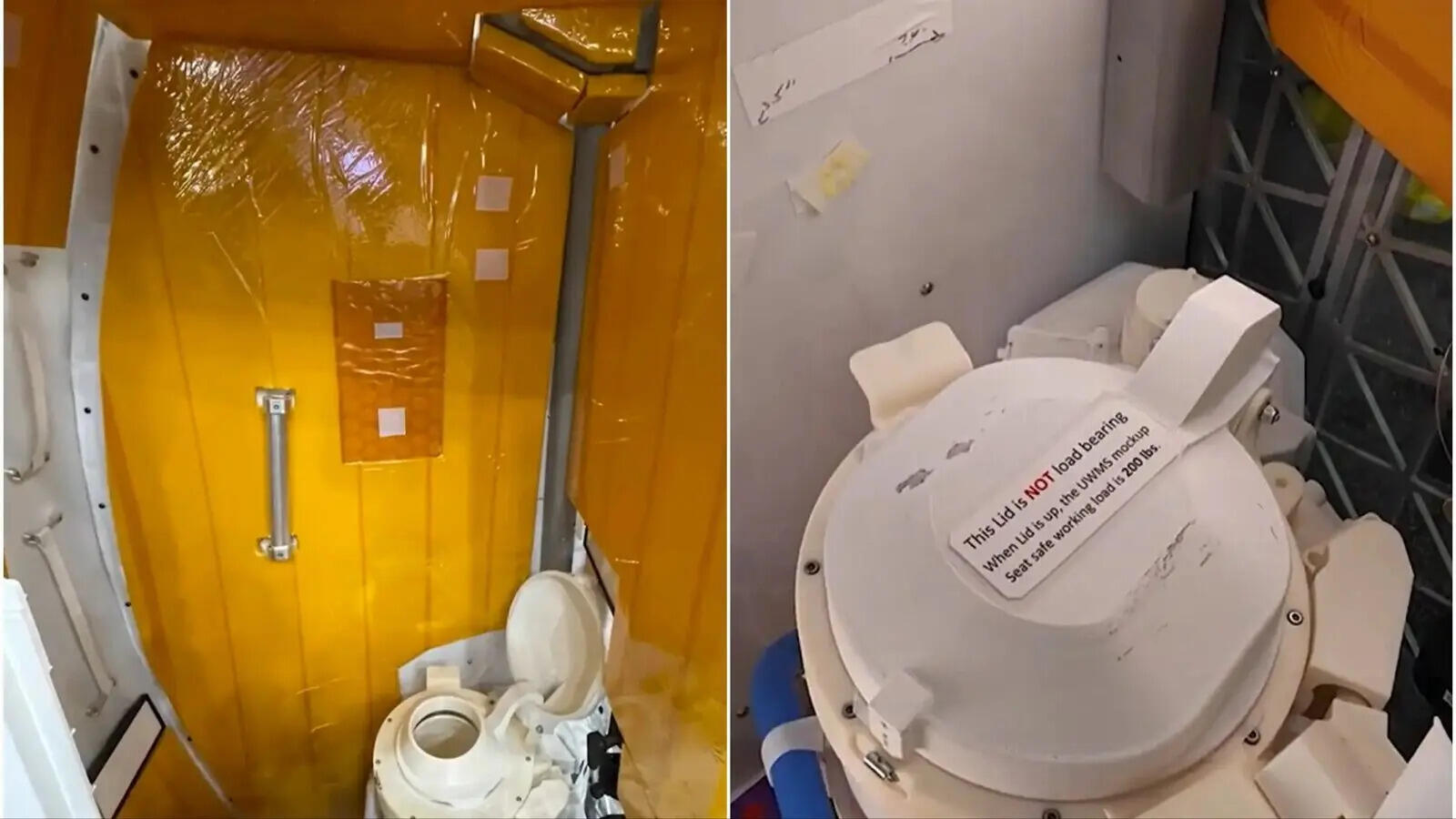
The engineering failure that turned the Artemis 2 mission into a claustrophobic ordeal is not just a plumbing issue. It is a fundamental breakdown in the systems intended to sustain human life beyond Low Earth Orbit. When reports surfaced that the Universal Waste Management System (UWMS) malfunctioned shortly after the Orion spacecraft cleared the atmosphere, the public narrative focused on the discomfort of the four-person crew. The reality is far more dangerous. A failed toilet on a ten-day lunar flyby is a biohazard event that threatens hardware integrity, crew health, and the very timeline of the Artemis program.
NASA’s $23 million titanium commode was supposed to be the pinnacle of space-age hygiene. Instead, it has become a symbol of the fragility of deep-space exploration.
The Physics of a Zero-Gravity Biohazard
In space, liquids do not behave. They cling. When the UWMS separates from the Orion’s internal plumbing or suffers a seal failure, the result is not a simple leak that can be mopped up. It is an aerosolized slurry of waste that migrates through the cabin via the ventilation system.
The immediate threat is not the smell. It is the electronics. Orion is a fly-by-wire spacecraft packed with high-density avionics and cooling fans. If moisture or particulate matter enters these systems, the risk of a short circuit or a thermal runaway increases exponentially. The crew is essentially trapped in a 330-cubic-foot pressure vessel with drifting contaminants that can irritate the eyes, lungs, and skin.
Why the Universal Waste Management System Failed
The UWMS was designed to be smaller and lighter than the units used on the International Space Station (ISS). To achieve this, engineers had to simplify the centrifugal separator—the heart of the machine that spins to separate solids from liquids in microgravity.
Preliminary data suggests a failure in the separator’s motor torque, likely caused by a pressure spike during the initial activation. Unlike the ISS, where astronauts can retreat to a different module while repairs are made, the Orion crew has nowhere to go. They are locked in a single room with a malfunctioning industrial machine that is vital for their survival.
The Desperate Shift to Contingency Management
Once the primary system failed, the crew of Artemis 2 had to revert to the Fecal Containment Device—essentially high-tech diapers and manual collection bags. This is the "Apollo 13" moment of the 21st century, but without the glamor of a Hollywood script.
Managing human waste manually for over a week in a cramped environment is a massive drain on crew morale and physical energy. The process is labor-intensive and requires strict adherence to sterilization protocols to prevent the spread of bacteria like E. coli. Every minute spent managing waste is a minute lost to scientific observation, navigation checks, and mission-critical communication.
The Hidden Logistics of Lunar Waste
The mass of the waste does not disappear. On the ISS, waste is loaded into cargo ships that burn up upon reentry. On Artemis 2, every gram of waste generated must remain on the craft until splashdown. This adds "wet mass" that was not intended to be stored in the cabin, shifting the center of gravity and potentially impacting the aerodynamics of the heat shield during the high-velocity return to Earth.
A Systemic Failure of Redundancy
The most damning aspect of the Artemis 2 crisis is the lack of a true backup. In the aerospace industry, redundancy is the gold standard. You have two of everything, and often a third. Yet, for the most basic human necessity, NASA relied on a single, complex mechanical unit and a pile of plastic bags.
The decision to omit a secondary mechanical toilet was driven by weight constraints. Every pound of equipment requires more fuel to break Earth’s gravity. In the trade-off between safety and "mass budget," the toilet lost. We are seeing the consequences of that gamble in real-time.
The Threat to the Artemis Timeline
This malfunction has implications that reach far beyond this single mission. If the UWMS cannot be proven reliable, the Artemis 3 landing—the mission intended to put boots back on the moon—cannot proceed.
NASA cannot risk a lunar landing mission where the crew might be physically incapacitated by a hygiene failure or where the Lunar Gateway becomes contaminated. The agency now faces a grueling post-flight investigation that could delay the entire moon program by years.
The Industry Oversight Problem
The contractors responsible for the UWMS are under the microscope. There is a growing divide between the legacy aerospace approach and the "move fast and break things" mentality of newer commercial partners. In this instance, the drive for a lightweight, "universal" solution may have overlooked the brutal vibrations and G-forces experienced during an SLS launch.
We have spent billions on heat shields and rocket boosters, but we failed to master the most basic aspect of being human in a can.
The Physiological Toll on the Crew
The astronauts on board—Reid Wiseman, Victor Glover, Christina Koch, and Jeremy Hansen—are professionals trained for extreme environments. But the long-term effects of living in a contaminated cabin are documented. Prolonged exposure to high levels of ammonia and carbon dioxide, which can spike when waste management systems fail, leads to cognitive decline and fatigue.
They are currently hurtling toward the moon at thousands of miles per hour, performing complex orbital mechanics while dealing with a situation that would be considered a health code violation in any building on Earth. The psychological pressure of maintaining a "professional" face for the public while managing a literal mess behind the scenes is immense.
The Hard Truth About Deep Space
This is the reality of the New Space Age. It is not all high-definition footage of Earth-rise and sleek touchscreens. It is messy, dangerous, and often undignified. The Artemis 2 malfunction proves that we are still far from being a multi-planetary species. If we cannot manage a ten-day trip to our own moon without a critical systems failure, the prospect of a months-long journey to Mars remains a fantasy.
Engineering for space requires a level of perfection that humans rarely achieve. When we fail, the consequences are visceral. The Orion spacecraft is currently a floating testbed for our limitations.
The mission will likely conclude with a successful splashdown, and the crew will be hailed as heroes. But behind the scenes, the engineers at Johnson Space Center are staring at a terrifying reality. They built a multi-billion dollar ship that is being defeated by the most basic biological functions of its passengers.
Fix the plumbing, or stay on the ground.