The recurring rhetorical cycle between Washington and Tehran—most recently punctuated by threats of "Stone Age" regression and dismissals of American intelligence—operates not as a series of emotional outbursts, but as a calculated exchange within a framework of Asymmetric Brinkmanship. When a superpower threatens total infrastructure destruction, it is asserting a claim to Escalation Dominance: the ability to increase the stakes of a conflict to a level where the opponent cannot match the cost and must, therefore, capitulate. Iran’s rebuttal, "You know nothing," functions as a strategic denial of that dominance. It signals that the American model of Iranian vulnerability is fundamentally flawed, suggesting that the costs of an "unmatched" strike would be distributed globally rather than contained within Iranian borders.
Understanding this friction requires moving beyond the surface-level insults to examine the structural mechanics of Iranian defense and the economic physics of a Persian Gulf conflict.
The Architecture of Distributed Deterrence
Traditional military analysis often overvalues aggregate firepower while undervaluing Structural Hardening and Functional Redundancy. A threat to return a nation to the "Stone Age" assumes a centralized, fragile infrastructure. Iran has spent four decades developing a defense-in-depth strategy designed specifically to survive the loss of its primary nodes.
1. The Decentralization of Command and Control
Iranian military doctrine, particularly that of the Islamic Revolutionary Guard Corps (IRGC), utilizes a "Mosaic Defense" model. This system decentralizes command, allowing local units to operate autonomously if the central leadership or communication backbone is severed. By removing the "head" of the snake, an attacker does not paralyze the body; instead, they create a swarm of independent actors. This renders a high-altitude, precision-strike campaign—the hallmark of American "Stone Age" threats—operationally incomplete.
2. Subterranean Industrialization
The "Stone Age" rhetoric ignores the physical reality of Iran’s "Missile Cities." These are vast, hardened underground complexes bored into mountain ranges. The strategic value of these facilities is twofold:
- Protection against First-Strike: They ensure a reliable second-strike capability even after a massive conventional bombardment.
- Intelligence Obscuration: The "You know nothing" retort refers specifically to the inability of satellite and signals intelligence to fully map these subterranean networks. If an aggressor cannot locate the assets, the threat of destroying them becomes a bluff.
The Economic Physics of the Strait of Hormuz
The most potent variable in Iran's strategic calculus is not its ability to win a direct kinetic engagement, but its ability to impose a Symmetric Economic Penalty. This is the mechanism by which a regional power neutralizes the advantage of a global superpower.
The Cost-Exchange Ratio
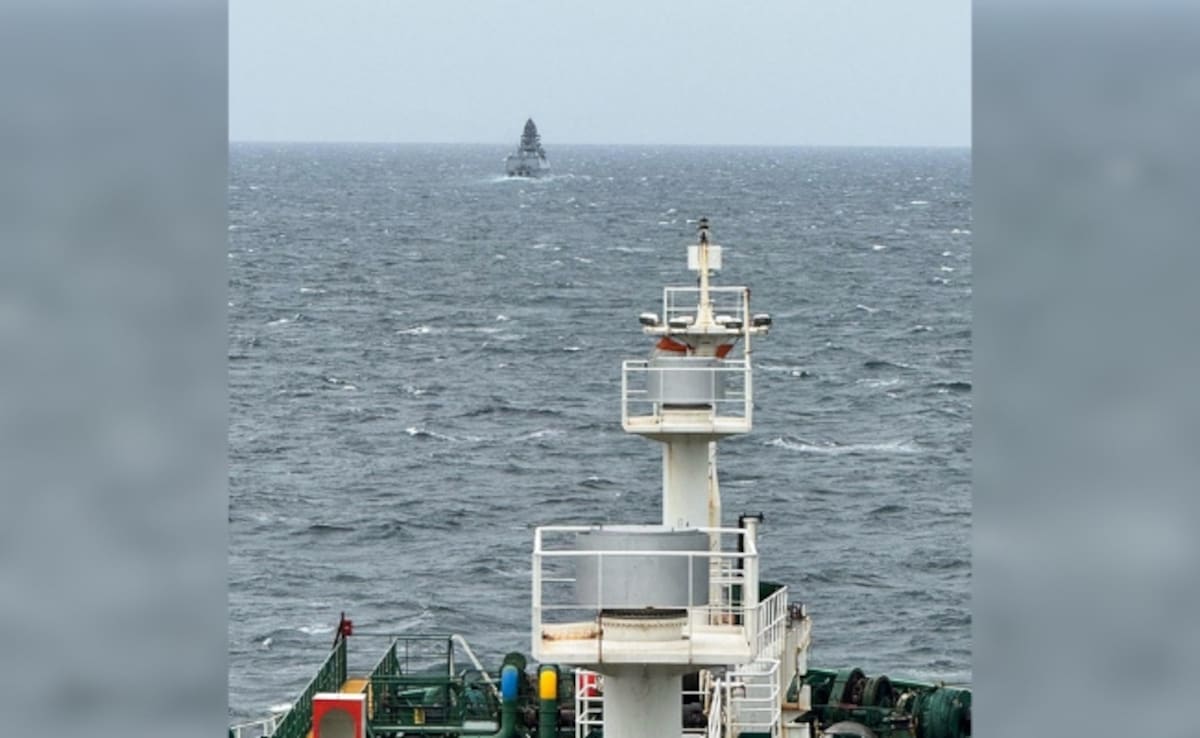
In a standard engagement, the U.S. Navy utilizes assets like the Arleigh Burke-class destroyer to protect maritime interests. However, Iran’s strategy relies on Swarms and Sea Mines. The cost-exchange ratio here is disastrous for the defender:
- A single RIM-162 Evolved SeaSparrow Missile (ESSM) costs over $1 million.
- The Iranian fast-attack craft or loitering munitions it intercepts cost between $20,000 and $50,000.
- A saturation attack designed to bleed the defender’s magazine depth eventually forces the higher-tech actor to retreat or risk the loss of a multi-billion dollar platform to a low-cost projectile.
Global Market Contagion
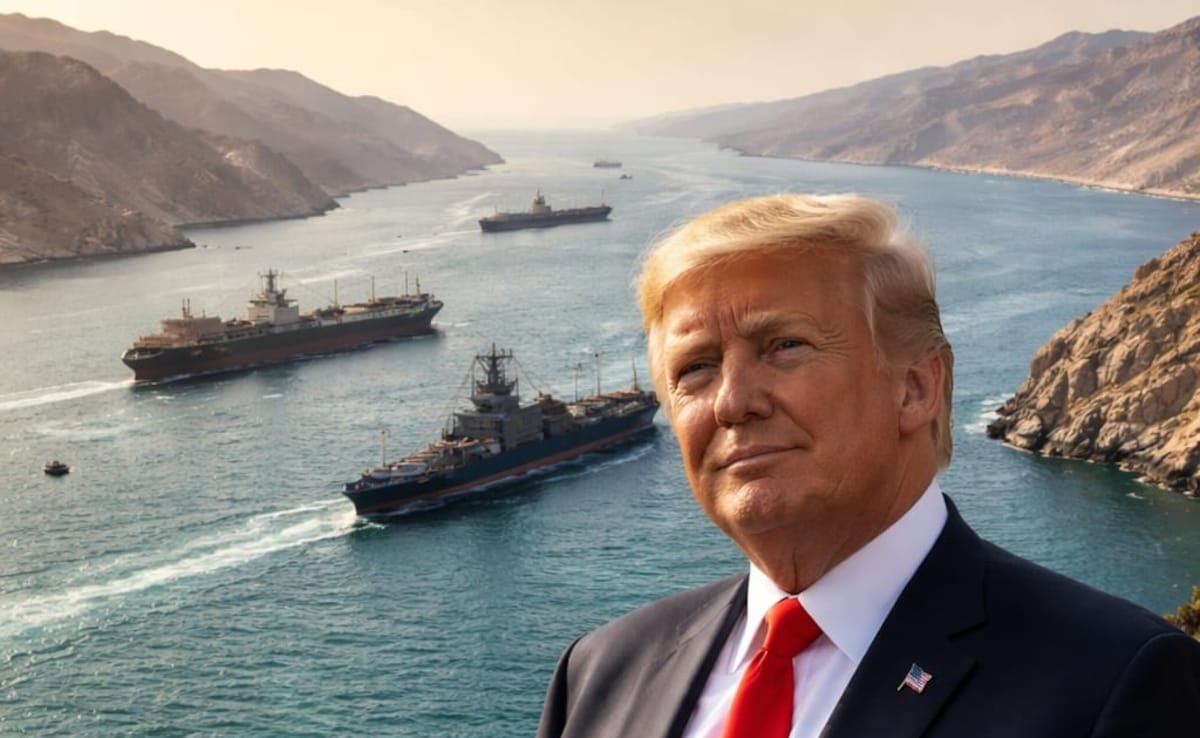
The Strait of Hormuz is a geographic bottleneck through which approximately 20% of the world's petroleum liquids flow. Iran’s deterrent rests on the threat of a Permanent Market Shock. If the U.S. targets Iranian domestic infrastructure, Iran can feasibly target the global energy supply chain. This transforms a bilateral conflict into a global depression. The logic of "Stone Age" threats fails here because the aggressor risks dragging the global economy back with the target.
The Intelligence Gap: Why Perception Dictates Reality
The phrase "You know nothing" highlights a critical failure in Western intelligence: the Mirror Imaging Bias. U.S. planners often assume Iranian leadership values the same assets as Western democracies—specifically, economic stability and civilian infrastructure.
However, the Iranian security apparatus prioritizes Regime Continuity and Ideological Export over GDP growth. When a threat targets the "Stone Age," it targets the civilian population's quality of life. For a revolutionary government that views itself in a perpetual state of siege, this is not a new variable; it is the baseline.
The Limits of Kinetic Threats
The effectiveness of a threat is $T = (Capability \times Credibility)$.
- Capability: The U.S. possesses the physical means to destroy Iranian power grids and refineries.
- Credibility: The credibility of using that capability is low because the blowback (oil at $250/barrel, regional proxy wars, and the collapse of European energy security) is a cost the U.S. political system is rarely willing to pay for a non-existential conflict.
When Iran claims the U.S. "knows nothing," they are asserting that Washington fails to understand the threshold of Iranian pain and the extent of Iranian reach.
Proxies as Externalized Weapon Systems
Iran’s "Forward Defense" strategy utilizes non-state actors as an extension of its national territory. This creates a Decoupling of Origin and Effect.
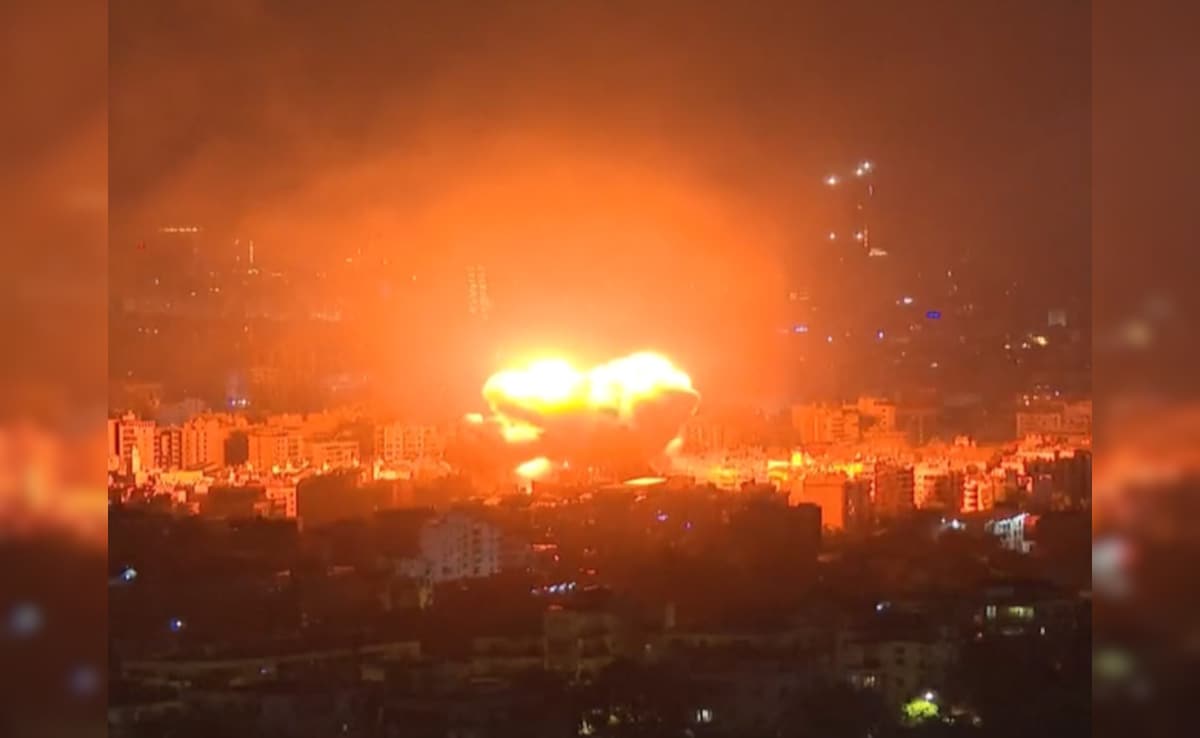
- The Levant and Yemen: Groups like Hezbollah and the Houthis serve as flanking maneuvers. If Iran is attacked directly, these groups can initiate strikes on regional targets (e.g., desalination plants in the Gulf or shipping in the Red Sea).
- The Attribution Problem: By using proxies, Iran forces the U.S. into a "Grey Zone" conflict. If the U.S. retaliates against Tehran for a proxy's action, it risks being seen as the escalator in the eyes of the international community. If it doesn't, the deterrence fails.
This network ensures that any "Stone Age" campaign would not be confined to the Iranian plateau. It would be a regional conflagration that renders the "surgical strike" concept obsolete.
The Failure of the Maximum Pressure Model
The historical data from 2018 to the present suggests that economic strangulation has a diminishing marginal utility. When a target is already 90% decoupled from the global financial system via sanctions, the threat of further destruction loses its psychological weight.
- The Autarky Pivot: Iran has been forced to develop domestic supply chains for critical components. While less efficient, these are more resilient to external shocks.
- The Eastern Realignment: The deepening of ties with China and Russia provides a pressure valve. China’s role as a primary oil buyer ensures that "total isolation" is a mathematical impossibility as long as Beijing perceives value in a multipolar Middle East.
The Mathematical Improbability of a "Clean" Victory
Strategic planners must account for the Entropy of War. In a conflict with Iran, the variables are too numerous for a controlled outcome.
- Cyber Warfare: Iran’s offensive cyber capabilities target Western industrial control systems. A "Stone Age" threat in the physical world could be met with a digital "Stone Age" threat against Western power grids or water treatment facilities.
- Asymmetric Naval Mining: The deployment of thousands of "smart" mines in the Persian Gulf would take years to clear, effectively closing the region to commercial insurance underwriters.
The Strategic Path Forward
The "Stone Age" rhetoric is a relic of 20th-century conventional warfare theory that assumes a clear distinction between the "front line" and the "home front." In the modern Persian Gulf, those lines are blurred by energy dependencies and asymmetric tech.
The U.S. must shift from a strategy of Total Destruction Threats to Proportional Functional Denial. Rather than threatening to destroy the nation, the focus should be on the specific technical nodes that enable proxy command and control. This reduces the "all or nothing" stakes that currently favor the Iranian "You know nothing" defense.
Conversely, the U.S. must rectify its intelligence deficit regarding the IRGC’s internal decision-making. If the goal is deterrence, the threat must target something the leadership actually fears losing—which, in the Iranian context, is rarely the civilian infrastructure.
The ultimate strategic play is the recognition that in a conflict defined by asymmetric costs, the actor with the lower "standard of living" threshold and the higher "pain tolerance" often holds the tactical advantage, regardless of total kilotonnage. To win, the U.S. must move beyond the "Stone Age" trope and address the reality of a distributed, hardened, and ideologically insulated opponent. Deterrence only works when the opponent believes you understand their world; as long as Tehran can credibly claim the U.S. "knows nothing," the cycle of escalation remains tilted in their favor.