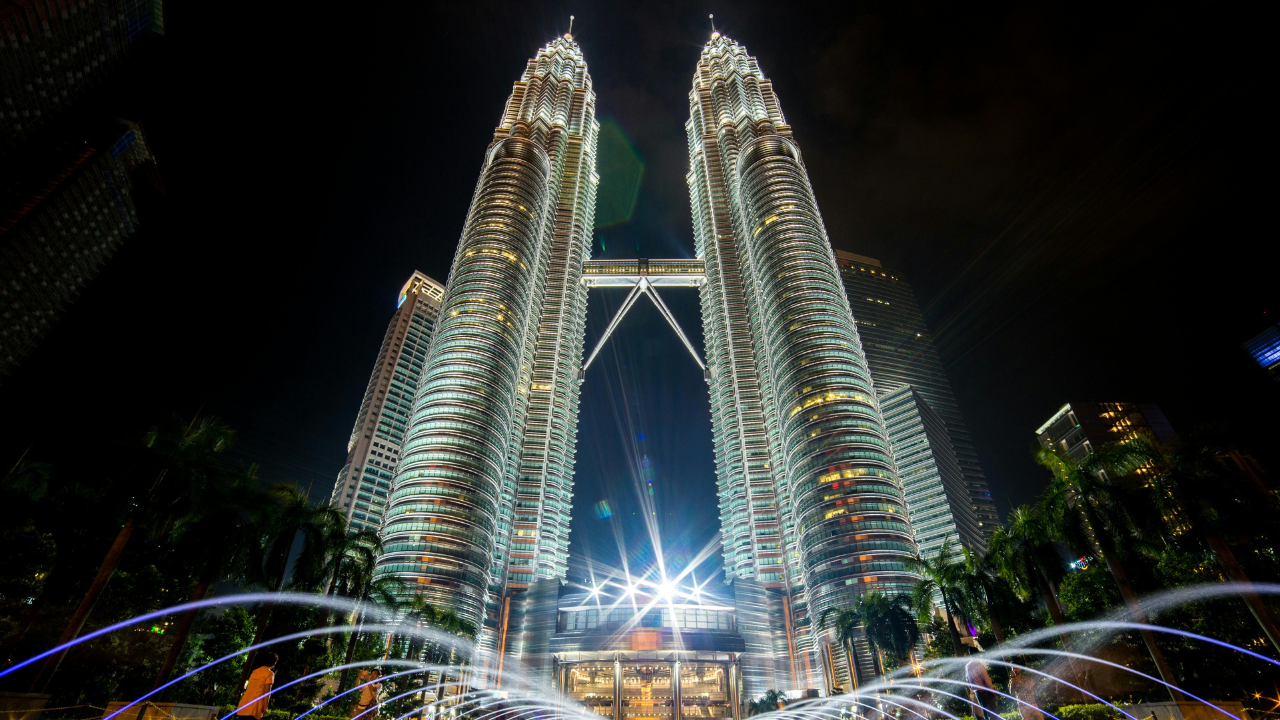
Building a skyscraper isn't just about steel and glass. It's about ego. In the early 1990s, Malaysia's Prime Minister Mahathir Mohamad didn't just want a tall building; he wanted a symbol that would scream to the world that Southeast Asia had arrived. The result was the Petronas Twin Towers in Kuala Lumpur. But the part of the story that actually matters—the part that still gets architects talking over drinks—is the high-stakes construction race between two Asian giants.
Malaysia essentially turned its biggest infrastructure project into a reality TV competition before that was even a thing. They hired the Japanese Hazama Corporation for Tower 1 and the South Korean Samsung C&T for Tower 2. Then, they told them to start at the same time and see who finished first. It wasn't just a job. It was a matter of national pride. Meanwhile, you can explore similar developments here: Your Frequent Flyer Miles Are Liability Not Loyalty.
A Foundation Built on Chaos
You can't talk about the Petronas Towers without talking about the ground beneath them. Most people think you just dig a hole and pour concrete. Not here. The original site sat on a messy mix of soft decayed limestone and hard rock. If they had built it there, one tower would have eventually started leaning like a tropical version of Pisa.
The solution was moving the entire site about 60 meters. This put the towers on a deep bed of "forest" soil. To hold up 88 floors of concrete, they had to create the world’s largest continuous concrete pour. For 54 hours straight, trucks rolled in every few minutes. It was a logistical nightmare that would've broken most crews. I've seen modern projects stall for weeks over a simple permit, yet these teams managed a record-breaking foundation pour in the middle of a monsoon-prone city. To understand the complete picture, we recommend the detailed report by Condé Nast Traveler.
The Race That Divided a Job Site
Once the foundations were set, the real drama began. Japan’s Hazama Corp had the "prestige" of Tower 1, the one actually owned by Petronas. South Korea's Samsung C&T had Tower 2. On paper, they were just two contractors. In reality, they were rivals in a sprint to the clouds.
The Koreans were the underdogs. When they started, they were actually behind. But they used a "climbing" formwork system that allowed them to pour concrete and move upward faster than anyone thought possible. They worked 24/7. They didn't just want to finish; they wanted to beat the Japanese team.
There's a famous story on the site about the lean. At one point, Tower 1 was found to be leaning about 25 millimeters off-center. To fix it, the next few floors were built leaning slightly the other way. It's a terrifying thought when you're standing at the bottom looking up, but it worked.
The Skybridge Gamble
The most iconic part of the building is the double-decker Skybridge. It’s not actually bolted to the buildings. If it were, the swaying of the towers in high winds would snap it like a toothpick. Instead, it slides in and out of the towers on giant bearings.
The bridge was built on the ground and then lifted into place. This was the moment of truth. Samsung C&T managed to win the race to the bridge level, earning the right to hoist the 450-ton structure into the air. It took three days to lift it 170 meters. Imagine the tension. One snapped cable and the entire project's reputation would've been buried in the mud.
Why Concrete Won Over Steel
If you look at American skyscrapers from that era, they're mostly steel. But the Petronas Towers are high-strength reinforced concrete. Why? Because Malaysia didn't want to import massive amounts of expensive steel. They had plenty of local concrete and labor.
This made the buildings incredibly heavy—twice the weight of a comparable steel tower. But it also made them incredibly stiff. This stiffness is why you don't feel like you're on a boat when you're at the top, even when a tropical storm is battering the windows. The decision to use concrete wasn't just about money; it was about using what was available to create something world-class. It’s a lesson in localized engineering that many modern "global" firms still fail to grasp.
The Result That Shocked the Industry
By the time the spires were being placed, the South Korean team had not only caught up but had technically finished their tower first. They "won" the race. But the real winner was Malaysia. By fostering this intense competition, the government got the towers built ahead of schedule and with a level of precision that's still studied today.
The towers held the title of "World's Tallest" from 1998 to 2004. Even now, they remain the tallest twin towers on the planet. They aren't just offices. They're a masterclass in how to manage international egos to get a job done.
If you're planning to visit or study the architecture, don't just look at the height. Look at the stainless steel facade. It's designed to mimic Islamic geometric patterns, specifically the Rub el Hizb. It’s a 1990s building that feels timeless because it didn't just copy Western styles. It forced the East to outdo itself.
Go to the Skybridge. Book your tickets at least 24 hours in advance because they sell out fast. Stand in the middle and realize you’re standing on a piece of engineering that’s floating between two giants. That's the best way to feel the scale of what Japan and Korea actually built.