The woman in line 4B at O’Hare isn’t thinking about the federal budget. She is thinking about her daughter’s wedding rehearsal in Denver, which starts in exactly three hours. She is looking at her watch—a rhythmic, desperate tick-tock—and then at the sea of luggage, winter coats, and agitated humans stretching toward the horizon of the terminal.
The line isn't moving. It hasn't moved in twenty minutes.
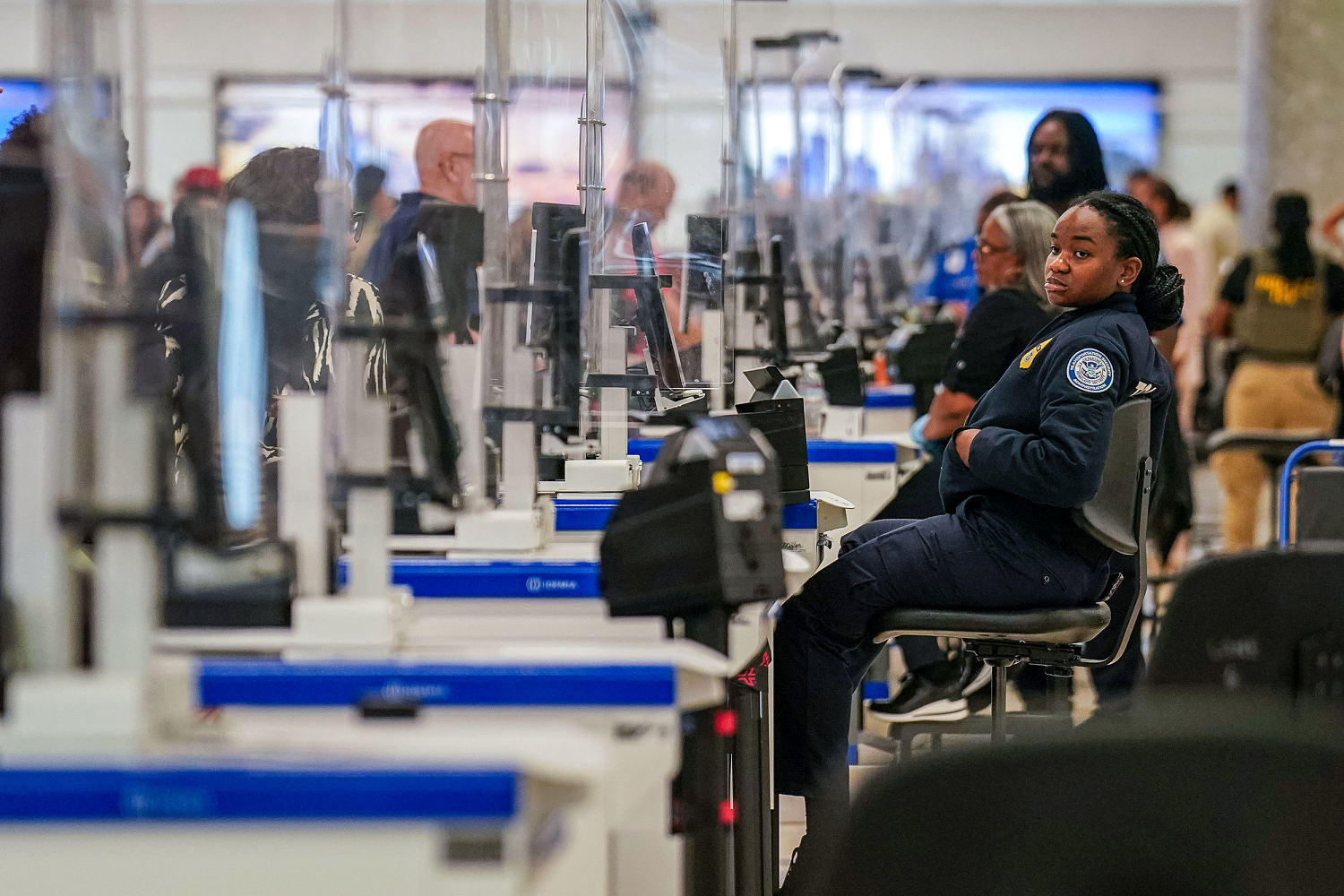
Behind the plexiglass, a TSA officer named Marcus—a hypothetical composite of the thousands currently working without the certainty of a paycheck—is staring at an X-ray screen. His eyes are stinging. He stayed up late last night trying to figure out which credit card has the lowest interest rate because the "funding impasse" in Washington D.C. means his next direct deposit is a ghost. He is exhausted. He is distracted. And he is the only thing standing between a pressurized metal tube at 30,000 feet and a potential catastrophe.
This is the hidden anatomy of a national travel meltdown. It isn't just about "chaos" or "delays." It is about a fundamental breach of the social contract.
The Invisible Price of a Stalled Pen
When Congress fails to pass a budget, the headlines usually focus on the "shutdown" or the political "brinkmanship." Those words are too clean. They smell like mahogany offices and expensive haircuts. They don't smell like the recycled air of a terminal where three thousand people are sweating through their sweaters.
The Transportation Security Administration (TSA) is an agency built on vigilance. Vigilance requires morale. It requires training. Most importantly, it requires people who aren't wondering if they can afford the gas to drive to work.
Currently, the agency is hemorrhaging talent. When the funding dries up or becomes a political football, the veteran officers—the ones who can spot a suspicious shadow on a thermal scan in half a second—are the first to leave. They go to the private sector. They go to local police departments. They go anywhere that doesn't treat their livelihood as a bargaining chip.
What’s left? A skeleton crew of the overworked and the new.
Consider the math. If a standard checkpoint is designed to process 200 passengers an hour with five open lanes, and you drop to two lanes because of staffing shortages, the math doesn't just double your wait time. It creates a compounding wave of failure. Missed connections lead to overbooked hotels, which lead to crowded standby lists, which lead to "gate lice"—the industry term for anxious travelers crowding the boarding area—which slows down the actual cleaning and turning of the aircraft.
One stalled pen in a subcommittee meeting in Washington creates a three-day ripple effect that can strand a family in Charlotte when they were supposed to be in Cancun.
The Myth of the Automated Solution
There is a common misconception that technology will save us. We see the sleek new scanners, the facial recognition gates, and the biometric "Pre-Check" lanes and assume the human element is becoming secondary.
That is a dangerous lie.
The machines are tools, not solutions. A high-tech CT scanner can produce a 3D image of your carry-on, but it still takes a trained human eye to interpret the density of a suspicious mass. It takes a human to manage the "behavior detection" that happens in the queue—noticing the passenger who is sweating too much for a 60-degree terminal or the one whose gait is unnaturally stiff.
When we stop funding the TSA, we aren't just slowing down the lines; we are thinning the shield.
Imagine a bridge. We can put the most advanced sensors in the world on that bridge to monitor vibrations and stress. But if we stop paying the engineers to look at the data, or if we stop funding the crews who patch the rebar, the sensors are just recording a slow-motion collapse.
The "chaos" people complain about on social media—the bins piled high, the shouting matches over 3.4-ounce liquids, the frantic sprints to Terminal C—is the sound of that bridge creaking.
The Human Cost of the "Sick-Out"
During the last major funding lapse, "blue flu" became a household term. TSA officers, technically essential employees who are required to work without pay during shutdowns, began calling out sick in record numbers.
Critics called it a strike. The officers called it survival.
If you aren't being paid, you can't afford childcare. If you can't afford childcare, you can't go to your shift at the airport. It isn't a political statement; it’s a household budget reality.
For the traveler, this manifests as the "closed" sign on the Pre-Check lane you paid $85 to use. It manifests as the sudden announcement that security is being consolidated into a single checkpoint on the other side of the airport.
But the real cost is deeper. It’s the erosion of trust.
When Marcus, our hypothetical officer, finally clears the woman in line 4B, he doesn't get a "thank you." He gets a glare and a sarcastic comment about how long it took. He absorbs the collective bile of a thousand frustrated strangers, all while knowing he can't buy groceries on the way home.
How long would you stay in that job?
The industry is already seeing a "retirement wave." The expertise is walking out the door, and it isn't being replaced. Training a new TSA officer isn't like training someone to flip burgers. It involves federal law, explosives detection, and a high-stakes psychological component. You can't just "hire more people" to fix a line that is three hours long today. You had to hire them six months ago.
The Economy of a Missed Connection
Beyond the emotional toll, there is a cold, hard economic reality to this funding failure. The American economy moves on wings.
When the "chaos" lingers, business travel plateaus. The consultant who was going to fly out for a site visit decides a Zoom call is "good enough" because they can't risk being stuck in an airport for six hours. The conference in Las Vegas sees a 15% drop in attendance because people are terrified of the return trip.
This isn't just a headache for airlines. It’s a blow to the hotels, the restaurants, the Uber drivers, and the dry cleaners.
Airports are cities. When the gates of the city are clogged, the city starves.
We are currently witnessing a system pushed to its absolute limit. Air travel volume has surpassed pre-pandemic levels, yet the infrastructure—the human infrastructure—is being treated as a discretionary expense. We are trying to pour a gallon of water into a pint glass and wondering why the floor is wet.
The woman in line 4B eventually makes it through. She sprints. She loses a shoe near the Auntie Anne’s. She reaches the gate just as the jet bridge door is being pulled shut.
The gate agent looks at her with a mix of pity and exhaustion. "Sorry," the agent says. "We had to close it. We're already behind schedule because of the crew's timing."
The woman sinks into a hard plastic chair. She cries. Not because she’s weak, but because she did everything right. She bought the ticket. She arrived early. She followed the rules. But the rules didn't account for a government that treats its most basic functions as a game of chicken.
The light on the jet bridge turns off. The plane pushes back. In Washington, the lights in the Capitol stay on late into the night, but the check still hasn't been signed.
The line at security is now ten people longer than it was five minutes ago. Marcus takes a deep breath, looks at the next gray bin, and tries to remember what a steady paycheck felt like.
The system isn't broken. It’s being dismantled, one unpaid shift at a time.