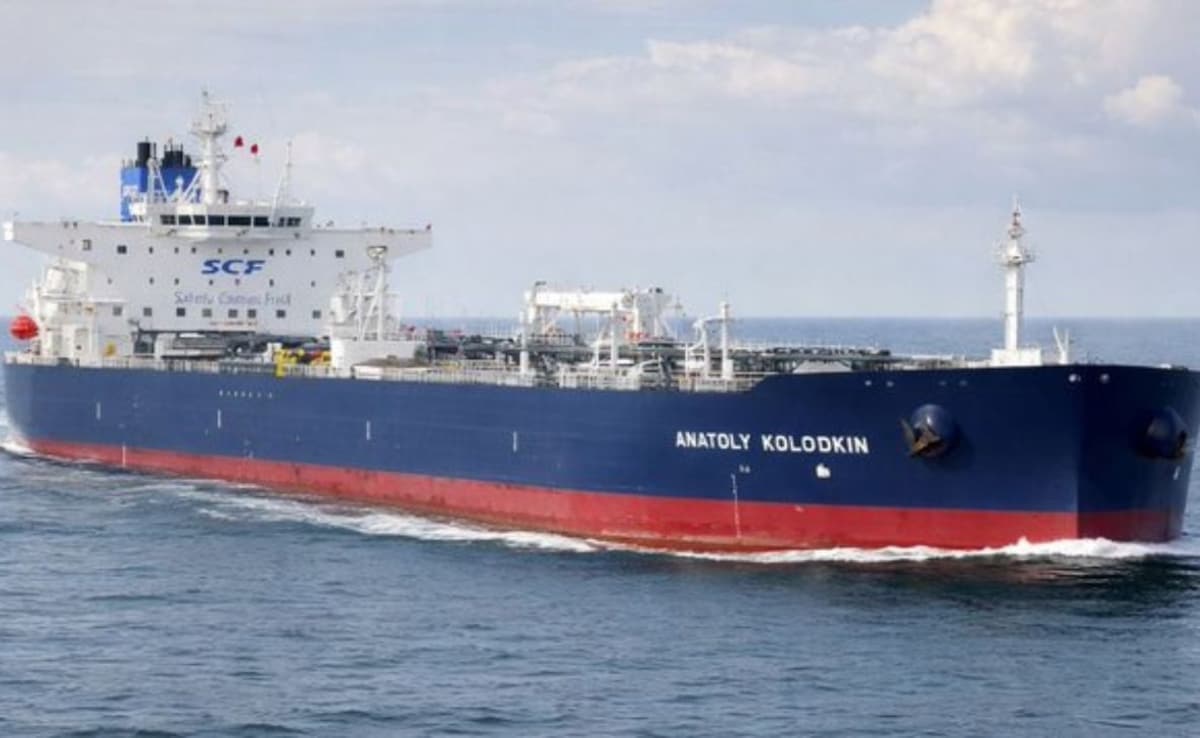
The arrival of a Russian tanker carrying roughly 700,000 to 730,000 barrels of crude oil at the Port of Matanzas represents more than a logistical recovery; it is a critical infusion of liquidity into a failing power grid. While previous reporting characterizes this as a "return" to normalcy, a structural analysis reveals this shipment serves as a temporary stabilizer for a system operating at a permanent deficit. To understand the impact of this cargo, one must deconstruct the Cuban energy crisis into its three primary drivers: technical obsolescence of thermoelectric plants, the collapse of preferential bilateral supply chains, and the shift from domestic refining to emergency spot-market imports.
The Triad of Cuban Energy Vulnerability
The Cuban electrical system operates under a structural fragility that renders a single shipment of 700,000 barrels both vital and insufficient. The crisis is defined by a three-part failure mechanism: If you liked this post, you might want to read: this related article.
- Generation Obsolescence: Most of Cuba’s thermoelectric plants (CTEs) have exceeded their 30-year operational life cycles by over a decade. These units require heavy crude oil, often high in sulfur, which increases corrosion rates and necessitates frequent, unplanned maintenance shutdowns.
- Refinery Throughput Constraints: The Cienfuegos and Havana refineries face intermittent operational status due to a lack of spare parts and chemical catalysts. When refineries are offline, the state cannot process crude into gasoline or diesel, forcing a reliance on direct fuel oil combustion for power, which is less efficient and more damaging to infrastructure.
- Credit Default and Liquidity Traps: Cuba’s inability to access standard international credit lines means energy procurement relies on high-risk, high-cost bilateral swaps. When these swaps—historically provided by Venezuela—fail, the island enters a state of acute energy poverty.
Quantifying the Russian Crude Influx
The current cargo, estimated at approximately 7.3 lakh (730,000) barrels, must be measured against the island's daily consumption metrics to gauge its true strategic value. Cuba’s daily oil consumption fluctuates between 120,000 and 150,000 barrels per day. Under optimal conditions, this single Russian shipment provides approximately five to six days of total national consumption if utilized across all sectors. However, the Cuban state does not distribute oil evenly; it prioritizes "baseload" power generation.
The Substitution Effect dictates how this oil will be used. Because domestic heavy crude production—roughly 38,000 barrels per day—is insufficient to run the CTEs at capacity, the Russian Urals or Siberian Light grades are likely being blended or used as direct feedstock for the Matanzas power complex. This shipment acts as a buffer against the "Zero-Output" scenario, where the grid frequency drops below 60Hz and triggers a total blackout, a phenomenon seen repeatedly in 2024 and 2025. For another look on this event, refer to the recent coverage from Forbes.
The Geopolitical Logistics of the Matanzas Terminal
The choice of the Matanzas terminal is a tactical necessity. As the island's only deep-water port capable of receiving Large Range (LR) or Suezmax-class tankers, Matanzas serves as the primary artery for the Cuban energy heartland. The logistics chain following the docking is fraught with friction:
- Pumping and Storage Degradation: The 2022 fire at the Matanzas supertanker base destroyed 40% of the terminal's storage capacity. Consequently, the current shipment cannot be stored as a strategic reserve; it must be offloaded directly into the pipeline system for immediate consumption or transferred to smaller coastal vessels for distribution to the Mariel and Santiago de Cuba plants.
- The Shadow Fleet Mechanism: The delivery of Russian oil to Cuba often involves "dark" shipping maneuvers to circumvent sanctions. This includes AIS (Automatic Identification System) manipulation and ship-to-ship (STS) transfers. These maneuvers add a "Complexity Premium" to the cost of the oil, estimated at $5 to $10 per barrel above the Brent or Urals spot price, further draining Cuban hard currency reserves.
The Venezuelan Shortfall and the Russian Pivot
The resumption of Russian shipments follows a significant contraction in Venezuelan exports to Havana. Historically, Venezuela supplied upwards of 100,000 barrels per day under the Caracas-Havana Accord. Due to PDVSA’s internal infrastructure collapse and the need to prioritize exports to the United States (via Chevron) to settle debts, Venezuelan supply to Cuba has dropped by nearly 50%.
Moscow’s intervention is not a gesture of charity but a calculated geopolitical asset swap. In exchange for energy security, Russia gains long-term access to Caribbean logistics hubs and potential concessions in the Cuban nickel and agricultural sectors. The "Russian Pivot" is a shift from the ideological subsidies of the Cold War to a transactional model where energy is a tool of regional influence.
Economic Cost Functions of Prolonged Blackouts
To evaluate the success of this shipment, one must look at the Opportunity Cost of Darkness. When the Russian tanker docks, it temporarily lowers the cost of the following economic variables:
- Industrial Stagnation: Without consistent power, food processing and cement production—two pillars of the Cuban internal economy—stop. The energy deficit leads to a direct contraction in GDP, estimated at 1% for every 100 hours of national blackout.
- Tourism Deterioration: The "Hard Currency" engine of Cuba, tourism, requires 24/7 refrigeration and air conditioning. Frequent power outages lead to a "Service Risk Premium," where international agencies de-list Cuban resorts, leading to a permanent loss of foreign exchange.
- Social Stability Costs: The Cuban government views energy as a security variable. The deployment of the Russian shipment to the capital, Havana, is a deliberate strategy to prevent urban unrest, even if it means rural provinces remain in "scheduled" blackouts for 12 to 18 hours a day.
The Failure of Renewable Transition
The urgency of the Russian tanker underscores the failure of Cuba’s "Policy of Prospective Development for Renewable Energy." The government set a goal of 24% renewable energy by 2030, yet the current share remains below 5%. The bottleneck is not a lack of wind or sun but a lack of Capital Expenditure (CAPEX) capability.
Transitioning to solar requires high upfront costs for panels and lithium-ion storage systems. Since Cuba cannot access World Bank or IMF loans, it remains trapped in a Carbon-Lock In. It must continue to spend its limited cash on expensive, imported Russian crude to keep its 40-year-old plants running, which prevents it from ever saving enough to invest in the solar infrastructure that would eliminate the need for the crude in the first place.
Strategic Forecast: The Inevitability of Grid Fragmentation
The 730,000 barrels currently at Matanzas will be exhausted within two weeks. Without a secondary tanker already in transit, the Cuban Electrical Union (UNE) will be forced to return to "Deficit Management" by mid-month. The long-term trend for the Cuban energy sector is not a return to stability but a move toward Grid Fragmentation.
The state is increasingly relying on Turkish "floating power plants" (Karpowerships) docked in Cuban harbors. These ships provide a modular, pay-as-you-go energy solution that bypasses the crumbling land-based CTEs. However, these ships require high-grade fuel oil, the exact cargo delivered by the Russian tanker.
The strategic play for the Cuban administration is no longer the restoration of a national grid, but the maintenance of "Power Islands"—Havana, the tourist zones, and the Special Development Zone of Mariel—while the rest of the country operates on a managed decline. The arrival of the Russian ship is a stay of execution, not a pardon. External stakeholders should monitor the frequency of these shipments as the primary indicator of Cuban state stability; if the interval between Russian or Venezuelan tankers exceeds 21 days, the risk of a total, unrecoverable "Black Start" failure of the national grid becomes the baseline expectation.