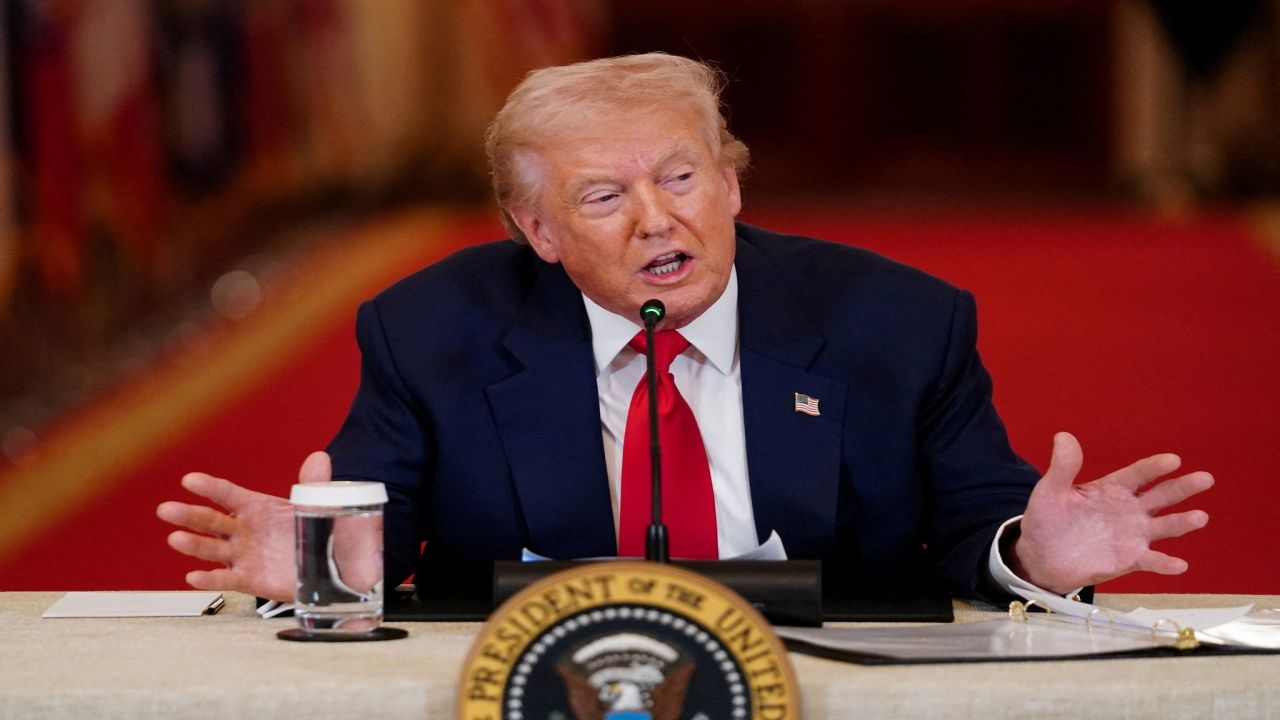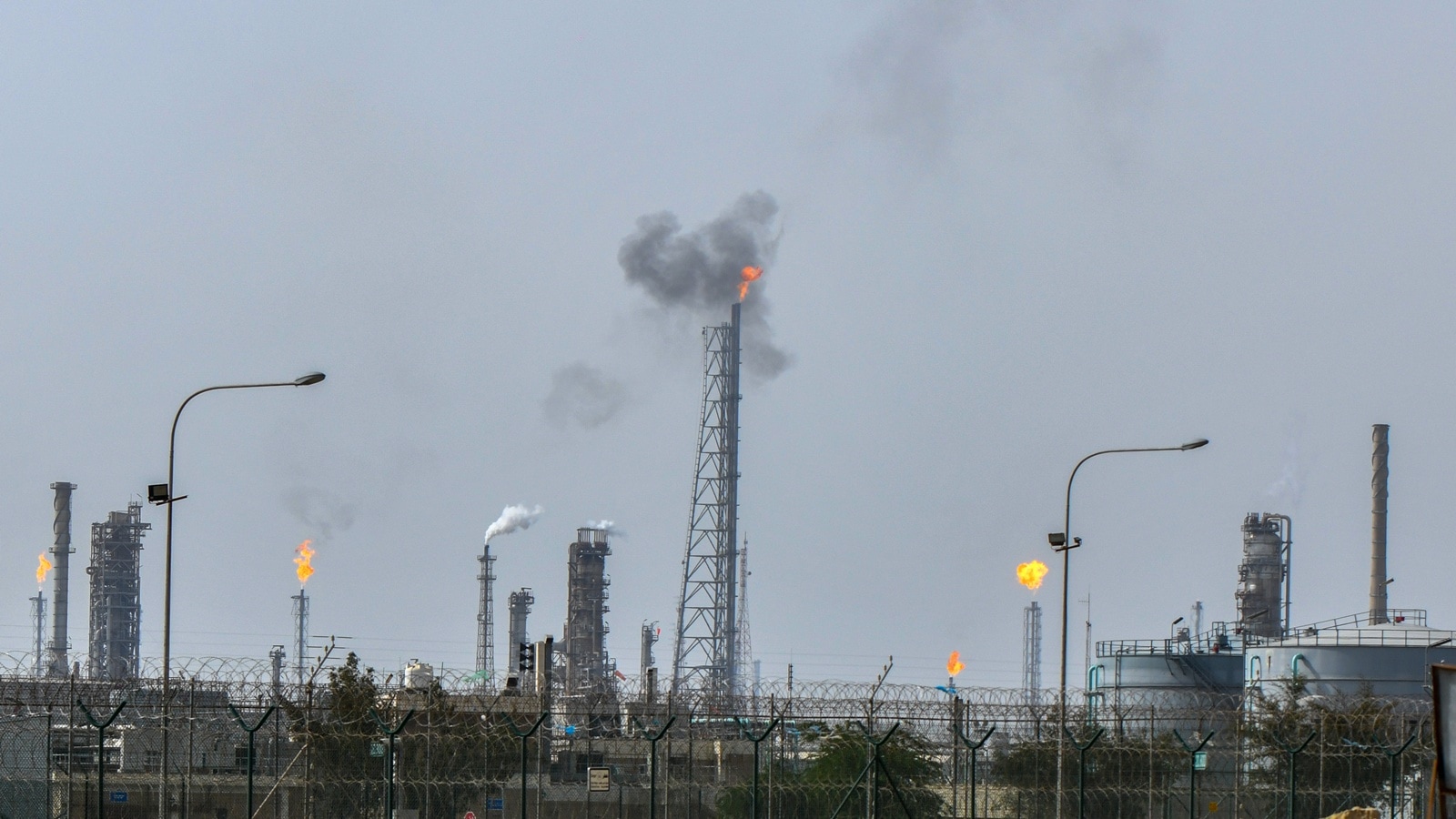
The financial media is having another classic meltdown. President Trump tells foreign nations to "grab it" regarding the blocked Strait of Hormuz, global oil prices jump over 4%, and predictably, the analyst class starts recycling the same tired doomsday scripts. They want you to believe that a 21-mile-wide strip of water in the Middle East holds the entire global economy hostage.
It is a massive grift.
The lazy consensus dominating your newsfeed right now is built on a fundamental misunderstanding of modern energy mechanics. Mainstream commentators look at a chart, see a spike in Brent crude, read a provocative headline about a prime-time White House address, and scream that the sky is falling.
I have watched energy traders play this exact fear-mongering game for over fifteen years. They thrive on the "geopolitical risk premium." It is a phantom tax they slap on barrels whenever someone breathes heavily near a Persian Gulf choke point.
Let's dismantle the panic and look at the hard reality that the clickbait articles are completely ignoring.
The Myth of Absolute Oil Scarcity
The competitor pieces love to throw around the big, scary statistic: 20% of the world’s oil flows through the Strait of Hormuz. They present it as if that 20% is just going to vanish forever, triggering immediate global collapse.
This ignores how commodity markets actually function. Oil is fungible.
When the Strait gets choked, the immediate reaction is panic buying and algorithmic trading spikes. That is what you are seeing with the 4% to 5% jumps. But physical supply and demand do not rewrite themselves overnight based on a politician's speech.
What the doomers ignore are the massive global buffers that did not exist during the oil shocks of the 1970s:
- The US Production Fortress: The United States is pumping historic amounts of crude. We are the number one producer on the planet. The administration is not wrong when it points out that the US imports virtually no oil through Hormuz anymore. We are insulated in a way we have never been before.
- Massive Commercial Inventories: Global commercial stocks are vast. Refiners do not run out of feedstock the day a strait closes.
- Alternative Routes: While not a 1-to-1 replacement for 20 million barrels a day, pipelines across Saudi Arabia to the Red Sea and through the UAE to the Gulf of Oman exist specifically to bypass the Strait. They are not fully utilized because they cost more to use than simply sailing through the Persian Gulf. Crisis economics change that math instantly.
Why the "Grab Hormuz" Rhetoric is Actually a Massive Bluff
Let's address the elephant in the room: Trump telling Asian and European nations that they must "grab it" and protect the shipping lanes themselves. The media calls this "leaving markets guessing."
It is not a puzzle. It is pure leverage.
The United States has spent decades acting as the unpaid security guard for global oil lanes that primarily feed Asian markets. China, India, and Japan are the massive importers relying on Hormuz, not the United States.
By aggressively signaling that the US is perfectly fine letting those dependent nations handle the heavy lifting, the administration is forcing a massive game of geopolitical chicken.
Is there a downside to this aggressive, contrarian stance? Absolutely. It alienates traditional allies, shatters NATO solidarity, and drives localized spikes in regional pump prices. I've seen knee-jerk isolationism backfire on corporate balance sheets before, and it can certainly backfire on a superpower.
But calling it "market confusion" misses the point. It is a deliberate strategy to force a burden-shift. The administration knows that the countries desperately needing that oil will eventually be forced to secure it, pay a premium for American crude, or negotiate directly to resolve the blockade.
The False Premise of Your Panic
People asking "How high will gas prices go?" or "When will Hormuz reopen?" are asking the wrong questions.
The right question is: Who profits from you believing the panic?
When prices spike on rhetoric, physical oil does not suddenly become harder to pull out of the ground. The cost of extraction did not go up because a speech was delivered.
The people winning right now are the speculators who bought call options on crude futures yesterday and the massive energy giants holding unhedged physical inventory. They need you terrified so they can offload their positions at inflated prices.
How to Actually Play This Volatility
Stop listening to network anchors who could not tell the difference between heavy sour crude and light sweet crude if their lives depended on it. If you want to navigate this without losing your shirt, you need to ignore the noise and watch the physical reality.
- Watch the Freight Rates, Not the Futures: If you want to know if the Strait is actually opening or if alternative routes are working, look at the cost to charter a Very Large Crude Carrier (VLCC). If insurance and freight rates are skyrocketing but actual volume is still quietly moving via pipelines or dark-fleet ship-to-ship transfers, the "shortage" is purely psychological.
- Look at the Spreads: Look at the price difference between Brent crude (the global benchmark highly exposed to Hormuz) and West Texas Intermediate (WTI, the US benchmark). If the spread blows out massively, it proves that the crisis is a localized transport issue, not a global supply destruction. It means there is plenty of oil; it is just in the wrong place.
- Bet on the Reversion: Geopolitical risk spikes are historically short-lived. Even the most severe blockades in history eventually dissolve because the producers (like Iran or Iraq) desperately need to sell the oil to survive. They cannot eat oil. They cannot build infrastructure with unrefined crude sitting in stranded reservoirs. They will eventually flood the market again to make up for lost revenue.
The media wants you glued to the screen, terrified that $150 or $200 oil is an absolute certainty. It isn't. It is a projection based on the assumption that global supply chains are rigid, fragile, and incapable of adapting.
They are not. They are fluid, greedy, and incredibly efficient at finding workarounds when the price is right.
Stop falling for the panic. The oil is still there.
Would you like me to analyze the specific pipeline capacity that bypasses the Strait of Hormuz to see how much of that 20 million barrel-per-day flow can actually be diverted?