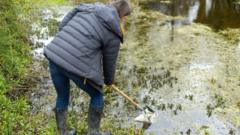
Most farmers look at a dried-up, overgrown hole in the corner of a field and see a waste of space. They see a historical relic from the days when horses needed a drink or a place to wash cartwheels. For decades, the trend was simple: fill them in, plough them over, and get more crops. We lost nearly half of our ponds in the UK and Europe during the 20th century. That was a massive mistake.
It turns out those muddy, neglected pits are actually the most important biodiversity hotspots on a farm. When you bring water and wildlife back to farmland ponds, you aren't just making the place look prettier. You're fixing a broken ecosystem. I’ve seen ponds that looked like literal trash heaps—cluttered with old tires and choked by willow scrub—turn into thriving nurseries for great crested newts and dragonflies in just one season. It doesn't take a miracle. It just takes a digger and some common sense.
Why Ghost Ponds Matter More Than You Think
The term "ghost pond" sounds spooky, but it’s just a pond that was filled in and buried under topsoil. Underneath that dirt, the original seed bank often stays dormant for half a century. Research from University College London (UCL) proves that once you dig these ponds back out, ancient aquatic plants can sprout from seeds that have been buried for over 50 years. That’s insane.
When people talk about restoration, they usually think about planting new stuff. Don't do that. The best farmland pond restoration is about uncovering what’s already there. You don’t need to buy expensive pond liners or fancy lilies from a garden center. You just need to scoop out the scrub and let the light hit the mud.
Digging Into the History
Many of these ponds were originally marl pits. Farmers dug them to get at the clay or lime underneath to spread on their fields. When mechanical farming took over, these pits became a nuisance. They were dangerous for cattle, they got in the way of big tractors, and they collected rubbish.
But here’s the thing. A farm with a network of healthy ponds is far more resilient than one without them. Ponds act as giant sponges. They hold water during heavy rains, which stops the field from flooding and prevents soil runoff from washing into local rivers. They’re basically free infrastructure that most farmers are currently ignoring.
The Secret Wildlife Benefits Nobody Tells You
Most conservation talk focuses on forests or hedgerows. Those are great, but ponds punch way above their weight. A single pond can support more species than an entire wood. When you bring water back, you’re creating a pit stop for migrating birds and a breeding ground for amphibians.
Think about the great crested newt. It's the poster child for pond conservation. They need specific types of ponds—ones with plenty of sunlight and not too many trees blocking the sky. When a pond gets overgrown, it becomes cold, dark, and filled with rotting leaves. That’s a death sentence for newts. They can't survive there. By clearing out the scrub, you’re essentially turning the heater back on and inviting them back for dinner.
It Is Not Just About the Water
Birds like yellowhammers and linnets rely on the insects that live around pond margins. If you have a farm with no water, you have a farm with fewer insects. If you have fewer insects, your bird populations will crash. It’s a chain reaction. I’ve seen fields where the bird song was basically non-existent until the local pond was cleared. Within two years, the noise was deafening. It’s that fast.
The Massive Mistake of Leaving Them Alone
The biggest myth in conservation is that "nature knows best" and we should just leave things alone. That's wrong. If you leave a small pond alone, it will eventually fill with sediment and turn into a wet woodland. That’s called succession. While wet woodland is fine, it doesn't provide the same habitat as open water.
You have to be aggressive.
- Clear the trees from the southern side to let the sun in.
- Dredge the rotten leaves out to stop the water from turning toxic.
- Don't worry about it looking like a muddy mess at first.
A freshly dug pond looks like a bomb site for about three months. It’s brown, it’s ugly, and it looks like you’ve ruined the land. Then, the first rains come. The dormant seeds wake up. The water clears. By next summer, it will be teeming with pond skaters and damselflies.
Why Fish Are Often the Enemy
Here’s a hard truth: if you want a wildlife pond, don't put fish in it. If a pond has fish, it probably won’t have many newts or rare insects. Fish eat everything. They eat the larvae, they eat the eggs, and they stir up the mud, which makes the water cloudy. Farmers often think they’re doing a good thing by stocking a pond, but they’re actually killing the biodiversity. Unless you’re running a commercial fishery, keep the fish out.
Managing the Margins for Maximum Impact
The area around the pond is just as important as the water itself. You want a "buffer strip" of long grass. This acts as a filter for any pesticides or fertilizers running off the field. It also gives frogs and toads a place to hide when they aren't in the water.
If the pond is right up against a tilled field, the water will be full of chemicals. That kills the life you're trying to save. Aim for at least a six-meter buffer of rough grass. It doesn't cost much to leave that bit of land alone, and the payoff in biodiversity is huge.
The Role of Livestock
You might think cows in a pond are a bad idea. Actually, it’s complicated. If a hundred cows are pooping in a small pond every day, it’s a disaster. But a little bit of grazing is actually good. The hooves create "poaching"—disturbed ground that provides a unique habitat for rare plants like mudwort. You want some shallow, muddy edges, not just deep water. Variety is what makes a pond great.
Practical Steps to Bring Your Pond Back to Life
If you’ve got a pond that’s currently a thicket of thorns and mud, don't overthink it. You don't need a degree in ecology to start.
First, get a digger in during the autumn or winter. This is when the wildlife is least active. Don’t try to do this in the spring when everything is breeding. You want to remove about two-thirds of the scrub around the edges. Focus on the south side. The more sun that hits the water, the better.
Second, scoop out the silt. Don’t take everything—leave some mud—but you need to get rid of the thick layer of black, smelly sludge at the bottom. That sludge is usually just decades of rotted leaves that have turned the water acidic and oxygen-poor. Spread that silt on the nearby field; it’s actually decent fertilizer.
Third, leave it alone. Seriously. Don’t go buying plants from a garden center. You’ll probably just introduce invasive species like New Zealand Pigmyweed, which is a nightmare to get rid of. Trust the seed bank. Trust the wind and the birds to bring in the local plants that belong there.
Connecting the Dots
A single pond is good, but a network of ponds is better. Think of them like a chain of hotels for wildlife. If a species fails in one pond, they can migrate from the one next door and recolonize it. This is called a "stepping stone" habitat. If your neighbor has a pond, try to restore yours too. You’re creating a corridor that allows wildlife to move through the landscape safely.
The Economic Side of the Argument
Farmers are business people. I get that. Devoting land to a pond has to make sense on the balance sheet. Thankfully, environmental schemes are finally catching up. In the UK, the Sustainable Farming Incentive (SFI) and other local grants often pay for pond creation and management.
Beyond the direct payments, there’s the pest control aspect. Ponds attract dragonflies, hoverflies, and birds. These are natural predators for the pests that eat your crops. If you have a healthy population of lacewings and ladybugs living in your pond margins, you might find you need fewer chemical sprays. It’s an integrated approach that saves money in the long run.
Stop seeing ponds as a problem to be solved or a hole to be filled. See them as a low-maintenance way to improve the health of your farm. The water is there, the seeds are there, and the wildlife is just waiting for an invitation.
Grab a spade or hire a JCB. Dig out the history and let the light back in. It’s one of the few things in farming where you get a massive result for a relatively small amount of work. Just keep the fish out and the sun in. Your land will thank you for it.