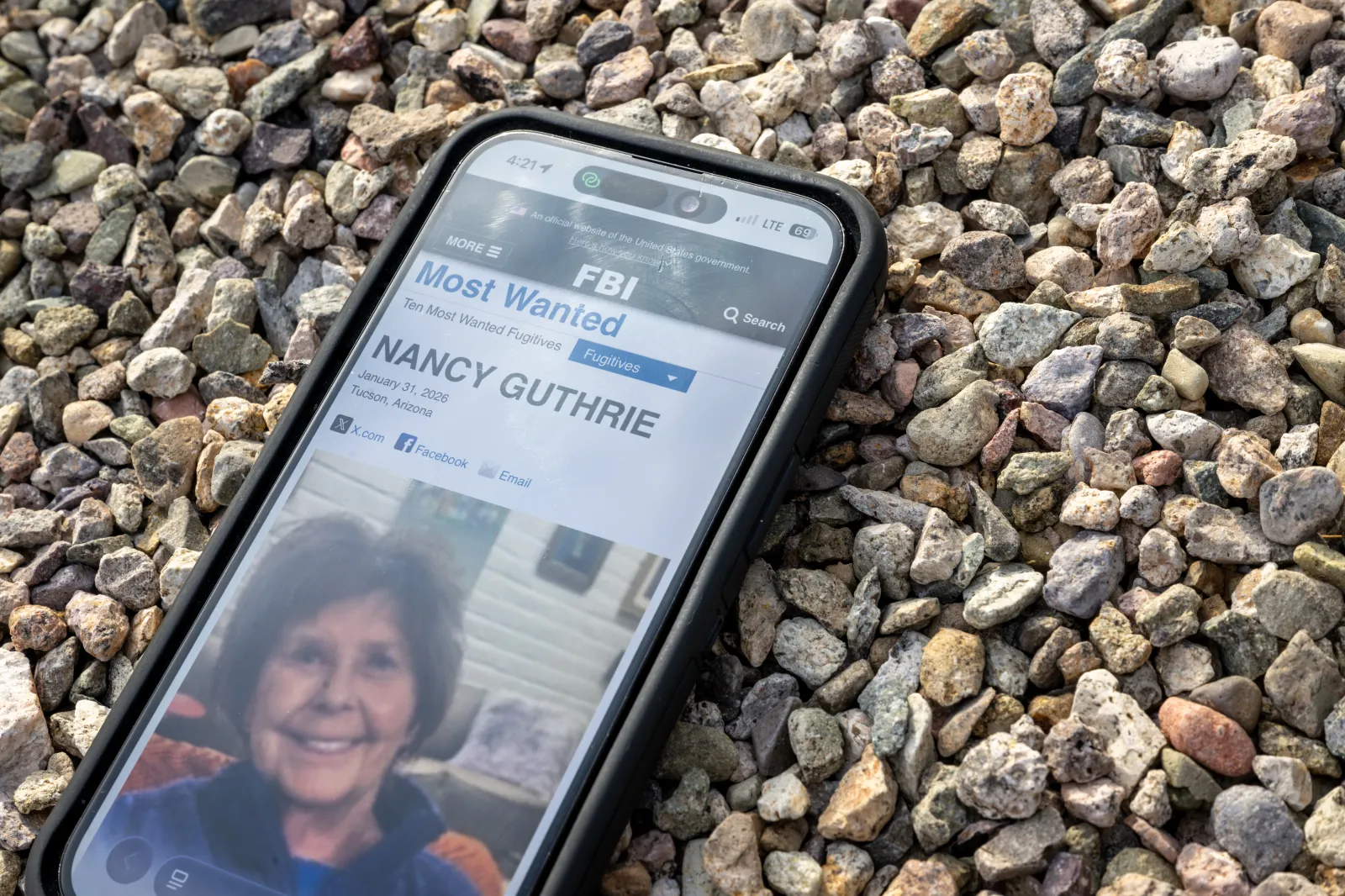
The true-crime machine has a predictable, exhausting appetite for "bombshells." When a high-profile disappearance like Nancy Guthrie’s stalls, the vacuum is invariably filled by retired detectives or armchair profilers offering "insider" updates that do little more than muddy the waters. The latest narrative—that this was a "well-planned job" involving "multiple suspects"—is the lazy consensus we need to dismantle.
It is easy to sell a conspiracy. It is much harder to look at the statistical likelihood of a botched domestic incident or a random act of opportunity. By labeling this a sophisticated operation, commentators are providing the public with a cinematic comfort blanket. They want us to believe in a world where criminals are Oceans Eleven-level tacticians, rather than desperate individuals making messy, impulsive decisions. Discover more on a connected issue: this related article.
I have spent years dissecting how investigations collapse under the weight of their own mythology. When you frame a case as a "mastermind" operation, you stop looking for the simple, ugly mistakes that actually solve crimes.
The Myth of the Professional Hit
Let’s talk about the "multiple suspects" theory being paraded around. In the world of actual criminal enterprise, involving more people increases the risk of discovery exponentially. Every additional person is a loose tongue, a digital footprint, and a DNA source. More analysis by Reuters delves into comparable perspectives on the subject.
If this were truly a "well-planned job," as the headlines suggest, we wouldn’t be seeing the chaotic trail of breadcrumbs usually associated with these cases. Professional kidnappers for hire—a demographic that exists almost exclusively in Liam Neeson movies—don't target private citizens without a massive, liquid payoff. If the motive isn't immediate financial ransom, the "professional" theory falls apart.
The "well-planned" narrative is often a placeholder for "the police haven't found the body yet." It’s an excuse for a lack of progress. If we assume the perpetrators were geniuses, we forgive the investigators for being outmatched.
The Ex-Detective Trap
Why do we give so much weight to the "ex-detective" archetype? These individuals are often removed from the current forensic capabilities and real-time data streams of an active investigation. They are looking at the case through the lens of 1990s policing, where "gut feeling" and "street smarts" took precedence over geospatial analysis and advanced digital forensics.
When a former investigator drops a "bombshell" claim, they are rarely working with new evidence. They are re-interpreting old data to fit a more dramatic narrative. It’s a performance. They are selling a version of the story that keeps them relevant in the 24-hour news cycle.
In my experience, when a case is described as "planned," it usually just means the perpetrator had a head start. It doesn’t mean they had a blueprint.
What People Also Ask (And Why They Are Wrong)
- "Is there a link to organized crime?" Probably not. Organized crime is a business. Businesses avoid the heat that comes with high-profile kidnappings of non-associates. It’s bad for the bottom line.
- "How could one person do this alone?" Easily. Most crimes of this nature are solo efforts. Managing a "team" for a kidnapping is a logistical nightmare that almost always leads to a rat.
- "Why haven't the suspects been caught?" Because the "multiple suspects" might not exist. Police are often forced to follow every lead, even the ones generated by public hysteria, which diverts resources from the most likely culprit: someone in the immediate or secondary social circle who acted alone.
Statistical Reality vs. Narrative Fiction
If you look at the Federal Bureau of Investigation (FBI) Uniform Crime Reporting data or similar metrics from international agencies, the "stranger danger" kidnapping by a tactical squad is a statistical anomaly.
Imagine a scenario where a local resident with a history of minor boundary-crossing sees an opportunity. They don't need a "well-planned" strategy. They just need sixty seconds of privacy and a vehicle. This is far more terrifying than a professional hit squad, which is exactly why the public prefers the "multiple suspects" myth. It’s easier to sleep at night if you believe you aren't at risk unless a syndicate targets you.
The Cost of the "Bombshell"
Every time a news outlet pushes a "bombshell" claim from an outsider, they create a "noise" problem for the actual detectives on the case. Tips flood in based on the new theory. People start "seeing" suspicious groups of men in black vans. The investigation is forced to pivot to appease public pressure, even if the evidence points in a completely different, more mundane direction.
We are seeing a total failure of skepticism. We are choosing the most exciting explanation over the most probable one.
The Anatomy of a Flawed Investigation
To understand why the Guthrie case is stalled, we need to stop looking at the "planning" of the suspects and start looking at the "gaps" in the initial response.
- The Golden Hour Myth: People think if a case isn't solved in 48 hours, it's a cold case. This leads to rushed conclusions and the naming of "persons of interest" who are later cleared, ruining lives in the process.
- Digital Blind Spots: We assume technology is a magic wand. If there’s no CCTV, we assume the suspects were "professionals" who avoided the cameras. In reality, there are massive gaps in surveillance even in suburban areas.
- Tunnel Vision: Once the "multiple suspects" theory takes hold, any evidence of a lone actor is often dismissed as an outlier.
The truth about the Nancy Guthrie case isn't buried in a sophisticated criminal plot. It’s likely buried in a simple piece of evidence that has been overlooked because it wasn't "dramatic" enough to make the evening news.
Stop waiting for the "multiple suspects" to be unmasked in a coordinated raid. Start looking at the people who had the most to gain from her silence, or the most proximity to her routine.
The most "well-planned" part of this entire story is the way the media has managed to convince you that this is a movie plot rather than a tragedy.
Ignore the "bombshells." Follow the silence.