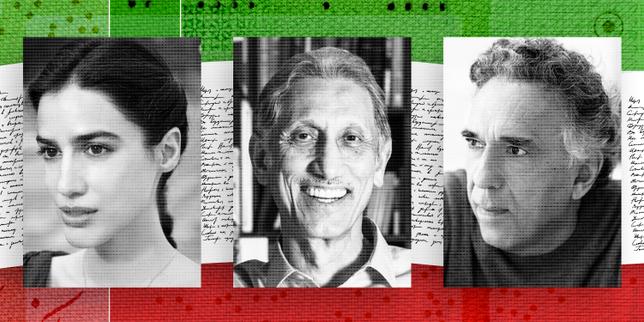
In Beirut, the air usually carries a specific weight. It is a thick, humid mixture of sea salt, roasted coffee, and the faint, metallic scent of construction dust that never quite settles. But lately, for those like Charif Majdalani who walk its cracked pavements, the air has changed. It feels thinner. It feels like a long-held breath that everyone is too terrified to let out.
Majdalani is a man who builds worlds with words, a chronicler of Lebanese resilience who has spent years documenting how a society survives the unthinkable. Yet, standing on the balcony of his Mediterranean life, he watches a familiar, dark tide rolling back in. Lebanon is not walking into a new conflict. It is being dragged, fingernails scraping against the limestone, into a calamity it did not choose and cannot afford.
Imagine a house that has survived a fire, an earthquake, and a flood in a single decade. The windows are boarded up, the plumbing is a memory, and the family inside is finally, painstakingly, beginning to sweep the glass from the floor. Then, through no fault of their own, the neighbor’s house catches fire, and the wind begins to blow the embers directly toward their roof.
That is the visceral reality of Lebanon today.
The Weight of Invisible Anchors
The tragedy of the modern Lebanese state is its lack of agency. For a nation that prides itself on being the "Paris of the Middle East"—a title that feels more like a haunting than a compliment these days—it possesses the autonomy of a leaf in a gale. Majdalani observes that the country is "caught in the gears." It is a mechanical inevitability. When the regional powers shift their weight, Lebanon is the joint that cracks.
Consider the average day in a Beirut suburb. It isn't just about the absence of electricity or the way the Lebanese Pound has evaporated into a ghost of its former value. It is the psychological tax of the "waiting." People check the news not to see what their government is doing—they have long since abandoned the hope of a functioning state—but to see what others are doing with their soil.
The border to the south is a jagged line on a map that feels more like a ticking clock. Every exchange of fire, every drone that hums through the blue sky, sends a shudder through the cafes in the north. The Lebanese people are experts at the art of the "normal." They will go to lunch, they will dress in their finest silks, and they will laugh loudly. But look at their hands. They are clutching their phones, scrolling for the one headline that confirms the sweep of the next disaster.
A Cartography of Misfortune
Majdalani’s perspective isn't rooted in simple pessimism; it is grounded in the brutal mathematics of history. Lebanon has become a theater where the play is written by foreign playwrights and performed by local actors who didn't get to see the script before the curtain rose.
The economic collapse of 2019 was supposed to be the bottom. The port explosion of 2020 was supposed to be the final, tragic exclamation point. We thought the debt had been paid in blood and currency. Instead, the geopolitical landscape has shifted, pulling Lebanon back into a vortex of regional confrontation.
The struggle is no longer just about sovereignty. It is about the fundamental right to exist without being a footnote in someone else's war. When a country is "trained to its own defense," as Majdalani puts it, it means the body is moving against its own will. It is a seizure. A national convulsion.
The Human Cost of Geopolitical Chess
Let’s look at a hypothetical man named Elias. He is sixty-four. He owns a small bookstore near the university. Elias has lived through the civil war, the Syrian occupation, the 2006 war, and the "Thawra" protests. He has rebuilt his storefront three times. He keeps his savings in a shoebox because the banks have become black holes that swallow life's work.
Elias represents the exhausted soul of the country. He doesn't care about the grand strategies of Tehran, Washington, or Tel Aviv. He cares that his daughter cannot find baby formula and that the light in his hallway only flickers to life for two hours a day. For Elias, and for millions like him, the "new calamities" Majdalani speaks of aren't political talking points. They are the reason his heart skips a beat every time a car backfires.
This exhaustion is the most dangerous export of the current crisis. When a population is this tired, the social fabric starts to fray in ways that are hard to stitch back together. The empathy that usually binds the Lebanese people—their legendary hospitality and shared suffering—is being replaced by a frantic, individual survivalism.
The Vanishing Horizon
What happens to a culture when it can no longer see a week into the future?
In most parts of the world, people plan for next year. They save for retirement. They dream of renovations. In Lebanon, the horizon has shrunk to the next twenty-four hours. This temporal claustrophobia defines every interaction.
Majdalani notes that the country is being swallowed by "new calamities" while the old ones haven't even been processed. It’s a stacking of grief. You cannot mourn the loss of your savings when you are worried about the roof over your head. You cannot demand justice for the port blast when the drums of a new war are drowning out your voice.
This isn't just a political crisis. It is an ontological one. It is the steady erosion of what it means to be a citizen.
The Ghost in the Machine
The irony of Lebanon’s current predicament is that the country is more connected to the world than ever. The diaspora is vast, sending back the "fresh dollars" that keep the heart beating. Yet, physically and politically, it has never felt more isolated. It is a luxury cruise ship with a dead engine, drifting into a storm while the passengers try to keep the ballroom lights on.
We often talk about "failed states" as if they are abstract concepts found in textbooks. Lebanon is a living, breathing laboratory of what happens when the state disappears but the people remain. The resilience of the Lebanese is often praised, but Majdalani is right to be wary of that praise. Resilience is often just another word for "having no other choice."
The world looks at Lebanon and sees a flashpoint on a map. They see "proxies" and "interests." They see a buffer zone.
They don't see the woman in Tripoli who is teaching her son to play the violin because she wants him to know there is something more beautiful than the sound of a jet engine. They don't see the farmers in the Bekaa Valley who are planting seeds in soil they might have to abandon by harvest time.
The tragedy isn't just the war that might come. The tragedy is the peace that is being stolen, day by day, by the mere threat of it.
The Mediterranean Silence
There is a specific kind of silence that falls over the Mediterranean when the sun begins to set. On a good day, it is peaceful. It is the sound of the tide pulling back from the pebbles.
But now, that silence is heavy. It is the silence of a theater before the lights go out. It is the silence of a writer like Charif Majdalani, looking out at the city he loves, realizing that the story is once again being taken out of his hands.
The gears are turning. The embers are blowing. The house is standing, for now, but the wind is picking up, and the sky is turning the color of a bruise.
Lebanon is waiting. And the world, as it always does, is watching from a safe distance, waiting to see if the house holds or if it finally turns to ash.