Tofu is boring. For decades, that was the unspoken consensus among younger Japanese men. While their grandparents saw it as a staple of longevity, the under-40 crowd increasingly viewed those white, wobbling blocks as "old people food" or a bland side dish for dieters. Sales were stagnant. The traditional tofu shop was disappearing from street corners. If you're a CEO in the Japanese food industry, that's a nightmare scenario.
Sagamiya Foods didn't just try to tweak their recipe to fix this. They blew up the entire marketing playbook. They realized that to sell soy to a generation raised on Gundam and video games, they had to stop talking about health and start talking about "manliness." It sounds ridiculous because it is. But it worked.
The problem with being too healthy
In the Japanese market, tofu has a persistent "feminine" image. It's marketed for skin health, weight loss, and delicate soups. If you're a hungry 25-year-old guy looking for a satisfying dinner, a soft block of silken tofu doesn't usually make the cut. Sagamiya Foods President Shugo Toriyama saw this gap and jumped into it. He knew that the "healthy" angle was actually a barrier for a specific, high-spending demographic.
Young men wanted something with "bite." They wanted something that felt substantial. Most importantly, they wanted something that didn't feel like a chore to eat. By leaning into a rugged, almost aggressive aesthetic, Sagamiya managed to turn a commodity into a lifestyle product. They stopped selling protein and started selling an attitude.
Zaku Tofu and the power of the fanboy
The real turning point came when Sagamiya partnered with the Mobile Suit Gundam franchise. This wasn't just a logo on a box. They created "Zaku Tofu"—green-tinted edamame-flavored tofu molded into the shape of the iconic antagonist's helmet.
It was a stroke of genius. It tapped into deep-seated nostalgia and "otaku" culture. Suddenly, men who wouldn't be caught dead browsing the tofu aisle were clearing out supermarket shelves. The packaging looked like a model kit. The promotional videos featured dramatic orchestral music and military-style briefings.
They sold over 4.6 million units of the Gundam-themed series. Think about that. That's nearly 5 million blocks of soy curd sold purely because they looked like a robot from a 1970s anime. It proved that in a saturated market, your product matters less than the story you tell about the person eating it.
Beyond the gimmick
Gimmicks die fast if the product is terrible. Sagamiya knew they couldn't just rely on plastic molds. They had to change the texture. Most traditional tofu is watery. To appeal to the "manly" palate, they developed "Beyond Tofu"—a line that mimics the creaminess and fat content of cheese.
They used low-fat soy milk cream to create a texture that can be grated, melted, or eaten with a beer. It’s dense. It’s salty. It feels like "junk food" even though it’s still fundamentally soy. By shifting the flavor profile from "clean and light" to "rich and savory," they moved tofu from the salad bowl to the bar snack plate.
This is a classic lesson in repositioning. If your audience thinks your product is for someone else, you don't just tell them they're wrong. You rebuild the product until it fits their self-image. For Sagamiya, that meant making tofu that goes well with a cold lager instead of a bowl of brown rice.
Why the manly angle matters for SEO and branding
When you look at search trends in the food space, "healthy" is a crowded keyword. Everyone is fighting for it. But "tofu for men" or "high-protein snacks for gamers" is a wide-open field. Sagamiya didn't compete on the "healthy" turf. They built their own stadium.
- Differentiation: They stopped competing with other tofu brands and started competing with cheese and meat snacks.
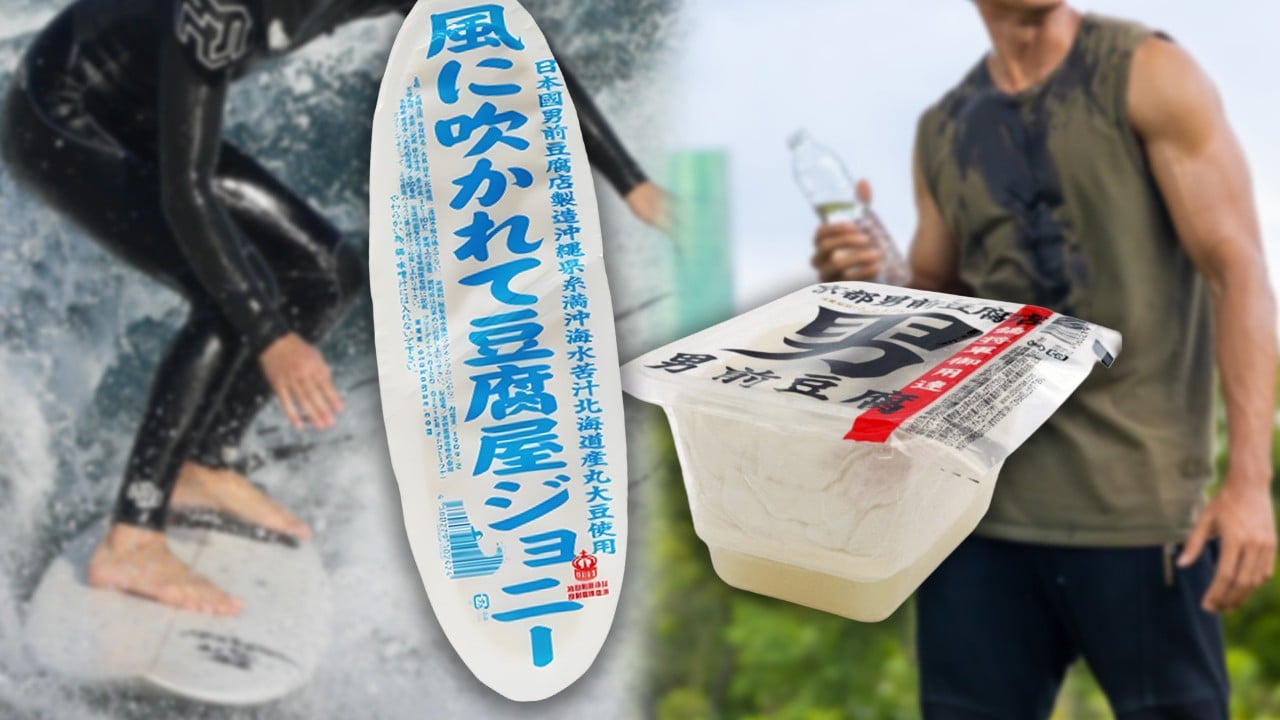
- Visual Identity: The black and silver packaging of their "Otoko-mae" (Handsome Man) style products stands out against the sea of white and blue plastic in the dairy aisle.
- Niche Loyalty: By targeting fans of specific franchises, they guaranteed a base of customers who would buy the product just to collect the container.
How to apply the Sagamiya method to your brand
You don't need a giant robot license to pull this off. You need to identify who isn't buying your product and figure out what "cultural baggage" is stopping them. If you sell yoga mats, maybe you're missing the tactical fitness crowd. If you sell tea, maybe you're missing the high-energy coffee drinkers.
Start by looking at your packaging. Is it too safe? Most brands try to appeal to everyone and end up appealing to no one. Sagamiya was okay with alienating traditionalists if it meant winning over the youth. They took a risk on "edgy" marketing and it paid off because it felt authentic to the subcultures they were targeting.
Don't be afraid to be weird. In a world of polished, corporate-speak branding, a green block of soy shaped like a space helmet is refreshing. It shows personality. It shows that there's a human behind the brand who actually likes the things their customers like.
Stop trying to be "premium" and start trying to be interesting. Use aggressive colors. Use bold fonts. Change the shape of the product itself. If you can make someone laugh or feel nostalgic while they’re standing in a grocery aisle, you’ve already won half the battle. Go look at your current marketing and find the "boring" parts. Cut them. Replace them with something that has a bit of teeth.