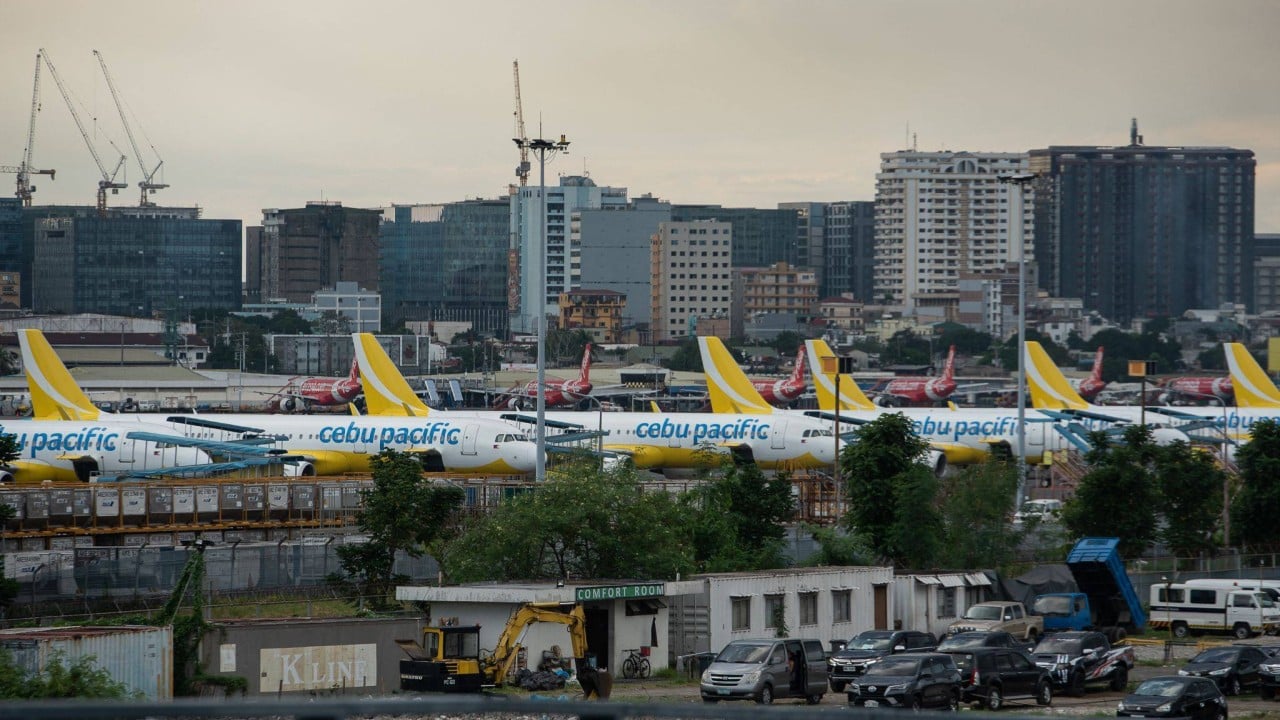
The headlines are screaming about a "distinct possibility" of grounded planes. President Marcos Jr. is sounding the alarm on a jet fuel shortage. The public is bracing for a logistical meltdown.
They are all looking at the wrong problem.
The standard narrative—that a fuel shortage is a looming catastrophe for the Philippines—is a lazy consensus built on a fundamental misunderstanding of aviation economics and national infrastructure. We are told that "connectivity" is the lifeblood of the archipelago and that any disruption is a death knell for the economy.
I have spent years watching airlines burn through cash just to maintain "market share" on routes that shouldn't exist. I have seen carriers prioritize vanity metrics over fuel efficiency and operational sanity. If the taps run dry, it isn't a crisis. It’s a long-overdue correction.
The Myth of the Essential Flight
Most people assume every flight on the board is a vital link in the global supply chain. It isn't. A massive percentage of domestic Philippine air travel is "induced demand"—low-cost carrier (LCC) routes propped up by cheap fuel and aggressive subsidies that do little more than congest the already suffocating airspace over Ninoy Aquino International Airport (NAIA).
When the President warns of grounding planes, he’s inadvertently describing a forced audit of utility.
In a fuel-constrained environment, the "invisible hand" of the market finally gets a grip. Airlines are forced to stop flying half-empty A320s to secondary cities just to squat on slots. They are forced to prioritize high-yield, essential cargo over weekend warriors chasing a ₱500 seat sale.
If the planes stay on the tarmac, the economy doesn't stop. It pivots. For decades, the Philippines has neglected its maritime and rail infrastructure because it was too easy to just throw another turboprop into the sky. A fuel crunch is the only thing that will actually force the government to stop treating aviation as a band-aid for a broken transport strategy.
The Petro-Dependency Trap
The panic over jet fuel (Jet A-1) exposes a deeper, more embarrassing truth: the Philippine energy strategy is a house of cards. We are importing nearly all our refined petroleum products. When the global supply chain hiccups or a regional refinery goes offline, Manila trembles.
The "consensus" solution is always the same: "Secure more supply." "Build more strategic reserves."
This is backward.
Building more tanks just creates more targets for price volatility. The real move—the one no one in the Department of Transportation wants to admit—is a radical contraction of the domestic aviation sector.
The Efficiency Math
Let’s look at the physics. An Airbus A321neo is a marvel of engineering, but using it to move 190 people 300 miles over an archipelago is an energy-intensive absurdity compared to modern fast-ferries or high-speed rail.
$E = \frac{1}{2}mv^2$
The energy ($E$) required to get a 90-ton mass ($m$) to a cruising velocity ($v$) of 500 knots is astronomical. When fuel is cheap, we ignore the math. When fuel is scarce, the math becomes the law.
By threatening to ground the fleet, the administration is admitting that the current model is unsustainable. Instead of begging for more barrels, the industry should be cannibalizing its least efficient routes.
Why Airlines Love a "Shortage"
Here is a secret from the boardroom: Airlines often welcome the threat of a shortage. It provides the perfect political cover to do three things they’ve wanted to do anyway:
- Price Gouging: They can implement "fuel surcharges" that far outpace the actual increase in their operating costs.
- Route Abandonment: They can cut unprofitable "social" routes to remote provinces while blaming the government, avoiding the PR nightmare of admitting the routes were dogs from the start.
- State Bailouts: They can hold the nation's connectivity hostage to extract tax breaks or landing fee holidays.
I’ve sat in meetings where "logistical constraints" were used as a euphemism for "we didn't hedge our fuel correctly and now we need a taxpayer-funded out."
The current "possibility" of grounding is less about a physical lack of kerosene and more about a game of chicken between the carriers and the state. The carriers want the government to subsidize the risk; the government wants the carriers to keep flying to look "stable."
The "People Also Ask" Delusion
If you look at the common concerns, people are asking: "Will my flight be canceled?" or "How do I get a refund?"
These are the wrong questions.
The right question is: "Why am I dependent on a mode of transport that is one tanker delay away from total collapse?"
If your business or lifestyle requires you to hop between islands three times a week via a kerosene-guzzling metal tube, you aren't "connected." You are vulnerable. The "actionable advice" isn't to buy travel insurance. It’s to diversify your logistics.
The Hard Truth About NAIA
Grounding planes would solve the one thing no amount of money has been able to fix: the congestion at NAIA.
Manila's primary airport is a case study in operational failure. It was designed for a fraction of its current throughput. By thinning the herd through a fuel-mandated grounding, you suddenly see the airport function as it should. Turnaround times drop. Air traffic control delays vanish. The "shortage" acts as a natural governor on a system that has been redlining for a decade.
The Strategic Pivot
If I were advising the palace, I wouldn't tell them to go hunting for more Jet A-1. I would tell them to let the groundings happen.
- Force the shift to sea: Move non-perishable freight back to the water where the carbon and fuel cost per ton-mile is a fraction of air transport.
- Kill the LCC subsidies: Stop pretending that ₱1 fares are a human right. They are an ecological and energy disaster.
- Audit the "Essential": Categorize every flight path. If it isn't moving medical supplies, high-value tech, or critical personnel, it sits on the bottom of the refueling list.
The Risk of Being Right
The downside to this contrarian approach is obvious: it hurts. It hurts the tourism industry. It hurts the "prestige" of the nation. It hurts the bottom line of the big three carriers.
But continuing the current path—begging for fuel to maintain an oversized, inefficient, and fragile aviation network—is worse. It’s a slow-motion wreck.
A "distinct possibility" of grounding isn't a threat. It’s a necessary intervention. It’s the universe telling the Philippine transport sector that the era of "cheap, easy, and everywhere" is over.
The planes that stay on the ground are the ones that were never supposed to be in the air in the first place.
Stop crying about the shortage. Start planning for the contraction. The only thing worse than a plane that won't fly is a country that thinks it can't survive without it.
Burn the flight schedule before the fuel burns you.