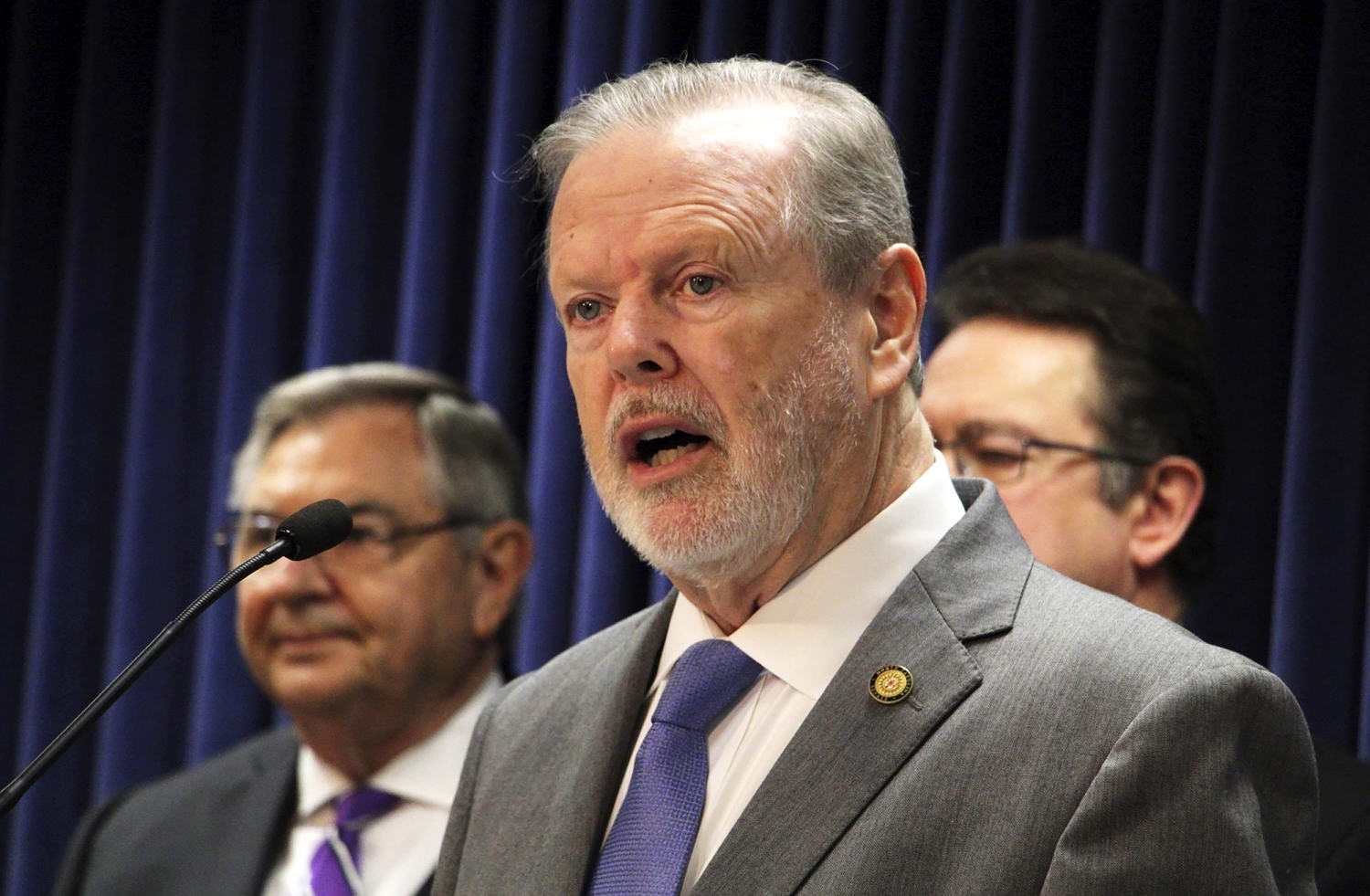
Markwayne Mullin has officially taken the oath to lead the Department of Homeland Security, marking a radical shift in how the United States manages its borders and internal stability. This isn't just a change in leadership. It is a fundamental rewiring of the largest law enforcement apparatus in the federal government. Mullin, a former MMA fighter and plumber turned U.S. Senator, brings a combative, blue-collar pragmatism to a department often bogged down by bureaucratic inertia. His arrival signals the end of the wait-and-see approach to immigration and the beginning of a high-pressure era defined by rapid deportations and aggressive physical infrastructure projects.
The department Mullin inherits is a massive, sprawling entity with over 260,000 employees. It manages everything from the TSA at your local airport to the Cyber and Infrastructure Security Agency. But the political reality is that Mullin was hired for one specific reason. He is there to execute a mandate on border enforcement that his predecessors either could not or would not finish.
A Departure from the Career Bureaucrat
Usually, a Homeland Security Secretary comes from a background in law, intelligence, or long-term government administration. They speak in the measured, often vague tones of the D.C. establishment. Mullin is the antithesis of that model. He views the department through the lens of a business owner and a tactical competitor. In his world, there are winners and losers. Right now, he views the current state of the southern border as a massive, ongoing loss for American sovereignty.
By placing a political firebrand at the top of DHS, the administration is bypassing the traditional "expert" class. This move is designed to cut through the legal challenges and internal resistance that typically stall major policy shifts. Mullin isn't interested in the nuances of international asylum theory. He is interested in the logistics of removal. He sees the border not as a humanitarian puzzle to be solved with more social workers, but as a security breach that requires a physical and technological shutdown.
The Logistics of Mass Deportation
To understand the Mullin era, you have to look at the math of enforcement. It is easy to talk about "mass deportations" on the campaign trail, but the operational reality is a nightmare of transportation, housing, and international diplomacy. Mullin's background in the private sector—specifically in labor and construction—gives him a different perspective on these bottlenecks. He views the problem as a supply chain issue.
We are likely to see a massive surge in the use of private contractors to manage the flow of detainees. This isn't just about building more walls. It is about the "soft" infrastructure of enforcement:
- Increasing the fleet of ICE Air operations to move people out of the country faster.
- Expanding temporary holding facilities that can be stood up in weeks, not years.
- Redirecting federal grants to prioritize local police departments that cooperate fully with federal detainer requests.
Critics argue that this approach ignores the "root causes" of migration, such as economic instability in Central and South America. Mullin’s response, based on his public record, is that DHS is not a foreign aid agency. Its job is to guard the door, not to fix the neighborhood.
The Cyber Frontier and the Quiet Crisis
While the border gets the headlines, Mullin faces a more insidious threat in the digital space. Domestic infrastructure is under constant, low-level bombardment from state-sponsored actors. The challenge for a leader like Mullin—who excels in high-visibility, physical confrontations—will be adapting to the invisible war of code.
The Cyber and Infrastructure Security Agency (CISA) has historically operated with a degree of independence. There is a tension here. Mullin’s instinct is toward centralization and top-down command. However, cybersecurity requires a decentralized, collaborative relationship with the private sector. If Mullin treats Silicon Valley CEOs the same way he treats political rivals in a committee hearing, he risks alienating the very people who hold the keys to the nation’s digital defense.
The "plumber’s logic" that Mullin often cites—find the leak, fix the leak—works well for a physical border. It is much harder to apply when the leak is a zero-day vulnerability in a power grid's software.
The Budgetary Battleground
You cannot run a department this large without a massive influx of cash, and Mullin’s primary advantage is his relationship with the Hill. Having served in both the House and the Senate, he knows where the bodies are buried in the appropriations process. He won't just ask for more money; he will frame the budget as a litmus test for national loyalty.
Expect a significant shift in how DHS funds are allocated. In previous years, there was a balance between "prevention" and "enforcement." Under Mullin, that balance is gone. We are moving toward a 100% enforcement model. This means less money for community outreach and integration programs and significantly more money for surveillance technology, drones, and high-speed transit for deportation.
The Human Cost of the New Mandate
There is no version of the Mullin plan that doesn't involve significant social friction. When you prioritize speed and volume in law enforcement, mistakes happen. The "collateral damage" of aggressive enforcement—families separated, long-term residents caught in the dragnet—will become the central flashpoint of his tenure.
Mullin has shown little appetite for the traditional "hearts and minds" aspect of governance. He operates on the belief that the majority of the country wants the law enforced, regardless of the optics. This is a high-stakes gamble. If the images of the new enforcement regime become too jarring, he may find that even his allies in Congress start to distance themselves.
However, Mullin isn't a man who worries about being liked. He is a man who worries about being effective. In his first few months, expect a flurry of "shock and awe" enforcement actions designed to send a clear message: the era of the open door is over.
Reshaping the Federal Workforce
One of the most significant, yet least discussed, aspects of Mullin’s appointment is the potential for a purge of the "deep state" within DHS. The department is filled with career civil servants who have spent decades building the current system. Many of them view Mullin’s approach as amateurish or even illegal.
Mullin is likely to use his authority to reassign or sideline these career officials in favor of political appointees who share his vision. This creates a more streamlined command structure, but it also strips the department of its institutional memory. When the next major hurricane hits or a complex terror plot emerges, that lack of veteran expertise could prove disastrous.
The Geopolitical Ripple Effect
Foreign governments are already bracing for the impact. Mexico, in particular, faces a looming crisis. If Mullin succeeds in rapidly increasing the volume of returns, the infrastructure on the other side of the border will buckle. This isn't just a humanitarian issue; it's a trade issue.
If the border becomes a site of constant tactical operations and closures, the flow of goods that fuels the North American economy will slow to a crawl. Mullin will have to decide what he values more: a perfectly sealed border or a functioning economy. It is a choice that will define his legacy and potentially the future of the American presidency.
The swearing-in of Markwayne Mullin is the first domino in a long sequence of planned disruptions. He didn't take this job to maintain the status quo or to be a "steady hand." He took it to be a wrecking ball directed at a system he believes is broken beyond repair. For those who have navigated the department's complexities for years, the message is clear: adapt to the new rhythm of enforcement or get out of the way.
Check the latest DHS operational updates and federal register filings to see which specific enforcement protocols have been signed into law this week.