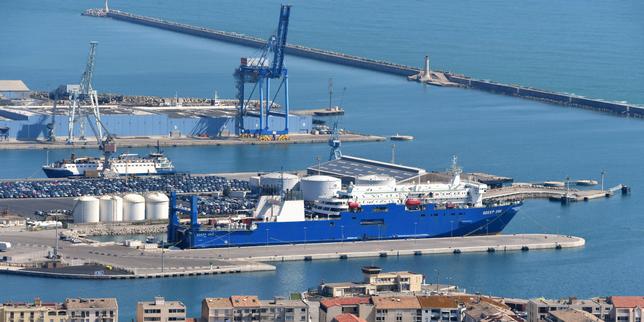
The Mediterranean isn't just a vacation spot. It's a high-stakes chess board for human traffickers who've stopped using rubber dinghies and started buying commercial yachts. Recently, a court in Montpellier peeled back the curtain on a particularly slick operation. They weren't looking at desperate people huddled on a raft. They were looking at a "filière de faux marins"—a pipeline of fake sailors—who sailed right into the port of Sète, pretending to be professional crew members.
This wasn't a fluke. It was a business model. By exploiting the specific labor laws meant for international maritime workers, these smugglers found a way to walk past border guards without raising an eyebrow. If you think border security is all about walls and thermal cameras, you’re missing the most effective trick in the book: the "legal" entry.
How the Sète Smuggling Ring Faked Professionalism
The scheme was simple but required a lot of nerve. The traffickers used high-end pleasure boats and sailing vessels to transport migrants from the Turkish coast or North Africa directly to French shores. Unlike the overcrowded boats we usually see on the news, these vessels looked like they belonged in a luxury marina.
To make it work, the migrants weren't just passengers. They were "crew."
Under maritime law, sailors have different transit rights than standard tourists. By providing these individuals with fake Seaman’s Discharge Books and professional-looking gear, the traffickers made them indistinguishable from the thousands of seasonal workers who move through French ports every year. When they docked in Sète, they didn't run for the hills. They walked off the gangplank with bags in hand, looking like they were headed to a hotel for a well-earned rest.
The French border police eventually caught on because the math didn't add up. You don't need fifteen "deckhands" for a forty-foot catamaran. Once the judicial police started digging into the paperwork, the whole facade crumbled. The certificates were forged, the "mariners" couldn't tie a basic knot, and the "captain" was actually a high-level recruiter for a transnational criminal network.
The Cost of a Cabin on a Ghost Ship
This isn't a cheap way to travel. While a spot on a dangerous Mediterranean raft might cost a few thousand dollars, a seat in the "fake sailor" program costs upwards of 10,000 to 15,000 euros.
Criminal networks are savvy. They know that wealthier migrants—often from Turkey, Syria, or Iraq—are willing to pay a premium for safety and a higher chance of success. The Sète case showed that these networks operate like travel agencies. They handle the boat purchase, the forged documents, and the logistics of the "landing" in France.
Why Sète Became a Target
Sète is a busy commercial and fishing port. It’s got a lot of "noise." In intelligence terms, noise is great for hiding. Unlike the high-profile ports in Italy or the crowded beaches of Greece, Sète offered a quieter entry point with direct rail links to the rest of Europe.
The traffickers knew that French authorities were looking for small boats in the English Channel or mass arrivals in the southeast. They didn't expect a clean, expensive yacht to pull into a commercial slip with a crew of "professionals" ready to disembark.
Judicial Crackdown and the Limits of Law
When the case hit the courtroom, the defense tried the usual angles. They claimed the "sailors" were just helping out or that the boat owners didn't know the full extent of the passengers' backgrounds. The judges didn't buy it.
The sentences handed down in these cases reflect a growing frustration among French officials. We're seeing a shift from treating these as isolated immigration violations to treating them as organized crime and human trafficking. The "faux marins" case resulted in prison time not just for the boots on the ground, but for the organizers who stayed behind the scenes in Turkey and Eastern Europe.
But here’s the reality: for every boat seized in Sète, three more are likely operating in smaller ports along the Hérault coast. The Mediterranean is too big to police every mast and every hull.
The Mediterranean Smuggling Evolution
Trafficking methods aren't static. They evolve faster than the laws meant to stop them. We've seen a clear progression over the last decade:
- The Rubber Raft Era: High volume, high mortality, low cost.
- The Fishing Trawler Era: Medium volume, slightly more "seaworthy" but still prone to disaster.
- The Luxury Yacht / Professional Crew Era: Low volume, high cost, and incredibly difficult to detect.
The Sète ring represents the third stage. It’s a sophisticated operation that uses the tools of global commerce—maritime law, international banking, and forged professional credentials—to bypass the traditional "fortress Europe" defenses.
What This Means for Maritime Security
If you’re a boat owner or work in the maritime industry, this case is a wake-up call. The scrutiny on private vessels is going to skyrocket. Expect more boardings, more paperwork checks, and a lot more questions about who exactly is on your manifest.
Authorities are now using AI-driven vessel tracking to look for "irregular" patterns. If a yacht takes an odd route from Izmir to Sète without stopping at major ports, a red flag goes up in a monitoring center in Marseille. The days of sailing under the radar are effectively over.
The "fake sailor" scam worked because it exploited trust in the maritime community. Now that the secret is out, that trust is gone. Every legitimate sailor now pays the price in the form of longer delays and more intrusive searches.
Immediate Steps for Port Authorities
Detecting these "ghost crews" requires more than just checking passports. It requires a deep dive into maritime certifications.
Port officials need to verify Seaman’s Books against international databases in real-time. If a sailor's credentials can't be validated by the issuing country’s maritime authority within minutes, the vessel shouldn't be allowed to clear customs.
Beyond paperwork, there’s the "smell test." Security teams in Sète and similar ports are being trained to look for basic nautical competency. If someone claims to be a deckhand but doesn't know how to secure a line or operate a winch, they’re flagged. It sounds low-tech, but it’s remarkably effective at catching the "faux marins" before they disappear into the French interior.
Criminals will keep trying to find the path of least resistance. Sète was that path for a while, but the recent court rulings have slammed that door shut for now. The focus now shifts to the next quiet port, the next loophole, and the next fake credential. Stay vigilant on the water and keep your documentation updated, because the Mediterranean is under a microscope like never before.