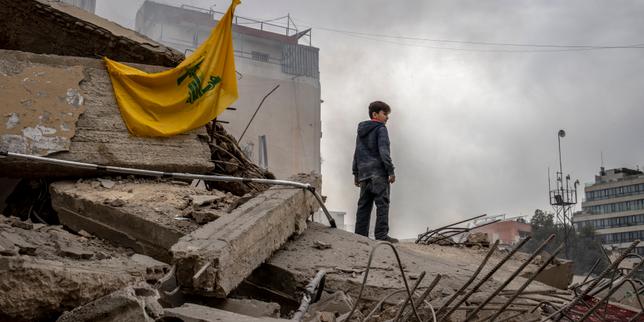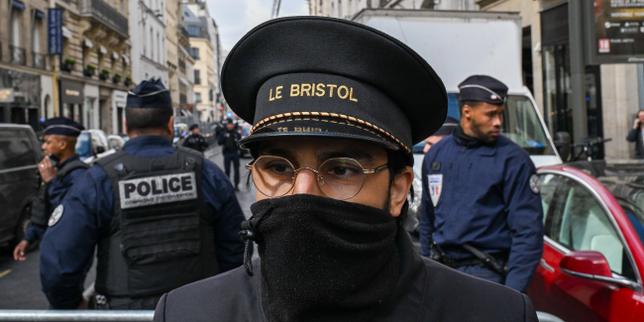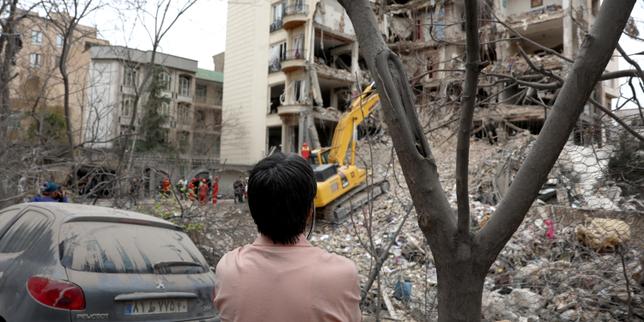
European intelligence agencies are currently tracking a shift in Iranian operational doctrine that moves far beyond traditional diplomacy or regional skirmishes. The red flags are no longer just in the Middle East. They are in the suburbs of Paris, the financial districts of Frankfurt, and the shipping ports of Antwerp. Security officials from Berlin to Brussels now openly admit that the threat of state-sponsored violence on European soil has reached its highest level since the 1980s. This isn't just about rhetoric. It is about the systematic activation of "sleeper" networks and the outsourcing of kinetic operations to organized crime syndicates.
The core of the problem lies in a fundamental change in how Tehran views its leverage. For years, the Iranian intelligence apparatus relied on its own agents—officers from the Ministry of Intelligence (MOIS) or the Quds Force. Today, they have shifted to a "contractor" model. By hiring local criminal gangs to carry out surveillance, arson, and attempted assassinations, they create a layer of plausible deniability that makes traditional counter-terrorism efforts much harder to execute. If a local gang member throws a firebomb, it looks like a common crime. In reality, it is often a directed strike from a foreign power testing the structural integrity of European security.
The Outsourced Assassination Model
Western security services have documented a disturbing trend of Iranian proxies recruiting among Europe’s most violent criminal underworlds. This isn't a theory. We saw it in the foiled plots against dissidents in London and the recent attacks on Israeli embassies in Sweden and Denmark. In these cases, the perpetrators weren't ideological zealots trained in secret camps; they were low-level criminals hired through encrypted messaging apps.
This shift serves two purposes. First, it bypasses the "watch lists" that intelligence agencies use to track known foreign operatives. A teenager with a rap sheet for drug possession in Malmö doesn't trigger the same alarms as a visiting diplomat with ties to the Revolutionary Guard. Second, it is cheap. The Iranian state can launch dozens of low-level disruptions for the price of one high-stakes operation, forcing European police to spread their resources thin.
The mechanism of this recruitment is often purely financial. These gangs operate on a "murder for hire" basis, and Tehran has deep pockets. Intelligence officials are struggling to adapt because the motive isn't religious or political at the execution level; it is transactional. This makes profiling the threat nearly impossible. You aren't looking for a radicalized individual in a basement. You are looking for a career criminal who just received a crypto-transfer from a shell company in Dubai or Istanbul.
Technical Blind Spots and the Encryption Gap
The battlefield has moved to the palm of the hand. While European politicians debate the ethics of data privacy, foreign intelligence services are exploiting the very tools designed to protect us. Encrypted platforms like Telegram and Signal have become the primary command-and-control centers for these shadow operations.
There is a massive discrepancy between the technical capabilities of the hunters and the hunted. European agencies are often hamstrung by strict legal frameworks that prevent the proactive monitoring of suspected coordinators. Meanwhile, the handlers sitting in Tehran or Beirut use VPNs and layered proxies to mask their digital footprints.
The Limits of SIGINT
Signal Intelligence (SIGINT) is failing to catch these movements before they turn violent. Why? Because the "chatter" has changed.
- Decentralized Commands: Orders are broken into fragments, sent through different channels, and reassembled by the "contractor" on the ground.
- Dead Drops 2.0: Instead of physical exchanges, agents use shared logins for draft emails or gaming platforms where they can leave messages in-game without ever hitting "send."
- Burner Infrastructure: The use of virtual SIM cards and temporary cloud instances allows an operative to vanish within seconds of a hit.
The result is a reactive security posture. Europe is currently playing a game of "whack-a-mole" where the hammer is heavy but the moles are moving at the speed of light.
Why Europe is the Preferred Target
Europe remains the primary theater for these operations for a simple, brutal reason: accessibility. Unlike the United States, which has the luxury of two oceans and a highly integrated border security system, Europe is a patchwork of open borders and varying security standards. Once an operative—or a hired criminal—is inside the Schengen Area, they can move from Lisbon to Riga with almost no friction.
Tehran also views Europe as a "soft" target where the political will to retaliate is fragmented. If an attack occurs in Germany, the response must be coordinated through the EU, which often results in watered-down sanctions or diplomatic protests rather than decisive action. This perceived weakness encourages further aggression. The Iranian leadership calculates that Europe is too dependent on energy stability and regional de-escalation to ever truly sever ties, even when its citizens are being targeted.
The Dissident Factor
A significant portion of this violence is directed at the Iranian diaspora. There are thousands of vocal critics of the regime living in European capitals. For Tehran, these individuals represent a persistent threat to their domestic narrative. By silencing a dissident in the heart of Berlin, the regime sends a message to its own population: "No matter where you go, we can reach you."
This creates a massive burden for local police departments. Protecting high-profile dissidents requires 24/7 security details, which are incredibly expensive and drain resources from other vital areas like counter-narcotics or human trafficking. The regime doesn't even need to succeed in an assassination to win; they just need to make the cost of hosting dissidents so high that European governments eventually stop welcoming them.
Case Study: The Dutch Connection
The Netherlands has become an unwitting hub for this activity. With its massive ports and complex logistics networks, it is easy for illicit funds and materials to flow through. Dutch authorities have investigated multiple killings on their soil that have "regime fingerprints" all over them, yet the legal bar for proving direct state sponsorship is incredibly high. This legal gray zone is exactly where the MOIS thrives. They know that "reasonable doubt" is their best weapon in a European courtroom.
The Failure of Traditional Diplomacy
The old school of thought suggested that trade and dialogue would moderate Iran’s behavior. That era is dead. The "Maximum Pressure" campaign from the U.S. and the subsequent collapse of the nuclear deal have left the regime with little to lose. In their eyes, the shadow war in Europe is a legitimate response to the economic strangulation they face at home.
The problem is that Europe has no unified "Plan B." Some nations want to keep the door open for a new deal, while others, particularly those in the East, see the Iranian threat as inextricably linked to Russian interests. The growing military cooperation between Moscow and Tehran has added a new layer of complexity. We are now seeing a "nexus of disruption" where intelligence sharing and tactical methods are being exchanged between the two powers.
The Drone Proliferation
It isn't just about men with guns. The technology used in the Ukraine conflict—specifically low-cost kamikaze drones—is beginning to worry European domestic security. There is a legitimate fear that these systems, or the parts to build them, could be smuggled into Europe to target critical infrastructure like power plants or communication hubs. The barrier to entry for a "swarm" attack is lower than it has ever been.
Structural Weaknesses in Counter-Intelligence
European agencies are currently fragmented. While Europol exists to facilitate cooperation, the actual "heavy lifting" is done by national agencies that are often protective of their sources and methods.
- Siloed Data: A suspect flagged in Greece might not show up on a French database for weeks due to bureaucratic hurdles.
- Legal Constraints: Some countries have strict laws against using intelligence gathered by foreign partners if the methods don't meet domestic legal standards.
- Language Barriers: The specialized knowledge required to monitor Farsi or Arabic communications is in short supply, leading to massive backlogs in translation and analysis.
The enemy knows these weaknesses. They exploit the seams between national jurisdictions. They launch an operation in one country using assets recruited in another, and then funnel the money through a third. By the time the dots are connected, the trail is cold.
The Economic Impact of the Shadow War
The threat of terrorism isn't just a human cost; it is an economic one. As the risk profile of European cities rises, so do the costs of insurance and private security. Major events, from fashion weeks to technology summits, are forced to implement "hardened" security measures that discourage attendance and increase overhead.
If a major port like Rotterdam or Hamburg were to be the site of a state-sponsored "accident," the disruption to global supply chains would be catastrophic. This is the ultimate "asymmetric" weapon. You don't need a navy to shut down a port; you just need a well-placed cyber-attack or a small group of highly motivated saboteurs.
The situation is escalating. Intelligence reports suggest that the "hit lists" are growing longer and the methods are becoming more brazen. We have moved past the era of diplomatic sniping and entered a period of active, covert kinetic conflict.
European governments can no longer afford to treat these incidents as isolated criminal acts. They are components of a sophisticated, multi-year campaign designed to undermine Western security and coerce political concessions. The first step in winning this shadow war is admitting that it is already being fought.
Stop looking for the traditional signs of a terrorist cell and start looking at the intersection of foreign intelligence and local organized crime. That is where the next attack is being planned. It is time to provide security services with the legal and technical tools to pierce the veil of encryption and the "contractor" model before the next "incident" becomes a national tragedy.
Invest in the boring things: Farsi-speaking analysts, cross-border database integration, and the proactive monitoring of crypto-exchanges in the Middle East. If you want to stop the fire, you have to follow the money and the code, not just the man with the match.