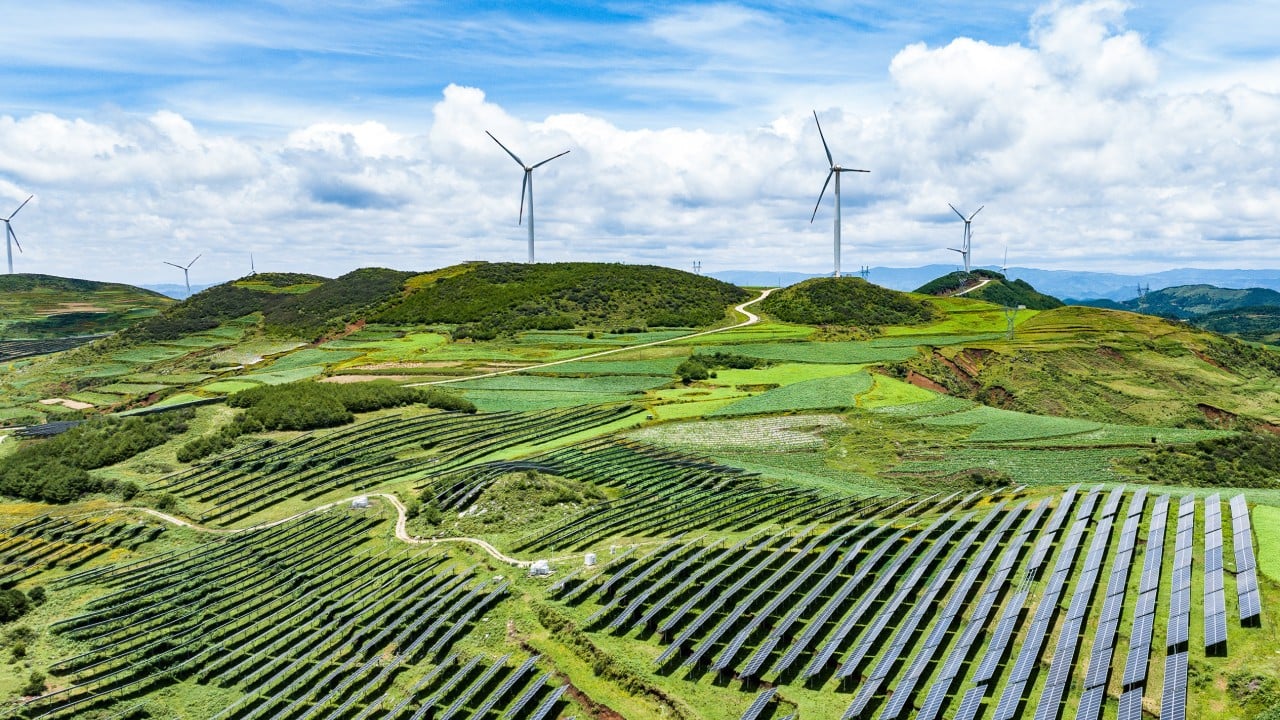
Western nations are currently attempting to outrun an energy crisis by sprinting directly into a trap set decades ago. As the global economy pivots from the volatility of oil and gas toward the perceived stability of wind, solar, and electric vehicles, the seat of power isn't just shifting; it has already moved. While European and American policymakers celebrate domestic subsidy packages, the physical reality of the energy transition remains firmly rooted in Chinese soil. China has effectively weaponized the supply chain, moving from a role as the world's factory to its indispensable gatekeeper.
The math is simple and brutal. Transitioning to a net-zero economy requires an exponential increase in mineral inputs—lithium, cobalt, copper, and rare earth elements—that dwarf the material needs of the fossil fuel era. By the time Western capitals realized that "green energy" was actually a game of high-stakes mining and chemical processing, Beijing had already secured the board. They didn't just build the solar panels; they built the machines that build the panels, the refineries that process the silicon, and the ports that ship the finished product.
The Refining Monopoly Behind the Curtain
Most discussions about energy security focus on where minerals are pulled out of the ground. This is a mistake. Mining is the easy part. The true strategic bottleneck lies in refining and processing, a segment of the industry China dominates with near-total authority. You can mine lithium in Australia or cobalt in the Congo, but there is a high statistical probability that those raw ores will travel across the ocean to a Chinese facility before they ever see the inside of a battery.
This dominance was not an accident of geography. It was the result of a twenty-year plan that prioritized industrial capacity over immediate quarterly profits. While Western firms faced pressure to divest from "dirty" processing industries due to environmental regulations and low margins, Chinese state-backed enterprises moved in. They accepted the thin margins and the environmental baggage in exchange for something far more valuable: market leverage.
Consider the solar industry. China currently controls over 80% of every stage of solar panel manufacturing. For specific components like wafers and ingots, that figure climbs toward 95%. If a trade war or a geopolitical flare-up were to halt exports tomorrow, the global transition to renewables would not just slow down; it would stop. Western "green" goals are, for the moment, entirely dependent on the goodwill of their primary strategic rival.
The Subsidy Illusion and the Cost of Catching Up
The United States and the European Union are now throwing hundreds of billions of dollars at the problem. The Inflation Reduction Act (IRA) and various European Green Deals are designed to "onshore" manufacturing. But money alone cannot bridge a twenty-year head start. Building a factory is one thing; building the expertise, the specialized labor pool, and the integrated supply network that surrounds it is quite another.
China’s advantage is not just cheap labor. That is an outdated trope. Their real edge is industrial clustering. In places like the Yangtze River Delta, a battery manufacturer is surrounded by its chemical suppliers, its cathode makers, and its specialized logistics providers. This proximity creates a feedback loop of innovation and cost reduction that isolated Western "gigafactories" cannot easily replicate.
Furthermore, Western projects face a gauntlet of permitting delays and local opposition that simply do not exist in the Chinese model. A new mine in the United States can take fifteen years to move from discovery to production. In that same timeframe, China can build an entire provincial ecosystem for electric vehicle manufacturing. We are fighting a high-speed industrial war with a slow-motion bureaucratic mindset.
The Hidden Price of Decoupling
There is a growing call for "de-risking" or "decoupling"—the idea that the West can build its own parallel supply chain. This is a noble goal, but the cost will be staggering. Estimates suggest that building a completely independent Western supply chain for batteries and solar would require trillions in investment and lead to significantly higher prices for consumers.
If we choose to buy only "non-Chinese" solar panels, we are choosing to pay 50% to 100% more for the same kilowatt-hour of energy. This creates a political paradox. Governments want a fast transition to save the climate, but they also want a "patriotic" transition to protect jobs. You cannot have both at the same speed. Protecting domestic industries through tariffs effectively acts as a tax on the climate transition, slowing down the deployment of the very technology needed to reduce carbon emissions.
The Rare Earth Stranglehold
Rare earth elements are the vitamins of modern technology. They are essential for the high-strength magnets used in wind turbines and electric vehicle motors. While they aren't actually that "rare" in the earth's crust, the process of separating them is chemically intensive and toxic. China’s willingness to absorb those environmental costs decades ago gave them a near-monopoly on the separation and metallic processing of these elements.
When China occasionally restricts exports—as they have done with gallium and germanium recently—the tremors are felt in every high-tech boardroom in the world. These restrictions aren't just about trade; they are a demonstration of power. They serve as a reminder that the "clean" energy future is built on a foundation of industrial processes that the West spent thirty years exporting to the East.
The West’s response has been to look for alternatives, such as motors that don't use rare earth magnets. While some progress is being made, these alternatives often come with trade-offs in efficiency or weight. In the brutal world of engineering, there is rarely a free lunch. Every time we move away from a material China controls, we often move toward a less efficient or more expensive solution.
The New Geopolitics of Energy
For a century, global power was dictated by who controlled the "choke points" of oil: the Strait of Hormuz, the Suez Canal, and the pipelines of Eurasia. In the new era, the choke points are chemical. The power shifts from those who own the wells to those who own the patents and the processing plants.
We are moving from a world of fuel-intensive energy to one of material-intensive energy. In the old world, if your oil supply was cut off, your cars stopped running immediately. In the new world, if your mineral supply is cut off, you can still run your existing EVs and wind turbines, but you cannot build any new ones. It is a slower, more creeping form of influence, but it is no less potent.
China is also aggressively exporting its energy standards. By building out the infrastructure in the Global South—ports, power grids, and charging networks—they are ensuring that the next generation of global energy consumers will be locked into Chinese technical specifications. This is "soft power" backed by hard infrastructure.
The Fragility of the Western Strategy
The current Western strategy relies heavily on the hope that innovation will eventually leapfrog China’s industrial might. We are betting on solid-state batteries, hydrogen, or some yet-undiscovered breakthrough to change the rules of the game. Hope is not a strategy. While Western startups chase the next big thing, Chinese firms are incrementally improving the "current" big thing, driving down costs so low that they become the de facto global standard.
The reality of the situation is that we are not entering an era of energy independence. We are trading one form of dependence for another. The reliance on a handful of Middle Eastern oil states is being replaced by a reliance on a single, much more sophisticated industrial superpower.
Western leaders must decide if they are willing to tell their citizens the truth. The "green" transition will be expensive, it will be messy, and for the foreseeable future, it will be stamped "Made in China." Anything else is a fairy tale.
The only viable path forward involves a massive, uncomfortable deregulation of domestic mining and a temporary acceptance that we cannot build a rival supply chain without some level of continued cooperation with the current leader. We need to stop viewing the energy transition as a purely environmental goal and start seeing it for what it is: the most significant industrial realignment since the dawn of the steam engine.
Governments should stop focusing on vanity projects and start clearing the path for the unglamorous, dirty work of chemical refining and heavy industrial manufacturing. If the West cannot find a way to make the "boring" parts of the supply chain profitable and permissible at home, the transition to renewables will be remembered not as a liberation from fossil fuels, but as the final transfer of economic hegemony.