The United States has recalibrated its military posture in the Middle East, opting for a surgical persistent strike model that avoids Iran’s energy infrastructure while systematically dismantling its proxy logistics. This is not a ceasefire. It is a strategic pivot designed to drain the capabilities of the Islamic Revolutionary Guard Corps (IRGC) without triggering a global oil price shock that would destabilize the Western economy. By signaling that energy sites are off the table for now, the Biden administration is attempting to manage an escalation ladder that has become increasingly crowded and unpredictable.
Pentagon officials have quietly confirmed that the pause on targeting refineries and export terminals is a tactical choice, not a permanent treaty. The mission remains focused on the "how" of Iranian influence—the drone factories, the missile depots, and the command centers in Iraq and Syria—rather than the "why" of its economic survival. This distinction is critical for understanding why bombs continue to fall even as diplomatic channels remain open.
The Invisible Architecture of Deterrence
Deterrence is often misunderstood as a binary state. You either have it or you don’t. In reality, it is a shifting negotiation conducted through high-explosives and encrypted cables. The current U.S. strategy aims to create a "contained conflict zone" where the costs of Iranian aggression are high, but the cost of Iranian collapse is avoided.
Targeting energy sites is the "nuclear option" of conventional warfare in the region. If the U.S. were to strike the Abadan refinery or the Kharg Island terminal, the immediate result would be a spike in Brent Crude prices. That is a political third rail in an election year. Instead, the U.S. is utilizing high-precision munitions to hit specific nodes in the IRGC’s supply chain.
Consider the logistical path of a standard one-way attack drone. It begins in a manufacturing facility near Tehran, moves through a series of warehouses in the Al-Anbar province, and is eventually launched from a mobile platform by a local militia. The U.S. is currently focusing its kinetic energy on the middle of that chain. By destroying the warehouses and the mobile launchers, they create a temporary vacuum of power without forcing a direct, state-on-state confrontation.
Why Energy Sites Are Currently Protected
The decision to spare Iran's oil sector is driven by a mix of macroeconomics and back-channel signaling.
- Global Market Stability: Any disruption to Iranian exports—roughly 1.5 million barrels per day—would force the hand of OPEC+ and potentially drive gasoline prices beyond the threshold of consumer tolerance in Europe and North America.
- The Chinese Factor: China remains the primary buyer of Iranian "teapot" crude. Striking these assets isn't just a hit to Iran; it’s a direct provocation of Beijing’s energy security.
- The Escalation Ceiling: Once you hit a nation's primary source of revenue, that nation has nothing left to lose. Keeping the energy sector intact provides the U.S. with a bargaining chip for future negotiations.
This restraint is often interpreted as weakness by hawks in Washington, but from a theater-command perspective, it is about keeping the fight manageable. You do not burn the house down when you are trying to catch a thief in the basement.
The Intelligence Gap in Proxy Warfare
One of the most significant challenges in this ongoing strike campaign is the fluid nature of the groups the U.S. is targeting. Organizations like Kata'ib Hezbollah and Harakat al-Nujaba do not operate like traditional armies. They are deeply integrated into the local civilian and political infrastructure of Iraq and Syria.
The U.S. uses a mix of signals intelligence (SIGINT) and human intelligence (HUMINT) to identify these targets. However, the IRGC has become adept at "maskirovka"—the art of deception. They frequently move high-value assets into schools, hospitals, or residential apartment blocks. This forced proximity creates a moral and tactical dilemma for U.S. planners. Every civilian casualty is a propaganda victory for Tehran and a setback for the U.S. mission to maintain regional partnerships.
The technology behind these strikes has reached a point of terrifying precision. We are seeing the increased use of the R9X "Flying Ginzu" missile, which uses kinetic blades instead of explosives to eliminate specific individuals in moving vehicles without harming nearby pedestrians. This level of granularity allows the U.S. to continue its strike campaign in densely populated areas while keeping the broader "energy pause" in place.
The Kinetic Reality on the Ground
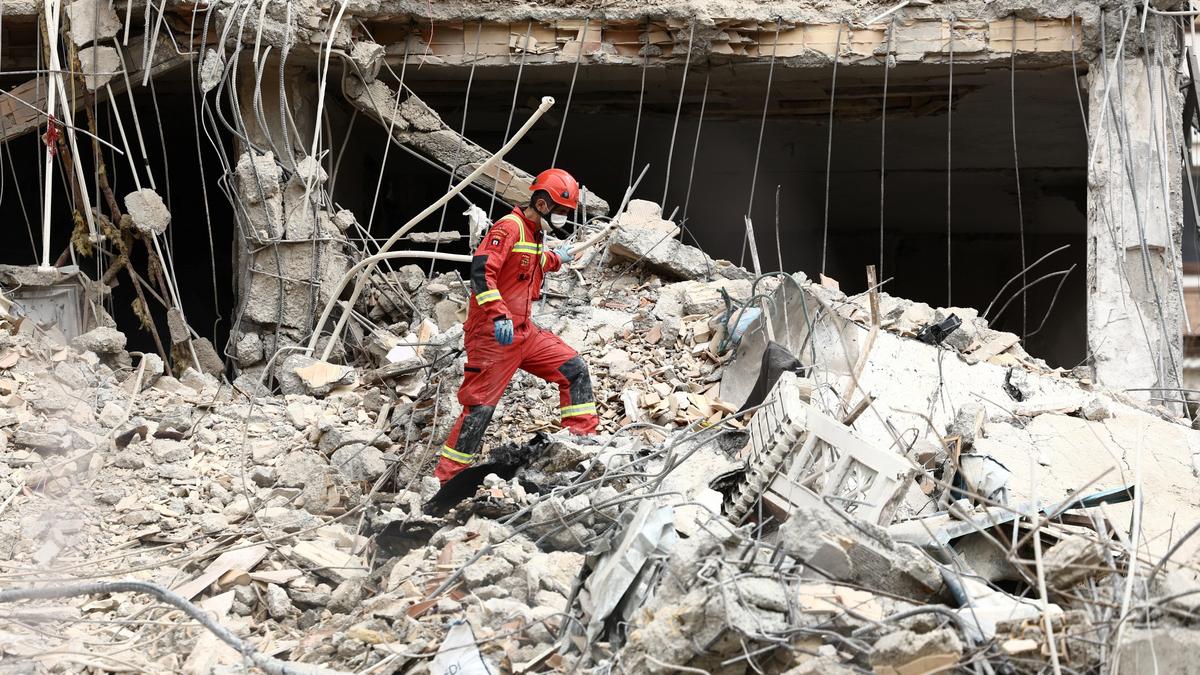
While the headlines focus on the lack of strikes on energy sites, the actual volume of ordnance being dropped on logistics hubs is staggering. Since the start of the current cycle of violence, hundreds of targets have been neutralized.
Target Profiles
- Command and Control (C2) Nodes: Encrypted communication centers where orders are relayed from IRGC handlers to local militia commanders.
- Unmanned Aerial Vehicle (UAV) Storage: Hardened bunkers housing the Shahed-series drones that have become the signature weapon of the conflict.
- Weapon Caches: Shipping containers filled with Iranian-made rockets and mortar shells, often hidden in plain sight.
The strategy is death by a thousand cuts. The U.S. is betting that by making the proxy war too expensive and too difficult to execute, Iran will eventually pull back its horns.
The Flaw in the Strategy
There is a significant risk in this approach. By explicitly stating that energy sites are off-limits, the U.S. may be inadvertently signaling to Tehran exactly how much it can get away with. If the Iranian leadership knows their economic lifeline is safe, they may feel emboldened to continue their proxy attacks indefinitely, viewing the loss of a few warehouses or drones as a manageable cost of doing business.
This creates a "perpetual war" loop. The U.S. strikes a facility, Iran replaces the equipment, and the cycle repeats. Breaking this loop requires more than just kinetic action; it requires a diplomatic or economic pressure that outweighs the IRGC’s ideological commitment to the region.
The current pause on energy sites is a fragile equilibrium. It relies on the assumption that Iran will not cross a "red line" that makes the status quo untenable—such as a mass-casualty event involving U.S. personnel or a direct strike on a major shipping lane like the Strait of Hormuz.
The Hardware of Persistent Engagement
The U.S. is relying heavily on its "Over-the-Horizon" capabilities. This includes the MQ-9 Reaper drone, which provides constant surveillance and immediate strike capability, and the B-1B Lancer bomber, which can carry a massive payload of precision-guided munitions from bases outside the immediate conflict zone.
These platforms are the backbone of the "persistent strike" model. They allow the U.S. to maintain a presence without a massive footprint of boots on the ground. However, the cost of operating these systems is high. Each flight hour of a B-1B costs tens of thousands of dollars, and the munitions themselves—like the AGM-158 JASSM—cost upwards of a million dollars per unit.
The U.S. is essentially spending millions to destroy targets that often cost the IRGC only a few thousand dollars to replace. This economic asymmetry is one of the most overlooked factors in the conflict. It is a battle of attrition where the U.S. is trading high-tech, expensive assets for low-tech, mass-produced proxy tools.
The Geopolitical Chessboard
To understand the strikes, one must look at the map of the "Shiite Crescent." This arc of influence stretches from Tehran through Baghdad and Damascus to Beirut. The U.S. strikes are designed to sever the "land bridge" that allows Iran to move weapons and personnel to the Mediterranean coast.
The pause on energy sites is also a nod to Baghdad. The Iraqi government is in a precarious position, trying to balance its relationship with Washington and its proximity to Tehran. If the U.S. were to strike energy targets inside Iraq—or targets that directly impacted the Iraqi economy—it could lead to the total expulsion of U.S. forces from the country. That would be a catastrophic loss for U.S. regional intelligence and a major victory for Iran.
The Pentagon is walking a tightrope. They must show enough force to satisfy domestic political demands and protect their troops, but not so much force that they collapse the very regional order they are trying to protect.
The Next Phase of Conflict
As the U.S. continues its campaign, the focus will likely shift toward electronic warfare and cyber operations. We are already seeing reports of mysterious "glitches" in Iranian drone command signals. These non-kinetic strikes offer a way to degrade IRGC capabilities without the visual of a mushroom cloud over a facility.
However, the kinetic strikes will not stop. As long as Iranian-backed groups continue to target U.S. interests, the U.S. will continue to hit back at the logistical heart of the operation. The "energy pause" should be seen as a yellow light—a warning that the U.S. is prepared to escalate, but is giving all parties a chance to slow down before the world’s fuel supply becomes the next target.
Watch the movement of U.S. carrier strike groups in the region. Their positioning often tells the story that the official press releases won't. If a carrier moves into a position where it can strike the Iranian coast directly, the "energy pause" may be nearing its end.
The silence regarding energy sites is the loudest part of the current strategy. It is a deliberate gap in the targeting list that highlights exactly where the U.S. fears to tread, and where Iran finds its ultimate protection.
Analyze the satellite imagery of the border crossings between Iraq and Syria.