The global fight to wipe polio off the face of the earth has hit a wall of diminishing returns. After decades of effort and billions in investment, the virus remains entrenched in the most inaccessible corners of the globe. For the United Kingdom and its international partners, the choice is no longer just about altruism or finishing a long-standing project. It is a cold calculation of biological security. If the final pockets of wild poliovirus in Pakistan and Afghanistan are not snuffed out, the risk of a global resurgence is not a possibility—it is a mathematical certainty.
The world has been "99% of the way there" for years. That last one percent is proving to be the most expensive, dangerous, and politically volatile stretch of road in medical history. To understand why we haven't crossed the finish line, you have to look past the optimistic press releases and into the messy reality of vaccine-derived strains, geopolitical instability, and the logistical nightmare of the "final mile."
The Hidden Threat of Vaccine Derived Strains
Most people believe there is only one type of polio. In reality, the public health community is fighting a two-front war. On one side is the Wild Poliovirus (WPV1). On the other is the Circulating Vaccine-Derived Poliovirus (cVDPV). This second threat is a bitter irony of the eradication effort.
The Oral Polio Vaccine (OPV) contains a weakened version of the live virus. It is cheap, easy to administer, and highly effective at building community immunity because the vaccine virus "sheds" and spreads to unvaccinated individuals. However, in areas with chronically low sanitation and poor immunization coverage, this weakened virus can circulate for a long time. As it passes from person to person, it can mutate back into a form that causes paralysis.
In 2022, the discovery of type 2 vaccine-derived polio in London’s sewage systems served as a violent wake-up call. It proved that as long as the virus exists anywhere, it is only a plane ride away from high-income cities. The UK’s "polio-free" status is a fragile shield. When vaccination rates dip in specific London boroughs or among marginalized communities, the protective barrier of herd immunity cracks. We are seeing the return of a disease that should be a historical footnote because the tools we used to fight it have, in some instances, become part of the problem.
The Geopolitical Trap
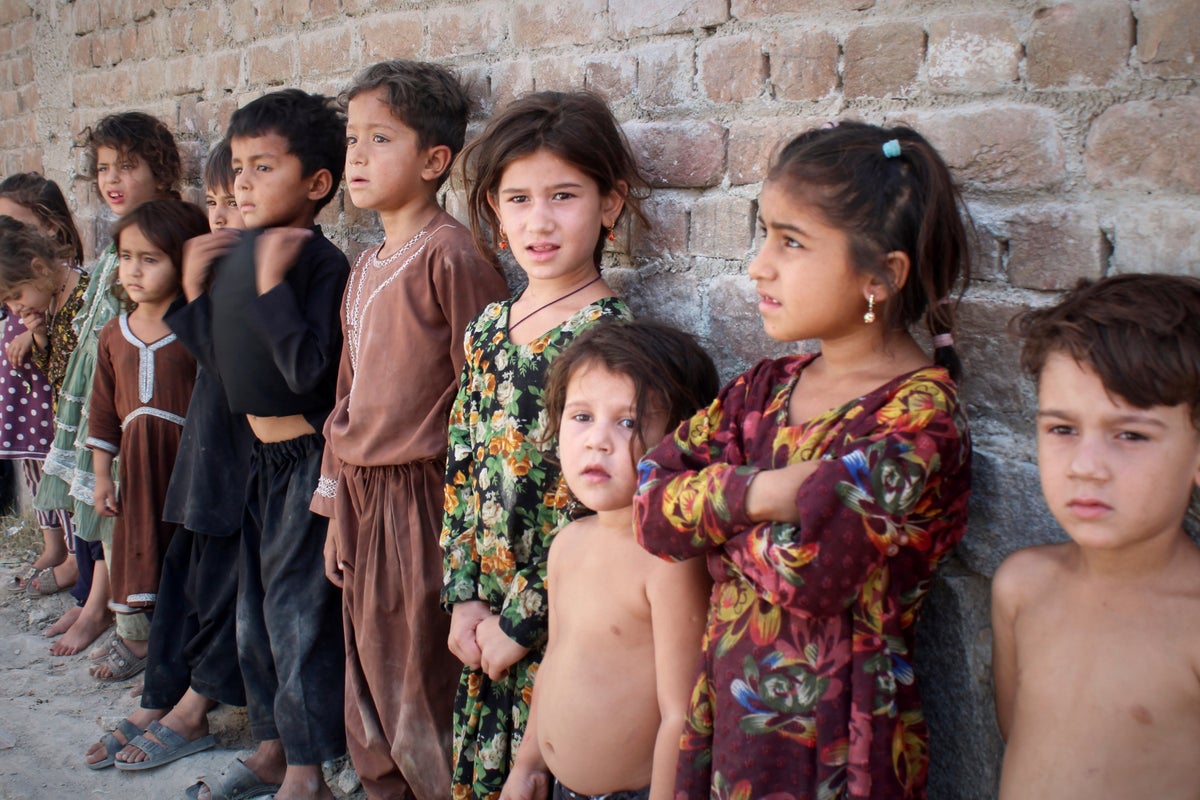
Eradication is not a medical challenge. It is a diplomatic one. The remaining strongholds of the wild virus are located in the "security-challenged" border regions between Afghanistan and Pakistan. These are places where the state’s reach is often nonexistent and where health workers face literal life-and-death stakes.
The Trust Deficit
In these regions, a vaccination campaign is rarely seen as a neutral medical act. It is viewed through the lens of surveillance and foreign interference. The shadow of the 2011 fake hepatitis vaccination clinic used by the CIA to track Osama bin Laden still looms over every health worker carrying a cooler bag. In these villages, the "polio man" is sometimes seen as a spy.
When trust breaks down, the virus wins. To reach every child, health workers must negotiate with local warlords, navigate active conflict zones, and counter disinformation campaigns that claim the vaccine is a Western plot to cause infertility. This isn't something that can be fixed with more funding alone. It requires a level of local cultural intelligence that the global health apparatus has often lacked.
The Financial Cliff
The United Kingdom has historically been one of the top donors to the Global Polio Eradication Initiative (GPEI). However, recent shifts in foreign aid budgets have sent ripples of anxiety through the global health community. The logic of cutting polio funding to save money is fundamentally flawed.
Maintaining a "near-eradication" state is the most expensive possible strategy. You are paying for massive surveillance networks, laboratory infrastructure, and emergency response teams across the globe just to keep the status quo. If the world stops now, epidemiological models suggest that polio could rebound within a decade, leading to hundreds of thousands of paralyzed children every year. The cost of treating those cases and the lost economic productivity would dwarf the current price tag of eradication.
Why the UK is Central to the End Game
London is a global transit hub. It is also a center for world-class genomic sequencing. The scientists at the UK’s National Institute for Biological Standards and Control (NIBSC) are the ones who identified the London sewage samples, tracing their origins with forensic precision.
The UK provides the "intel" for the global war. By cutting support, the UK doesn't just reduce the number of vaccines in the field; it degrades the global early warning system. Without that system, a new outbreak could go undetected for months, spreading through a highly mobile population before the first child shows signs of paralysis.
The Shift to Inactivated Vaccines
There is a way out of the vaccine-derived polio trap, but it is technically demanding and expensive. The Inactivated Polio Vaccine (IPV), which is delivered via injection, contains a "killed" virus. It cannot mutate or cause paralysis. The global strategy is to eventually transition the entire world to IPV.
However, IPV is harder to administer. You need trained medical professionals, needles, and a strict "cold chain" to keep the vials at the correct temperature. In a mountain village in Waziristan, an oral drop is feasible; a sterile injection is a monumental task. The UK’s role in developing and funding more stable, needle-free versions of the inactivated vaccine is perhaps the most underrated part of the entire campaign.
The Fatigue Factor
Donors are tired. The public is tired. We have been hearing that polio is "almost gone" since the 1980s. This fatigue is the virus’s greatest ally. When a goal feels perpetually out of reach, the temptation is to pivot to something else—climate change, pandemic preparedness, or local healthcare crises.
But polio is a unique case. Unlike most diseases, it has no animal reservoir. It only lives in humans. If we kill it in humans, it is gone forever. Smallpox is the only human disease we have ever truly defeated. Polio is supposed to be the second. To fail now would be a historic indictment of our collective will. It would signal that the international community is no longer capable of finishing what it starts.
The Surveillance Blind Spot
We only see the polio cases that result in paralysis. For every one child who loses the use of their legs, there are hundreds of others who carry the virus with only minor symptoms or none at all. They are the "silent spreaders."
The current surveillance strategy relies heavily on Environmental Surveillance (ES)—testing sewage. This is how we found it in London and New York. But in large parts of the developing world, there is no centralized sewage system to test. We are flying blind in the very places where the virus is most likely to be circulating. Expanding ES to include simple, localized testing kits that can be used in open drains is a technological hurdle we must clear immediately.
Reforming the GPEI
The Global Polio Eradication Initiative is a massive, somewhat bloated bureaucracy involving the WHO, CDC, UNICEF, and the Gates Foundation. While it has done incredible work, it has also been criticized for being top-heavy and slow to adapt.
The "top-down" approach—where experts in Geneva or Atlanta dictate strategy to local communities—is reaching the limit of its effectiveness. The final mile requires a "bottom-up" revolution. This means hiring local women in Pakistan and Afghanistan as the primary vaccinators, as they are the only ones allowed into homes. It means integrating polio vaccines with other essential services like clean water and basic nutrition so that parents don't ask, "Why are you giving my child polio drops when they are dying of thirst?"
The Cost of the "Wait and See" Approach
There is a school of thought that suggests we should just accept polio as an endemic disease and manage it like the flu. This is a dangerous delusion. Polio is not the flu. It is a permanent, life-altering disability.
If we move to a "containment" strategy, we commit every future generation to the cost of vaccination and the risk of outbreaks. The "eradication" strategy is a one-time capital investment that pays dividends forever. The math is simple: eradication is cheaper than control.
The UK government’s commitment to the GPEI is not just a line item in a budget. It is a decision on whether to permit a preventable tragedy to persist for another century. We have the science. We have the vaccines. We have the genomic tools to track every mutation. What we lack is the stamina to survive the final, most grueling lap of the race.
Stop thinking about polio as a problem of the global south. It is a vulnerability of the global north. Every time a health worker is turned away in a remote village, the risk to a child in London increases. The world is too small for "their" diseases not to become "ours."
Finish the job.