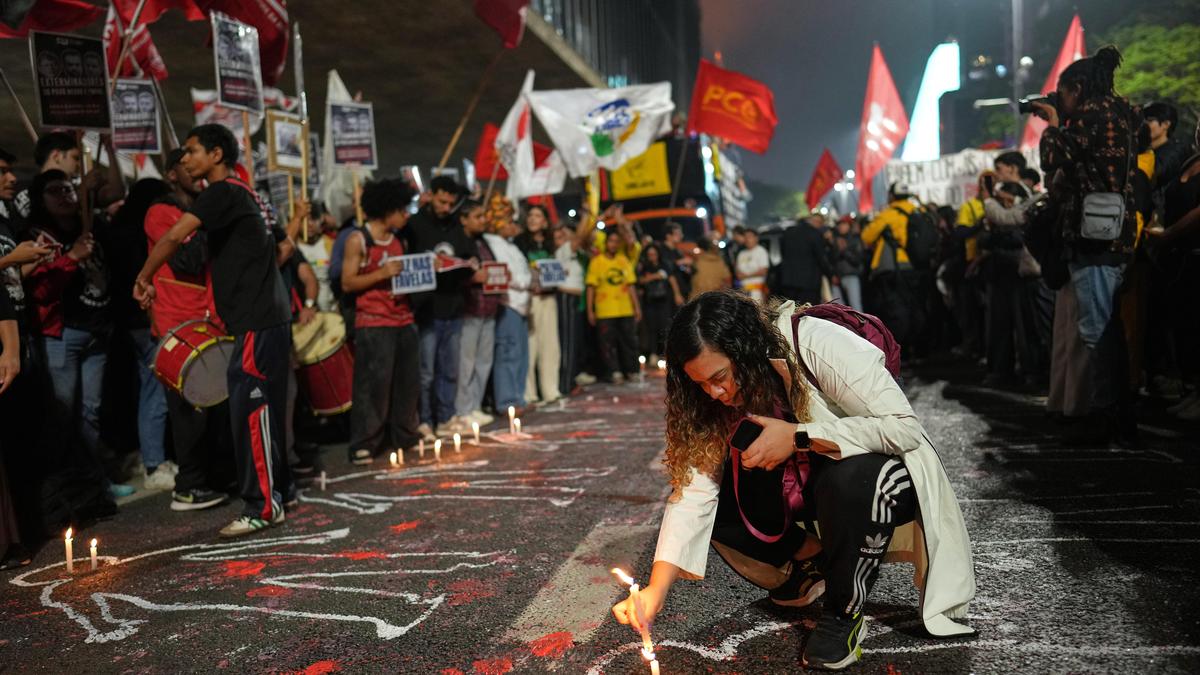
Rio de Janeiro doesn't just have a crime problem. It has a war problem. When the smoke cleared after the 2021 Jacarezinho raid, 28 people were dead. It was the deadliest police operation in the city's history. But the bullets were only the beginning. What followed was a calculated political explosion that fundamentally changed how Brazil views law enforcement, human rights, and the power of the state. If you think this is just about "cops vs. robbers," you're missing the entire point of how modern urban conflict works.
The Jacarezinho operation wasn't a fluke. It was a symptom of a deeply entrenched system where the line between public safety and state-sanctioned execution gets blurred every single day. I've spent years watching these patterns. You see a raid, you see the body bags, and then you see the politicians rush to the microphones. One side calls it a massacre. The other calls it a victory for "good citizens." Neither side seems particularly interested in the fact that the cycle repeats every few months without fail.
The Day Jacarezinho Became a Graveyard
On May 6, 2021, the Civil Police of Rio de Janeiro ignored a Supreme Court injunction. This wasn't a minor clerical error. The court had restricted police raids in favelas during the COVID-19 pandemic. The police went in anyway. They claimed they were targeting the Comando Vermelho (Red Command) for recruiting minors. They sent in an armored helicopter, hundreds of officers, and enough firepower to take down a small army.
The result was carnage. A subway passenger was hit by a stray bullet. A police officer died early in the operation, which many believe triggered a "revenge" mentality among the responding units. By the time the shooting stopped, the narrow alleys of Jacarezinho were slick with blood. Residents reported officers entering homes without warrants, seizing cell phones, and executing suspects who had already surrendered.
This wasn't tactical precision. It was a blunt force trauma to a community that's already living on the edge. When you see 27 "suspects" killed and only one officer, the math doesn't look like a firefight. It looks like a sweep. The police claimed all the deceased had criminal records, as if a rap sheet justifies an extrajudicial killing. It doesn't. Not in a democracy, anyway.
Why the Courts Can't Stop the Bleeding
The Brazilian Supreme Court (STF) tried to intervene with the ADPF 635, often called the "Favelas Case." The goal was simple: stop the slaughter. It required police to justify the "exceptionality" of any raid during the pandemic. But the Jacarezinho raid proved that the police in Rio don't feel particularly bound by the highest court in the land.
- Institutional Defiance: The Civil Police argued the raid was planned for months and couldn't be stopped.
- The "Exceptional" Loophole: By labeling every threat as "imminent" or "exceptional," law enforcement effectively bypassed judicial oversight.
- Lack of Independent Oversight: The Public Prosecutor's Office is supposed to monitor police conduct. In reality, they rarely bring charges against officers involved in "confrontations."
The political shield provided by the Rio state government and, at the time, the federal administration, created a culture of impunity. When leaders say "a good criminal is a dead criminal," they aren't just using a campaign slogan. They're giving a direct order to the guys holding the rifles.
The Propaganda War and the Political Battlefield
After the gunfire died down, the media war started. This is where the real "battlefield" exists. On one hand, you have human rights organizations like Amnesty International and local collectives like Coletivo Papo Reto documenting abuses. They use cell phone footage to show the world what the official police reports conveniently leave out.
On the other hand, you have the "Bancada da Bala" (the Bullet Caucus). These are politicians who built their entire careers on the promise of hardline security. For them, Jacarezinho wasn't a tragedy. It was a campaign ad. They framed the outcry as "defense of bandits." It’s a brilliant, if cynical, move. It forces the public to choose between a murderous police force or total anarchy. It leaves no room for the middle ground where actual law and order lives.
The impact on the 2022 elections was massive. Security became the ultimate wedge issue. Candidates didn't talk about police training or social programs in the favelas. They talked about who would be "tougher." This rhetoric doesn't just win votes; it kills people. It reinforces the idea that the favela is an enemy territory rather than a part of the city.
The Economic Cost of State Violence
We often talk about the human cost, but the economic impact is staggering. Every time a raid like Jacarezinho happens, the neighborhood shuts down. Schools close. Health clinics stop operating. Workers can't get to their jobs because the train lines are suspended or because they're afraid of being caught in the crossfire.
Think about the kids. There's a whole generation of children in Rio who know the sound of a "caveirão" (police armored vehicle) better than the sound of a school bell. That's a trauma that doesn't just go away. It shapes their view of the state. If the only time you see a government representative they're wearing a mask and holding an AR-15, you're probably not going to grow up with a high level of civic trust.
What Real Reform Looks Like
If we want to stop these massacres, we have to stop pretending that more bullets equals more safety. Data from the Fogo Cruzado institute shows that the number of shootings doesn't actually correlate with a decrease in crime rates in the long term. It just moves the crime around.
- Mandatory Body Cameras: This isn't a silver bullet, but it's a start. In states like São Paulo, when body cams were introduced, lethality dropped significantly. Rio has resisted this at every turn.
- Ending the "War on Drugs" Logic: Most of these raids are ostensibly about stopping drug trafficking. Newsflash: the drugs are still there. The traffickers are still there. Only the residents and the occasional low-level runner end up dead.
- Intelligence over Force: Real policing happens through investigation, money laundering probes, and catching the guys at the top who live in luxury penthouses, not the teenagers in the favela alleys.
The political battlefield in Rio is littered with the bodies of people who were never given a chance to see a courtroom. Until the "exceptional" becomes truly rare, the city will remain a place where peace is just the silence between two raids.
Check the local reporting from groups like Voz das Comunidades to see the perspective of those living under the drones. Support initiatives that advocate for police accountability and judicial reform. The next raid is already being planned. The question is whether anyone will be held responsible when the smoke clears again. Stop believing the hype that violence is the only way to achieve order. History shows it's usually just a way to maintain the status quo while the bodies pile up.