The media is obsessed with the spectacle. They see a rapper in a suit, a pair of signature sunglasses, and a massive mandate from Kathmandu, and they've already started printing the coronation invitations. The narrative is seductive: the ultimate outsider, the structural engineer turned mayor, finally breaks the "syndicate" of the aging octogenarians who have held Nepal hostage for thirty years.
It makes for a great headline. It also happens to be a total misunderstanding of how power actually functions in the Himalayas.
If Balendra Shah were to become Prime Minister under the current parliamentary math, it wouldn't be a triumph for democracy. It would be a suicide mission for his political brand and a guaranteed recipe for the most expensive legislative gridlock in the history of the Federal Democratic Republic of Nepal.
The Math Of Failure
In the current Nepali political ecosystem, the "Popular Mandate" is a currency that doesn't actually spend at the federal level.
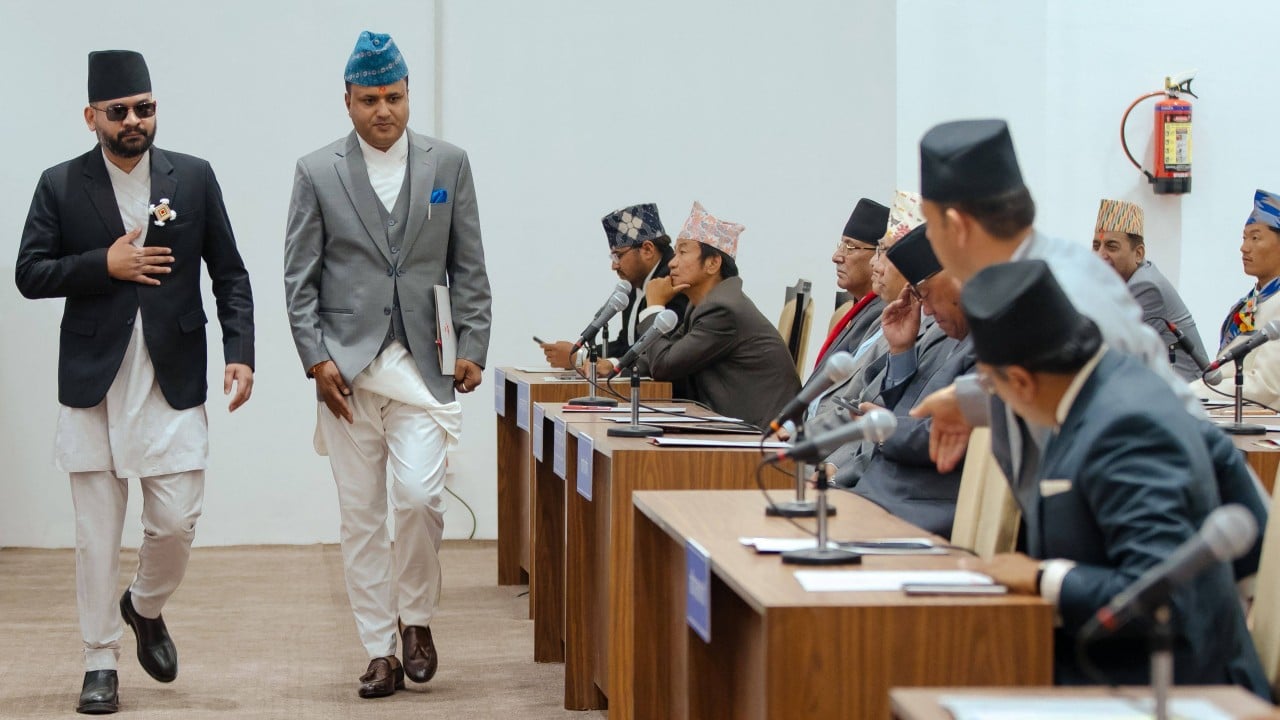
Let's look at the numbers. Nepal operates on a mixed-member proportional representation system. To hold a majority, you need 138 seats in the 275-member Pratinidhi Sabha. Currently, the landscape is fractured among the Big Three: the Nepali Congress, the CPN (UML), and the CPN (Maoist Centre).
Imagine a scenario where Balen Shah wins a dozen seats in a flash election. He still has to sleep with the enemy. To pass a single budget, he would have to trade away his principles to the very cartels he built his reputation on destroying.
I’ve seen this play out in emerging markets across South Asia. A charismatic "disruptor" enters the room, realizes he can’t even appoint a secretary without the approval of a coalition partner, and either becomes the very thing he hated or gets ousted in a No-Confidence motion within nine months.
The media calls this "entering the mainstream." I call it the death of the outsider.
The Executive Trap
The biggest misconception in the "Balen for PM" movement is that the Prime Minister has the same unilateral power as the Mayor of Kathmandu Metropolitan City.
As a mayor, Balen has a direct executive mandate. He can send bulldozers to clear an encroachment on a sidewalk. He can enforce a waste management contract. He can act.
The Prime Ministry is not an executive role in the same sense; it is a negotiation role.
In the Prime Minister’s Office, your day isn't spent fixing potholes. It is spent managing the egos of provincial governors and ensuring that your coalition partners’ cousins are getting the procurement contracts they were promised in the backrooms of the Baluwatar residence.
If Balen Shah takes the job, he loses the one thing that makes him powerful: the ability to say "No."
Why The Youth Vote Is Asking The Wrong Question
The "People Also Ask" section of the internet is currently flooded with queries about how Balen can "clean up" Singha Durbar.
The premise is flawed. You don’t clean up Singha Durbar by putting a clean man at the top. You clean it up by dismantling the bureaucracy that makes clean men dirty.
The real question isn't "When will Balen become Prime Minister?" The question is "Why do we still have a system that requires a Prime Minister to be a hostage to the parliamentary floor?"
Until Nepal shifts to a directly elected executive—a presidential-style system or a directly elected Prime Minister—any outsider who enters the palace will be swallowed whole.
The Real Cost Of The Spectacle
We are witnessing a massive misallocation of political capital.
Instead of building a nationwide grassroots movement that can capture 30% of the proportional vote, the supporters of the "Independent" movement are focused on a single personality. This is the "Messiah Complex" that has haunted Nepali politics since the 1950s. We keep waiting for a king, then a revolutionary, then a democrat, and now a rapper to save us.
The reality is far grimmer.
Balen Shah’s true power lies in his role as a thorn in the side of the establishment from the municipal level. By moving him to the federal level, the establishment isn't losing; they are winning. They are moving their most dangerous critic into a cage where they control the lock, the key, and the food.
I’ve analyzed dozens of "Third Way" movements across the globe. The ones that succeed don’t go for the crown first. They build deep, boring, institutional power at the local level for a decade before they even look at the national capital.
The Syndicate's Last Laugh
Do you really think the aging leaders of the NC and UML are afraid of Balen?
They are salivating at the prospect of him running for PM. Why? Because they know how to play the game of numbers. They know how to delay a bill in committee for eighteen months. They know how to use the judiciary to tie an executive's hands.
They want him in the ring so they can beat him with the rulebook.
If you want to actually disrupt the status quo, stop asking for a Balen premiership. Start asking for a constitutional amendment that renders the old guard’s seat-counting irrelevant.
Anything else is just a very expensive concert where the audience pays the price.
Stop looking at the sunglasses. Look at the balance sheet. Nepal doesn't need a savior; it needs a structural overhaul that no single man, no matter how popular, can deliver under the current rules.
Go ahead. Swear him in. Watch him drown. Or, we could actually start talking about the system instead of the man.
Pick one.