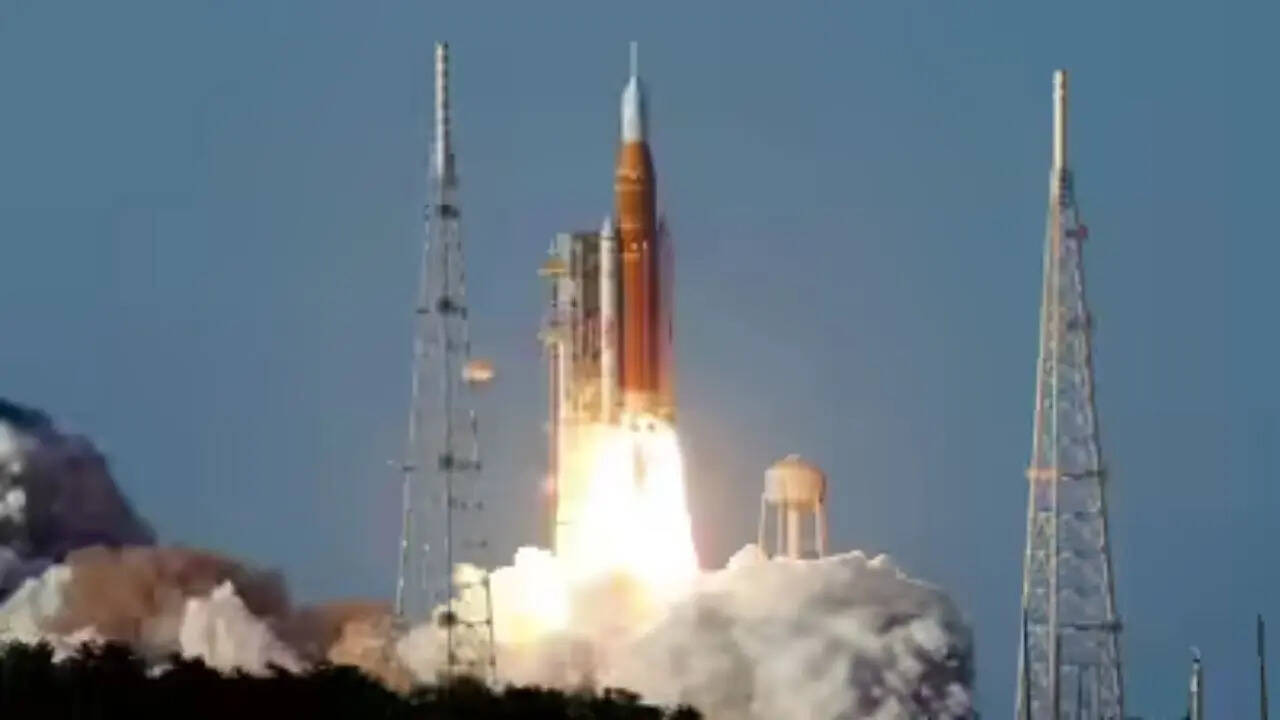
The physical reality of returning humans to the lunar vicinity scales logarithmically in complexity compared to low Earth orbit. On April 1, 2026, the Space Launch System (SLS) placed four astronauts into a highly elliptical Earth orbit, initiating the Artemis II mission. While public discourse frames this as a legacy flight tracing the steps of Apollo 8, a structural analysis reveals it as a heavily constrained engineering validation test.
The primary objective is not exploration but the stress-testing of a tightly coupled closed-loop system in a high-radiation environment. To understand the operational reality of where the crew is and when they will reach their destination, the flight must be deconstructed through its three distinct orbital phases.
Phase One: The High Earth Orbit Bottleneck
Following orbital insertion, the Orion spacecraft entered an initial orbit with an apogee of 1,200 nautical miles. The immediate operational sequence required a manual execution of the perigee raise burn by the Interim Cryogenic Propulsion Stage (ICPS). This pushed the spacecraft into a high Earth orbit (HEO) characterized by an extreme 23.5-hour period and an apogee of roughly 38,000 nautical miles.
The crew is currently operating within this HEO environment. This phase is dictated by an aggressive 24-hour verification checklist that acts as a hard gate before deep space injection.
Two critical failure pathways are being mitigated during this period:
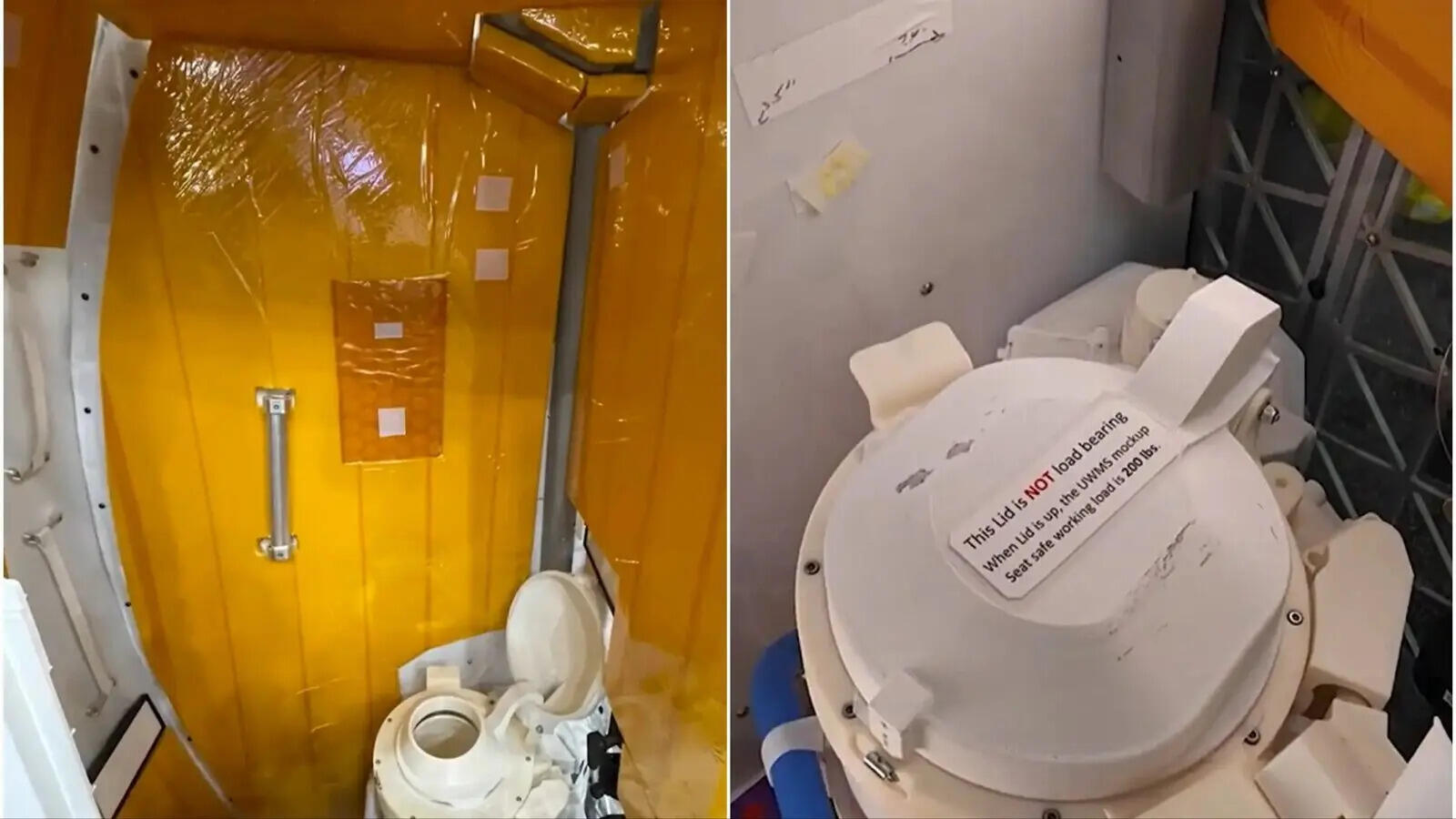
- Life Support System Outgassing and Loading: Unlike the uncrewed Artemis I mission, the presence of four metabolic loads introduces humidity, carbon dioxide, and ambient heat variables that ground simulations cannot fully model. Crew members are currently running stress tests of the Environmental Control and Life Support System (ECLSS) via forced physical exercise to measure the scrubbers' continuous draw rates.
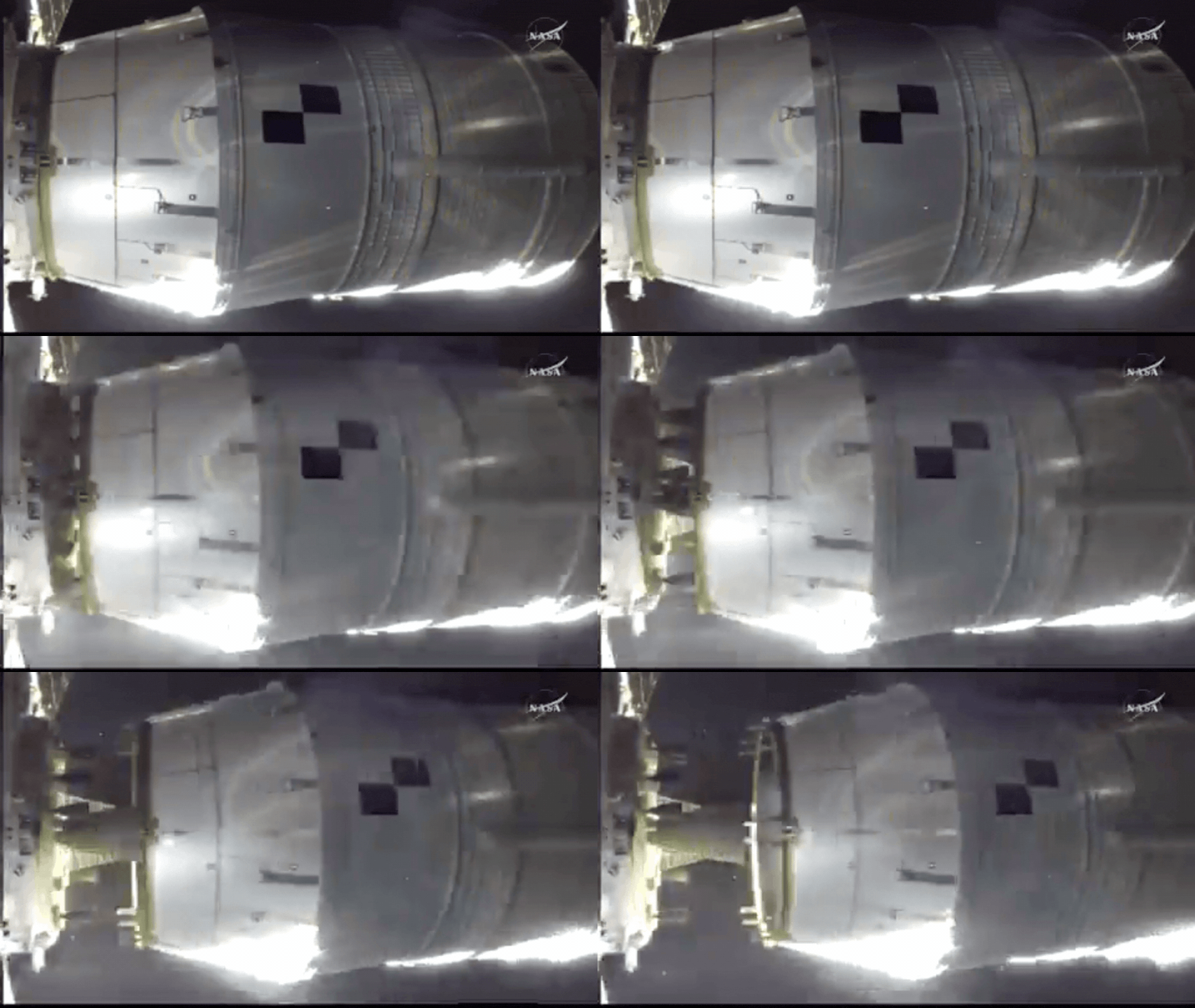
- Proximity Operations Handling: Pilot Victor Glover is executing manual handling tests using the spent ICPS as a fixed target. This is a critical risk-reduction exercise for Artemis III and IV, which will require manual docking maneuvers with orbiting landers. The handling qualities are evaluated using the Cooper-Harper rating scale to map pilot compensation against spacecraft response.
The HEO phase represents a calculated dwell. If the ECLSS or the auxiliary thrusters fail to meet specified telemetry bands during these first 24 hours, the mission can be aborted with a relatively low delta-v penalty, allowing the crew to return safely to Earth.
Phase Two: The Translunar Injection Cost Function
Assuming all telemetry gates are cleared, the European Service Module (ESM) will execute the Translunar Injection (TLI) burn. This maneuver provides the kinetic energy required to overcome the Earth's local gravity well and establish a ballistic trajectory toward the Moon.
The transit time is governed by the mass-to-thrust ratio of the ESM and the specific orbital geometry of the April launch window.
- The Velocity Vector: The TLI burn will accelerate the spacecraft toward the escape velocity threshold.
- The Four-Day Transit: The laws of orbital mechanics dictate that the transit from HEO to the lunar sphere of influence will consume approximately 96 hours. During this period, kinetic energy is continuously traded for potential energy, causing the spacecraft to decelerate relative to Earth as it climbs the gravitational hill.
Hypothesizing an optimized burn on the evening of April 2, the spacecraft will intercept the Moon's orbital path by approximately April 6. The precise moment of arrival is not a static target but a dynamic calculation based on the execution accuracy of the TLI and subsequent trajectory correction maneuvers.
Phase Three: The Free-Return Trajectory Mechanics
Artemis II utilizes a free-return trajectory. This is a highly specific orbital profile where the spacecraft uses the Moon's gravitational mass to reverse its direction and fling it back toward Earth without requiring a large engine burn.
The trajectory introduces strict physical parameters:
- Minimum Altitude: The closest approach to the lunar surface will be roughly 4,600 miles (7,400 kilometers).
- The Abort Constraint: The advantage of a free-return trajectory is passive safety. If the main propulsion system fail entirely after TLI, the spacecraft will naturally return to Earth's atmosphere. The limitation, however, is that the crew cannot enter a low lunar orbit. They are strictly passengers on a massive gravitational slingshot.
The Reentry Thermal Gradient
The return sequence, projected for April 10, introduces the final and most severe engineering constraint. Because Orion will be returning from deep space rather than low Earth orbit, it will hit the upper atmosphere at approximately 25,000 miles per hour (40,000 km/h).
The kinetic energy dissipation required to slow the capsule creates a plasma envelope around the heat shield, generating temperatures scaling toward 5,000 degrees Fahrenheit. The structural integrity of the spacecraft relies entirely on the ablative wear of the heat shield, a component that showed higher-than-expected erosion during the uncrewed Artemis I mission in 2022. The modifications made to the shield's block design since then are the true pass/fail criteria of the entire Artemis II mission.
The strategic play for NASA centers on the extraction of high-fidelity data from the Orion Artemis II Optical Communications System (O2O). This laser terminal, developed by MIT Lincoln Laboratory, is attempting the first high-bandwidth data transmission from the lunar vicinity on a crewed flight. Operational success here dictates the feasibility of live, high-definition telemetry streaming for complex lunar surface operations in the subsequent Artemis phases. The flight is less about a physical return to a location, and entirely about whether the data pipelines can survive the distance.