The strategic calculus regarding Venezuela’s sovereignty is shifting from a paradigm of diplomatic attrition to one of kinetic and logistical enclosure. Project South Spear—often characterized in popular media as a nebulous threat—functions as a multi-vector doctrine designed to exploit specific structural vulnerabilities within the Venezuelan state apparatus. To understand the operational reality, one must move beyond political rhetoric and analyze the three distinct pillars of this escalation: the disruption of illicit revenue streams, the degradation of command-and-control (C2) infrastructure, and the psychological decoupling of the military elite from the executive branch.
The Cost Function of Regime Survival
The Venezuelan state operates on a high-maintenance cost function where political loyalty is directly indexed to the availability of liquid capital. When the "Spear of the South" framework is applied, it targets the delta between the regime's mandatory expenditures—military salaries, subsidized food programs (CLAP), and debt servicing to creditors in Moscow and Beijing—and its shrinking revenue.
This economic encirclement is not merely about traditional sanctions. It involves the active interdiction of "shadow" exports. By mapping the AIS (Automatic Identification System) data of "ghost tankers" and applying satellite-based synthetic aperture radar (SAR), external actors can now identify ship-to-ship transfers with a precision that makes the previous decade’s smuggling routes obsolete. The strategic objective here is the "Fiscal Asphyxiation Point": the moment where the cost of maintaining internal security forces exceeds the total accessible tax and resource revenue.
The Triad of Regional Destabilization
The alarm radiating through the Southern Cone is a response to a fundamental shift in the regional security architecture. The "Spear" represents a departure from the "Maximum Pressure" era of 2017–2020 by integrating three specific operational capabilities:
- Forward Logistic Integration: The movement of high-readiness assets into neighboring territories is no longer about temporary exercises. It is about establishing "Warm Base" infrastructure—facilities that can be scaled to full operational capacity within a 72-hour window. This reduces the "Transit Friction" that previously gave Caracas a significant early-warning buffer.
- Asymmetric Intelligence Overmatch: Utilization of high-altitude long-endurance (HALE) platforms provides a persistent "Unblinking Eye" over the Miraflores Palace and key military installations. The ability to monitor real-time movements of the Fuerza Armada Nacional Bolivariana (FANB) removes the element of surprise that the regime has historically used to quell internal dissent.
- Cyber-Kinetic Coupling: The vulnerability of Venezuela’s electrical grid and telecommunications backbone (CANTV) acts as a force multiplier. If the physical "Spear" is the threat of kinetic action, the digital "Spear" is the ability to induce a total information blackout, isolating regional commanders from the central authority in Caracas.
The Command and Control Bottleneck
A critical oversight in standard geopolitical reporting is the assumption that the FANB is a monolithic entity. In reality, it is a fragmented collection of interest groups. The "South Spear" doctrine exploits the "Principal-Agent Problem" within the Venezuelan military.
The central authority (the Principal) cannot verify the absolute loyalty of regional commanders (the Agents) when communications are compromised or when the credible threat of personal targeting exists. As external pressure increases, the "Incentive Alignment" for a general shifts from "Defend the Regime" to "Ensure Personal Immunity."
This creates a bottleneck in the decision-making process. If a regional commander believes that a specialized, high-precision strike capability is positioned within striking distance—as the "Spear" implies—their willingness to suppress local uprisings diminishes. They must weigh the immediate risk of regime punishment against the long-term risk of being on the losing side of a rapid decapitation strike.
Logistic Realities of the Southern Frontier
The geography of the Orinoco Mining Arc and the border with Colombia serves as a friction point. The "Spear" utilizes the "Hemispheric Defense Framework," which essentially outsources the containment of the Tren de Aragua and other non-state actors to a coalition of regional intelligence services. This puts the Venezuelan executive in a "Two-Front Bind."
- Front One: The maritime and aerial corridors controlled by U.S. Southern Command.
- Front Two: The porous land borders where irregular warfare and intelligence gathering are escalating.
The second limitation of Venezuela's defense strategy is its reliance on aging S-300VM surface-to-air missile systems. While formidable on paper, these systems require high-uptime maintenance and integrated radar networks that are increasingly susceptible to electronic warfare (EW) jamming. The "Spear" doctrine likely includes the deployment of EA-18G Growler-equivalent capabilities, which can "blind" the Venezuelan Integrated Aerospace Defense Command (CODAI) before any physical breach occurs.
The Mechanism of Psychological Encirclement
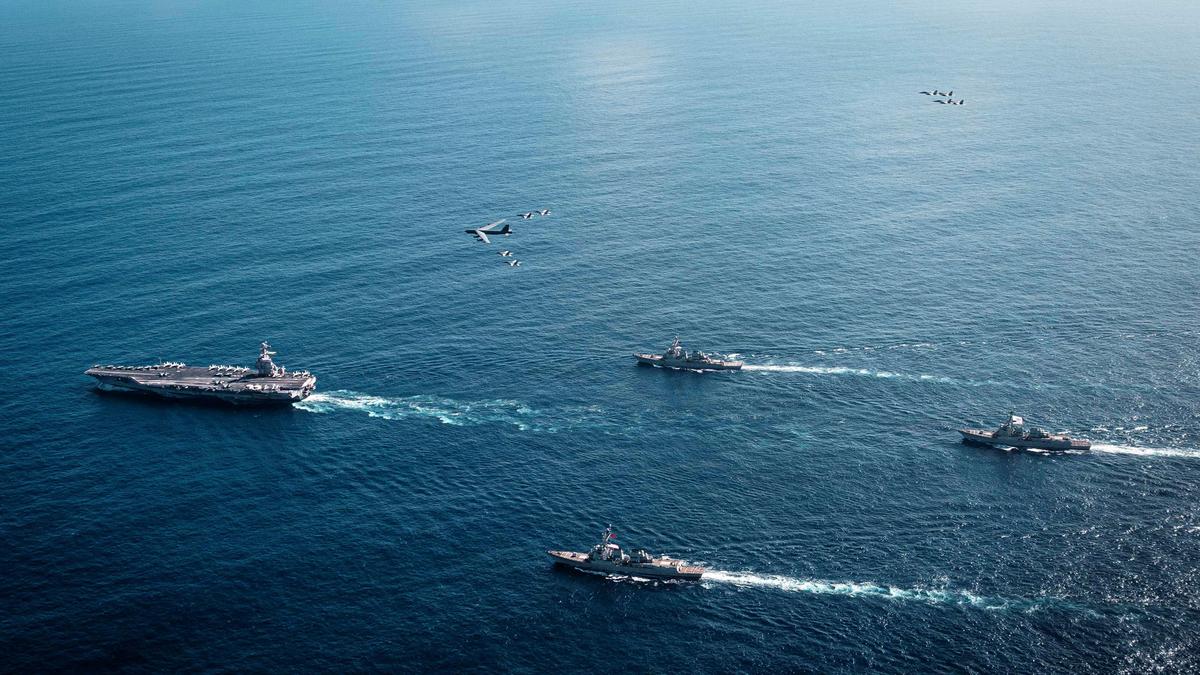
Beyond the hardware, the "Spear" functions as a psychological operation intended to trigger a "Cascade Failure" in regime confidence. This is achieved through the transparent movement of assets. In traditional warfare, secrecy is paramount; in the "Spear" framework, visibility is the weapon.
By publicizing the deployment of specialized units and the upgrading of regional runways, the adversary forces the Venezuelan leadership into a permanent state of "High-Alert Fatigue." This state leads to:
- Resource Depletion: Constantly moving troops to meet perceived threats consumes fuel and equipment life cycles that cannot be easily replaced due to sanctions.
- Paranoia-Induced Purges: The fear of "internal collaborators" linked to the "Spear" forces the regime to purge its own ranks, often removing the most competent officers in favor of the most loyal, thereby weakening the overall effectiveness of the FANB.
Theoretical Constraints and Failure Modes
No strategy is without its failure modes. The primary risk of the "Spear of the South" is "Inadvertent Escalation." If the pressure is applied too rapidly without a "Golden Bridge" (an exit path for the regime elite), the result may not be a transition of power but a "State Collapse" scenario.
A state collapse in Venezuela would trigger a "Migration Shockwave" that the current regional infrastructure is not equipped to handle. Furthermore, the "Sunk Cost Fallacy" for the regime's international backers—Russia and China—must be considered. If they perceive the "Spear" as a direct threat to their sovereign investments, they may provide "Asymmetric Life Support" (e.g., advanced EW suites or private military contractors) to tip the balance back toward a stalemate.
Strategic Forecast: The Deployment of Tactical Friction
The next phase of this engagement will not be a singular invasion, but the systematic introduction of "Tactical Friction." This involves:
- Financial Interdiction 2.0: Targeting the digital wallets and crypto-exchanges used by the regime to bypass the SWIFT system.
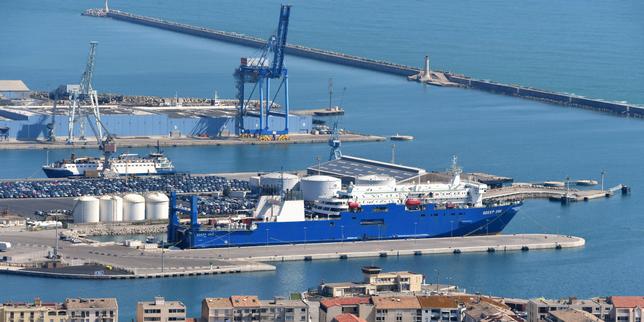
- Maritime Exclusion Zones: Implementing "Sanitary Cordons" under the guise of anti-narcotics operations to effectively blockade key petroleum ports.
- Precision Sanctioning of Mid-Level Officers: Moving the focus from the top 10 leaders to the top 500 operational commanders to break the chain of command.
The strategic play is to force the Venezuelan executive to negotiate from a position of "Negative Leverage," where every day of delay results in a measurable and irreversible loss of both domestic control and personal safety. The "Spear" is not just a weapon; it is a clock.
To move forward with a deeper analysis of the specific logistical hubs involved, we should examine the current "Sortie Rates" of surveillance aircraft from regional bases to determine the actual intensity of the "Unblinking Eye" over the Caracas-Valencia corridor.