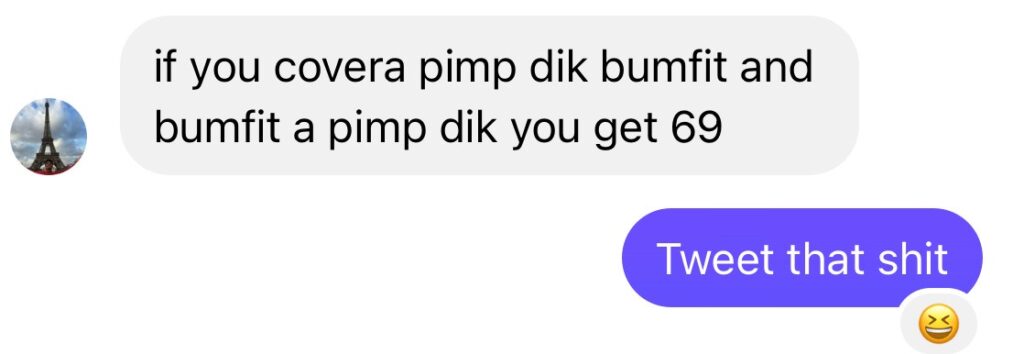
You’ve probably never heard of "Bumfit," but your ancestors might have used it every single day to keep their livelihoods from wandering off into the fog. It sounds like gibberish or a playground insult. In reality, it’s a ghost. It is a linguistic fossil from a language that hasn't been spoken as a primary tongue in England for over a thousand years. When we talk about the history of counting rhymes, we aren't just talking about bored shepherds in the Cumbrian fells. We’re talking about the survival of the Celtic soul in the face of Germanic invasion.
The standard story of the English language is that the Anglo-Saxons showed up, pushed the Britons to the edges—Wales, Cornwall, Scotland—and replaced the local speech with their own. That’s mostly true. But languages don't just vanish. They hide. They hide in the names of rivers like the Avon (which basically just means "river") and they hide in the way farmers count their sheep.
The Yan Tan Tethera Mystery
If you go to Northern England or parts of Scotland, you might find old-timers who remember a specific set of numbers used for tallying sheep, knitting stitches, or even children’s games. They go by many names—the Lincolnshire Score, the Swaledale digits, or most commonly, Yan Tan Tethera.
Look at them closely.
- Yan
- Tan
- Tethera
- Methera
- Pimp
Compare that to modern Welsh: Un, dau, tri, pedwar, pump. It’s almost identical. These aren't English numbers. They are Brythonic. While the rest of the country was busy adopting "One, Two, Three" from their Germanic overlords, these rural communities held onto a counting system that predates the Roman Empire.
The most fascinating part is how the system handles the number fifteen. In these rhymes, fifteen is often Bumfit. This isn't some random nonsense word. It comes from the Old Welsh pymtheg, which is a combination of five (pimp) and ten (deg). When you hit fifteen, you don’t just say fifteen. You say "five-ten." Then sixteen becomes "one-and-five-ten" (Yan-a-bumfit). It is a mathematical relic of a vigesimal (base-20) system that has survived against all odds.
Why the Numbers Refused to Die
Linguists often wonder why a shepherd would keep using Celtic numbers when they speak English for everything else. It comes down to utility and tradition. Sheep counting isn't just math. It’s a rhythmic, ritualistic process.
The "Score" system works in blocks of twenty. You count twenty sheep, make a mark in the dirt or notch a stick, and then start over. The rhythm of Yan, Tan, Tethera, Methera, Pimp is percussive. It’s easier to maintain a steady pace with these sharp, distinct syllables than with the more mushy "one, two, three, four, five."
There is also the "insider" element. For centuries, these counting systems were a badge of the trade. If you didn't know the score, you weren't a real shepherd. It was a trade language, a shibboleth that kept the community tight. Even when the meanings of the words were forgotten, the sounds remained because they worked.
The Connection to Indo-European Roots
To understand why Pimp sounds like Five, we have to go way back. We are talking about Proto-Indo-European (PIE), the mother tongue that connects Latin, Sanskrit, Greek, and English.
The PIE word for five was something like penkwe. As tribes migrated, that "p" sound did different things. In the Germanic branch (which became English), the "p" shifted to an "f" sound. That’s how penkwe became five. In the Celtic branch, specifically the P-Celtic group that occupied most of Britain, the "p" stayed put or transformed into a "b".
So, when a Cumbrian shepherd says "Pimp," he is actually using a word that is technically more "ancient" in its phonetic structure than the English "Five." He's speaking a dialect that skipped the Great Germanic Sound Shift. It’s a direct line to the Bronze Age.
How Counting Rhymes Became Nonsense
As these systems moved from the fields to the nurseries, they started to mutate. Kids don't care about linguistic purity. They care about rhymes. This is how we get the weird variations like:
- Hevera, Devera, Dick (8, 9, 10)
- Lethera, Methera, Co - Inchy, Pinchy, Dominy
By the time these were recorded by Victorian folklorists in the 19th century, there were hundreds of local variations. Some had been influenced by Romani words. Others by Viking Old Norse. In some versions, ten is "Dik." In others, it’s "Tig." But the skeleton is always the same. It’s always a count to twenty, and it always breaks at fifteen.
The "Bumfit" phenomenon is the peak of this linguistic drift. It sounds funny to us today because we’ve lost the context. We hear a silly word; the shepherd heard a precise numerical coordinate.
Why You Should Care About Dead Numbers
We live in a world of standardization. We want one clock, one currency, and one way to count. But there’s a loss of texture in that. When we lose Yan Tan Tethera, we lose a piece of the landscape. These numbers belong to the hills. They were shaped by the same rain and wind that shaped the sheep they were counting.
They also prove that "Standard English" is a relatively new invention. The history of Britain isn't a clean line of succession. It’s a messy, overlapping mess of cultures that refused to be fully conquered. Every time you use a "nonsense" counting rhyme to pick who's "it" in a game, you might be tapping into a 2,000-year-old Celtic tradition.
Tracking Down Your Own History
If you want to see this in action, don't look in a textbook. Look at old local glossaries from the 1800s. Look for "Sheep Scoring" records in county archives in Yorkshire, Westmorland, or Cumberland.
You’ll find that people didn't just count sheep this way. They counted stitches in knitting. They counted "rows of fruit." This was a functional, everyday tool for the working class. It wasn't academic. It was survival.
Stop thinking of "Bumfit" as a joke. It’s a survivor. It’s a linguistic cockroach that lived through the Romans, the Saxons, the Vikings, and the Normans. That’s something worth respecting.
Next time you’re counting something tedious, try it. Yan, Tan, Tethera, Methera, Pimp. You’ll find the rhythm carries you faster than "One, Two, Three" ever could. The old ways usually have a reason for sticking around as long as they do. Go find a local dialect map and see what the "score" was in your neck of the woods. You might find that your own backyard has a much older voice than you realized.