The air in upstate New York during hockey season doesn’t just feel cold. It feels heavy. It is a thick, biting dampness that clings to the wool of a team jacket and settles into the marrow of your bones. For the parents and players of a youth hockey team, this cold is the backdrop of a life lived in two-hour increments—early morning practices, the smell of sharpened skates, and the long, humming drives between small-town rinks.
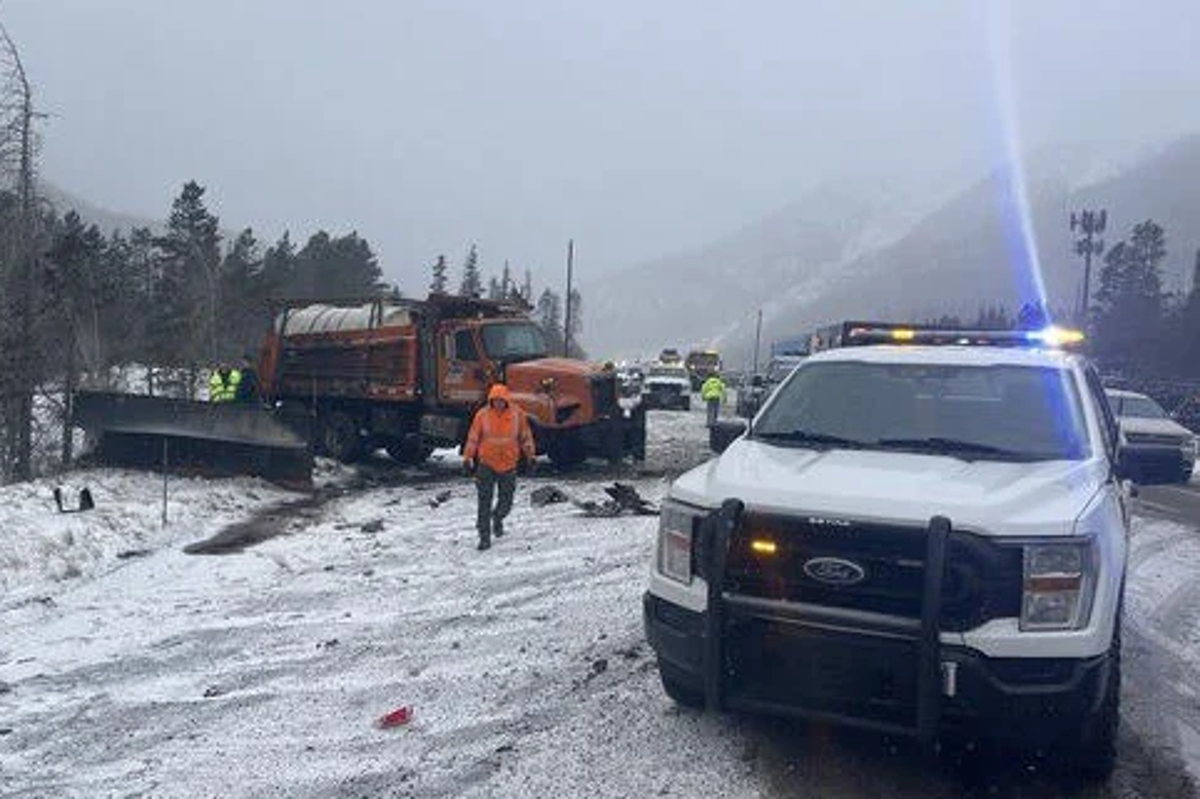
On a Saturday that should have been defined by the thrill of a power play or the sting of a hard-won victory, the narrative shifted. It didn't happen on the ice. It happened on a slick stretch of asphalt where the mundane act of road maintenance collided with the fragile reality of a team bus.
The Geometry of a Moment
The physics of a crash are indifferent to the passengers. A snow plow is a beast of utility, a massive steel blade designed to clear the path for the rest of us. It weighs tons. When that weight is mismanaged, it becomes a kinetic nightmare. On this specific afternoon, a 2021 Western Star snow plow was being operated by a driver whose primary job was to make the roads safer for travelers like the members of the youth hockey program.
The team was traveling in a Ford Transit van. It is a vehicle built for camaraderie, meant to carry gear bags, sticks, and the high-energy chatter of teenagers coming off a game. As the van moved through the intersection, the plow didn't stop. It didn't yield. It struck the passenger side of the van with the kind of force that reorders the universe for everyone involved.
Metal folded. Glass turned into a million diamond-shaped shards. In that split second, the van wasn't a vessel for athletes anymore; it was a site of trauma.
The driver of the plow has since been charged. The legal system calls it "failure to yield the right of way" and "reckless endangerment." But those are dry, clinical terms for a mistake that left a community shattered. To understand the gravity, you have to look past the police report and into the rows of a locker room where one seat remains empty.
The Invisible Stakes of the Road
We often treat snow plow drivers as invisible sentinels. We hear them in the middle of the night, the rhythmic scraping of steel against pavement, a sound that usually signals safety. We trust them. We assume that the person behind the wheel of a ten-ton machine is hyper-vigilant, aware that they are essentially driving a weapon of necessity.
When that trust breaks, the fallout isn't just physical. It’s a collective loss of breath.
Consider the "What Ifs" that haunt a small town after an event like this. What if the game had ended five minutes earlier? What if the light had stayed green for three seconds longer? These questions are the ghosts of the highway. They don't provide answers, but they highlight the razor-thin margin between a normal Saturday and a tragedy that leads the evening news.
The driver now faces the weight of the law. Investigations point to a failure to observe the most basic rules of the intersection. It wasn't a mechanical failure. It wasn't an "act of God" involving a sudden whiteout or an unpredictable patch of black ice. It was a human error.
The Silence After the Siren
In the immediate aftermath of a wreck involving a youth team, there is a specific kind of silence. It’s the silence of parents checking their phones, waiting for a text that says "we're okay." It’s the silence of teammates who aren't sure how to talk about the person who isn't there to take their shift on the wing.
One person lost their life in that van. Others were injured, their bodies bearing the marks of a collision that will take years to mentally unpack. For the victim’s family, the plow driver’s name is now synonymous with a permanent "before" and "after."
We tend to focus on the charges—the "reckless" and the "deadly"—because they offer a sense of order. If we can punish the person responsible, we feel like we’ve fixed the problem. But the problem is deeper. It is the complacency that creeps into a routine job. It is the moment a driver forgets that the blade they are pushing isn't just clearing snow; it's navigating through the lives of neighbors.
The hockey world is a tight-knit ecosystem. When a team from one town suffers, sticks are put out on porches from Maine to Minnesota. It’s a silent tribute to the shared risk of the road. Every parent who has ever driven a carload of kids to a 6:00 AM tournament knows the vulnerability of those dark, wintry highways.
Accountability in the Aftermath
The legal proceedings will move at a glacial pace. There will be depositions, photos of skid marks, and expert testimony about sightlines and braking distances. The driver will sit in a courtroom, a person who likely started their day thinking they were doing a public service, now facing the reality of a life taken by their hand.
Recklessness isn't always a high-speed chase or a drunken blur. Sometimes, it is simply the failure to look. It is the assumption that because you are the biggest thing on the road, the road belongs to you.
The charges filed against the driver serve as a reminder that the responsibility of operating heavy machinery is absolute. There is no room for a "bad day" or a "distraction" when you are behind the wheel of a vehicle that can crush a passenger van like an aluminum can. The law seeks to balance the scales, but anyone who has ever stood in a cemetery knows those scales never truly level out.
The youth hockey team will eventually return to the ice. They will skate hard, they will sweat, and they will find solace in the rhythm of the game. But the cold they feel now isn't just the temperature of the rink. It is the lingering chill of a Saturday afternoon on a New York highway where the path wasn't cleared, but crossed.
The heavy steel of the plow rests in a lot now, impounded and still. It is a grim monument to a moment of negligence.
Somewhere, a gear bag sits untouched in a hallway, the salt from the road still drying on its straps.



