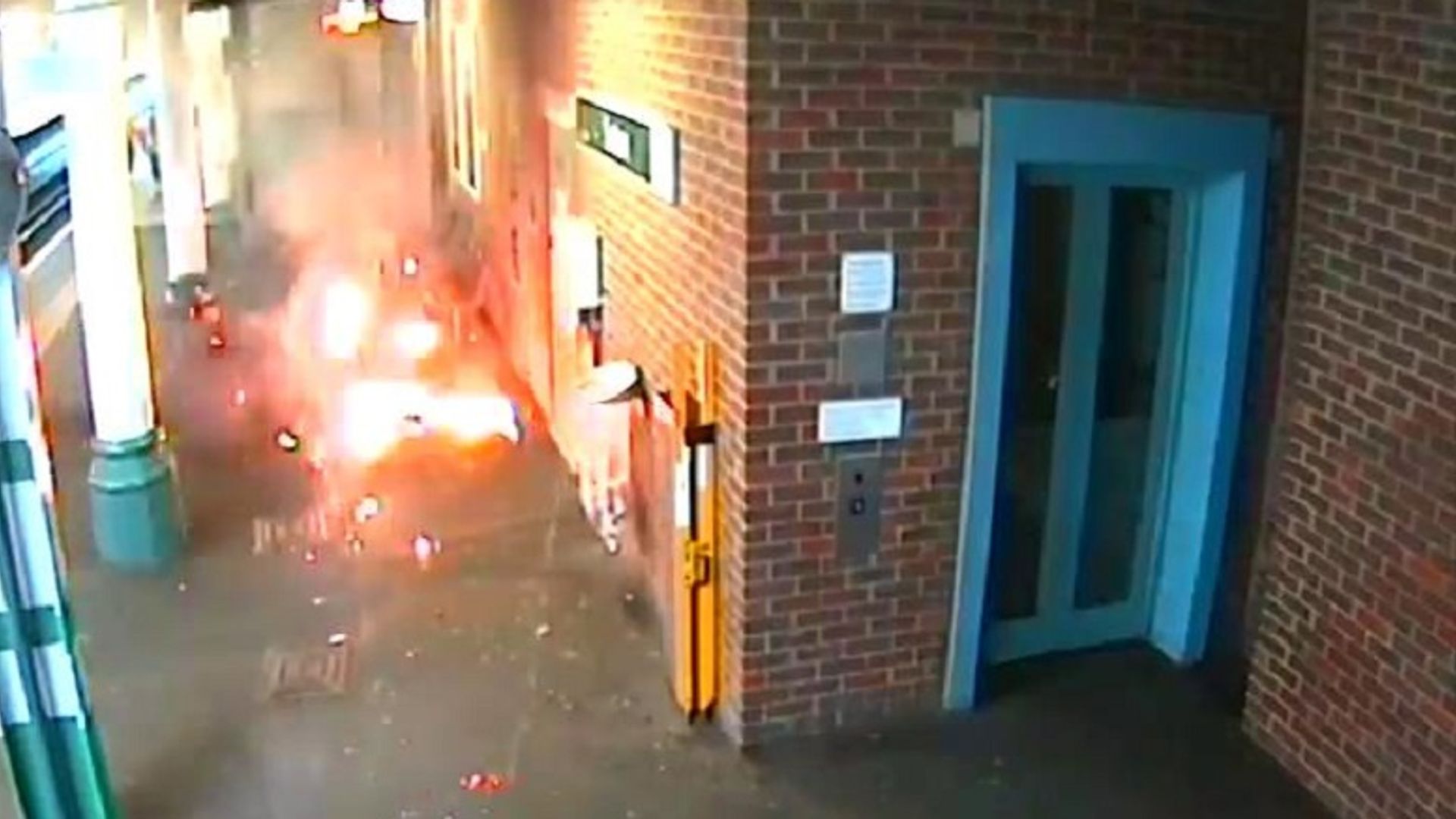
Sarah didn't hear the explosion. She heard a hiss. It was the sound of a pressurized secret finally escaping its metal cage. In the corner of her studio apartment, tucked neatly behind the sofa, her e-bike battery was undergoing a silent, chemical rebellion. Within seconds, the hiss became a roar. A jet of white-hot flame, localized and intense as a blowtorch, punched through the plastic casing.
By the time the smoke alarm registered the catastrophe, the air was already toxic. This wasn't a slow-burning house fire started by a forgotten candle or a frayed lamp cord. This was a thermal runaway. It is a phrase fire investigators use to describe a chain reaction that cannot be stopped by conventional means. Once the internal separators of a lithium-ion cell fail, the energy stored inside isn't just released—it is weaponized.
We are living through a quiet revolution on two wheels. You see it on every city street: the silent glide of the food delivery rider, the effortless uphill climb of the commuter, the zip of the electric scooter weaving through gridlocked cars. It is a beautiful, efficient solution to the urban chokehold. But beneath the floorboards of our apartments and under the seats of our bikes, we are hauling around dense packets of high-energy chemistry that we don't fully respect.
The numbers are no longer just statistics; they are sirens. In major hubs like London and New York, fire services are responding to battery-related blazes at a record-shattering pace. These aren't just "accidents." They are the predictable result of a collision between cutting-edge physics and a grey market that prioritizes price over lives.
The Anatomy of a Trapped Sun
To understand why a bicycle can suddenly turn into a furnace, you have to look at the battery as a pressurized vessel of liquid energy. Inside those sleek metal canisters are hundreds of small cells, each packed with a volatile cocktail of chemicals. Between the positive and negative electrodes sits a separator—a film thinner than a human hair.
When that film fails, the battery shorts. This generates heat. That heat then triggers the neighboring cell to fail, which generates more heat. This is the "runaway" in the name. It is a domino effect occurring at a molecular level, accelerating until the entire pack reaches temperatures exceeding 600°C.
Water doesn't put these fires out. Not really. It might cool the surrounding area, but the battery produces its own oxygen as it burns. It feeds itself. Firefighters often have to submerge entire vehicles in shipping containers of water for days just to ensure the reaction has truly died.
Why is this happening more now? It isn't just that there are more bikes on the road. The problem is the "Frankenstein" factor.
Consider the "Conversion Kit." For a few hundred dollars on an unvetted marketplace, anyone can turn a standard mountain bike into an electric speedster. You get a motor, a controller, and a battery. Often, these components aren't designed to talk to each other. They are mismatched, forced into a marriage of convenience. The charger might push too much current; the battery might lack a sophisticated Management System (BMS) to shut things down when they get too hot.
The Hidden Price of the Cheap Charge
We have become a society that expects technology to be cheap and invisible. We buy third-party chargers because the original manufacturer’s version costs $80 and the knock-off costs $15. We assume that if it fits the plug, it is safe.
But a charger is not just a wire. It is a gatekeeper. A high-quality charger communicates with the battery, sensing its health and slowing the flow of electrons as it nears capacity. A cheap charger is a firehose. It keeps pushing energy into a battery that is already full, stressing the chemistry until the internal structures warp and buckle.
Then there is the physical trauma. Imagine dropping your phone. The screen cracks, you curse, and you move on. Now imagine your e-bike battery, mounted low on a frame, bouncing over potholes, vibrating against the pavement, or taking a hard knock against a curb. Unlike your phone, that battery is a heavy, high-voltage brick. A dent in the outer casing can be a death sentence for the cells inside. The damage is invisible. It sits there, dormant, waiting for the next time you plug it in to finally give way.
The delivery economy has accelerated this risk to a breaking point. For many, an e-bike isn't a weekend toy; it’s a lifeline. It’s the difference between making rent and falling behind. These bikes are ridden for twelve hours a day, in the rain, in the snow, and through the vibration of cobbles. They are charged in cramped hallways and overcrowded apartments where the bike sits between the resident and the only exit.
When a battery fails in these conditions, it creates a "curtain of fire." Because the gases released are heavier than air, they sink, filling the room with a thick, flammable mist before the first flame even appears. By the time someone wakes up, the exit is blocked by a white-hot wall of chemical fury.
Learning the Language of the Machine
We don't need to fear the technology, but we do need to develop a new kind of literacy. We need to learn to listen to what our devices are telling us.
A battery that smells like sickly-sweet fruit is a battery that is leaking electrolyte. A battery that feels hot to the touch while sitting idle is a battery in the early stages of failure. A battery that has begun to bulge or "bloat" is a bomb waiting for a trigger.
The solution isn't to ban the e-bike. To do so would be to retreat from one of the most promising shifts in urban transit in a century. The solution is a return to quality and a rejection of the disposable mindset. It means buying from reputable brands that subject their packs to rigorous testing. It means never charging a battery overnight while you sleep. It means treating that hunk of metal and plastic with the same caution you would treat a canister of gasoline.
Government regulation is slowly catching up, moving to ban the sale of uncertified batteries and chargers that don't meet basic safety standards. But the market moves faster than the law. For now, the responsibility sits in our hallways and garages.
Sarah’s apartment was gutted in under ten minutes. She survived because she happened to be awake, and she happened to be near the door. Most aren't that lucky. As we plug in our lives, our phones, our scooters, and our cars, we are making a silent pact with the physics of the future. We are carrying the sun in our pockets and under our seats.
The glow is beautiful, and the speed is intoxicating. But fire has no conscience. It only follows the path we lay for it, cell by cell, until there is nothing left to burn. We must decide if the convenience of a cheap charge is worth the weight of the ashes it leaves behind.
It starts with a hiss. By the time you hear the roar, it’s already too late.