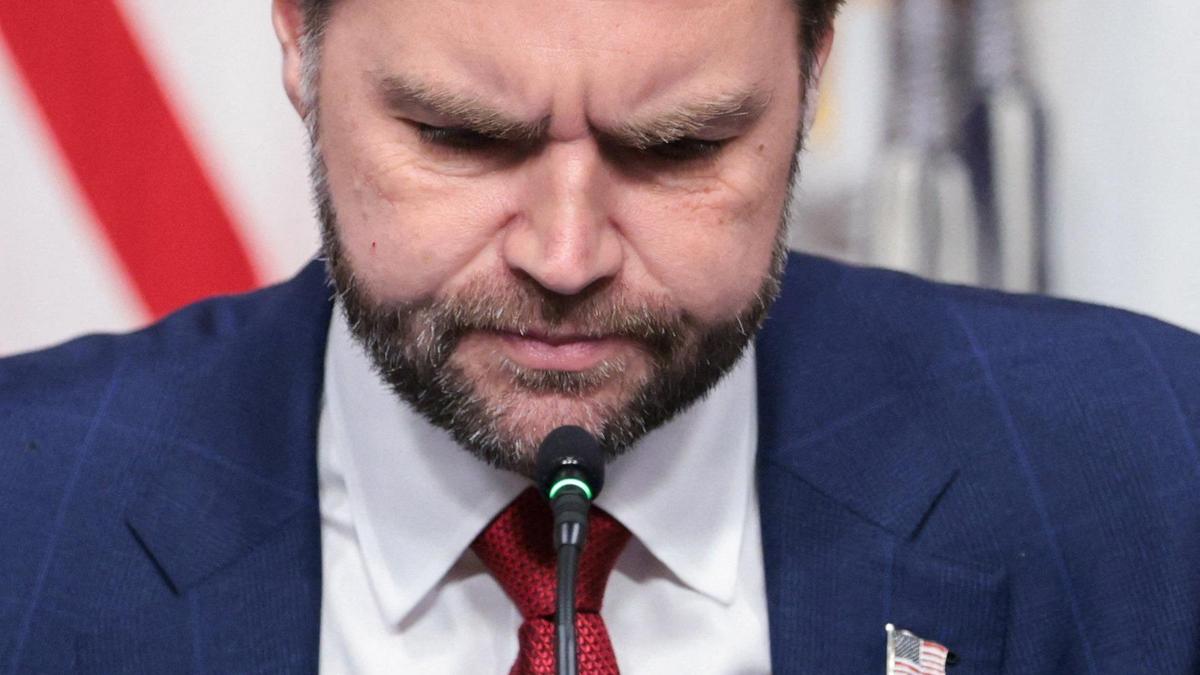
J.D. Vance isn't just another politician nodding along to briefing papers. He’s obsessed with UFOs. Most people in Washington treat the subject of Unidentified Aerial Phenomena (UAPs) like a career-ending joke, but the Vice President has leaned in. It's a massive shift in how the executive branch handles the unexplained. For decades, the official line was "nothing to see here." Now, the man a heartbeat away from the presidency is openly questioning what’s flying in our restricted airspace.
You’ve probably seen the headlines. Some mock him. Others cheer. But if you look at the data coming out of the Pentagon’s All-domain Anomaly Resolution Office (AARO), Vance’s curiosity isn't just a quirk. It’s a response to a growing pile of sensor data that the military can't explain. We aren't talking about grainy photos from the 1950s anymore. We're talking about radar tracks, FLIR footage, and multiple-sensor corroboration.
Why the Vice President is Digging into UAPs
Vance’s interest isn't about little green men. It’s about transparency and national security. During his time in the Senate and now in the White House, he’s pushed for the declassification of records that have been buried in "black programs" for years. He’s voiced frustration with the "Pentagon bureaucracy" that seems to hide information even from the people elected to oversee it.
He recently mentioned that his interest spiked after talking to pilots. These aren't conspiracy theorists. They’re highly trained observers. When a Navy pilot tells you they saw a craft hovering against hurricane-force winds with no visible means of propulsion, you listen. Or at least, Vance does. He’s pointed out that if these objects belong to a foreign adversary, we have a catastrophic intelligence failure. If they aren't ours and they aren't theirs, we have a much bigger reality check coming.
The Problem with Military Secrecy
The push for UAP disclosure has always hit a brick wall at the Department of Defense. They claim they're protecting "sources and methods." Vance doesn't buy it. He’s argued that the American public can handle the truth, even if that truth is "we don't know what these are."
The 2024 and 2025 National Defense Authorization Acts (NDAA) included language specifically aimed at forcing the government's hand on UFO records. While some of the more aggressive transparency measures were stripped out by House leadership, the momentum hasn't stopped. Vance has been a vocal supporter of the idea that the government shouldn't be able to hide non-prosaic technology under the guise of private aerospace contracts.
What the Pilots are Actually Seeing
To understand why a Vice President would risk his reputation on this, you have to look at the specifics of the encounters. These aren't flashes in the sky. Military encounters often involve what researchers call "the five observables."
- Anti-gravity lift: No control surfaces like wings or rotors.
- Sudden and instantaneous acceleration: Moving from a hover to hypersonic speeds without breaking the sound barrier or destroying the craft.
- Hypersonic velocities without signatures: No heat trail. No sonic boom.
- Low observability: Ability to become invisible to radar or the naked eye.
- Trans-medium travel: Seeing objects move from space to the atmosphere and then into the ocean without changing speed.
If even 1% of these reports are accurate, our current understanding of physics is incomplete. Vance knows this. He’s positioned himself as the guy willing to ask the awkward questions that his predecessors avoided.
The Political Risk of Being the UFO Guy
There’s a reason most politicians stay away from this. The "giggle factor" is real. Historically, bringing up UFOs was a great way to get labeled as a kook. But the tide turned in 2017 after the New York Times published those famous Navy videos.
Vance is betting that the public is tired of being stonewalled. He’s tapping into a deep-seated distrust of federal institutions. By demanding UFO transparency, he’s not just talking about aliens. He’s talking about accountability. He’s saying that the "Deep State"—a term he uses frequently—doesn't get to keep secrets from the Commander-in-Chief or the taxpayers.
Why This Matters for 2026 and Beyond
As we move deeper into 2026, the pressure for a "controlled disclosure" is mounting. Members of the Senate Intelligence Committee have already received classified briefings that reportedly left them "disturbed." Vance’s obsession ensures that this topic stays on the White House agenda. It’s no longer a fringe issue relegated to late-night radio shows.
If the Vice President keeps pushing, we might see the first real cracks in the wall of silence. He’s already signaled that he wants more whistleblowers to come forward under the protection of the laws passed recently. He’s basically telling the guys in the windowless rooms at the Pentagon that their time is up.
Real Steps Toward Transparency
If you want to follow this trail, don't just wait for a press conference. Watch the UAP Discovery Act updates. Keep an eye on the whistleblower testimonies coming out of the House Oversight Committee. The real work is happening in the unclassified summaries of AARO reports, though Vance and others have criticized those reports for being too dismissive.
Start by reading the 2021 Preliminary Assessment from the Office of the Director of National Intelligence. It was the first time the government admitted that UAPs are a "physical threat" to flight safety. From there, look into the David Grusch testimony from 2023. Grusch, a former intelligence officer, claimed under oath that the U.S. has "intact and partially intact" craft of non-human origin. Vance has referenced the need to verify these claims seriously rather than just laughing them off.
The next move is simple. Demand that your local representatives support the UAP Disclosure Act. The Vice President is already on board, but he can't fight the entire military-industrial complex alone. It’s time to see the flight logs. It’s time to see the high-resolution satellite imagery that we know exists. The "obsession" Vance has isn't a distraction. It's a demand for the truth about our place in the universe.