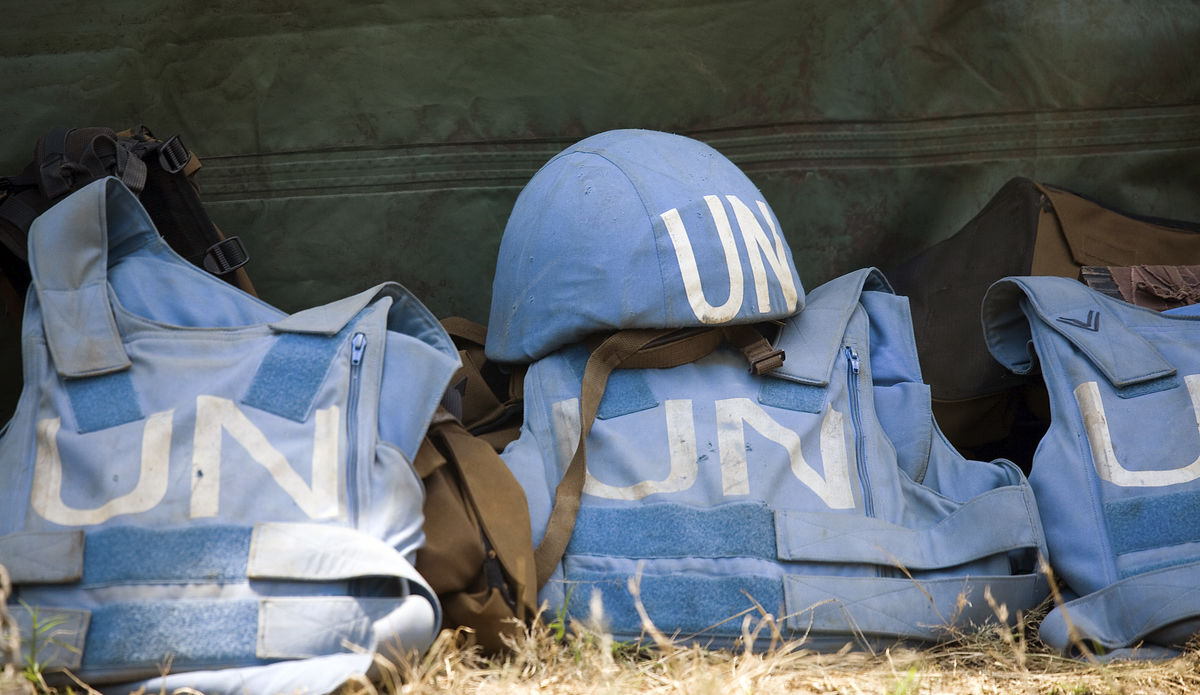
The headlines are predictable. A blue helmet falls in Southern Lebanon. An Indonesian peacekeeper is killed, others are wounded, and the international community reaches for its well-worn script of "deep concern" and "condemnation in the strongest possible terms." It is a hollow ritual. While the media treats these incidents as tragic anomalies or "accidental" escalations, they are actually the logical conclusion of a bankrupt security architecture.
We are sending soldiers into a meat grinder with a mandate written by bureaucrats who haven't smelled cordite in thirty years. If you think UNIFIL—the United Nations Interim Force in Lebanon—is there to actually "keep peace," you are falling for the most expensive PR campaign in military history.
The Myth of the Neutral Buffer
The common consensus is that UNIFIL acts as a neutral buffer between Israel and Hezbollah. This is a fantasy. In any high-intensity conflict zone, "neutrality" is just another word for "target."
By its very design, a peacekeeping force is a reactive entity. It exists in a state of permanent tactical disadvantage. Under Chapter VI of the UN Charter, these troops are restricted to self-defense. In Southern Lebanon, this translates to a bizarre reality where thousands of armed personnel watch rockets fly over their heads and tanks roll past their checkpoints, only to file a report that will be buried in a New York basement.
The Indonesian soldier killed in this recent strike wasn't a casualty of a "mistake." He was a casualty of a mission that lacks the teeth to deter anyone and the mobility to stay out of the way. When two regional powers decide to settle scores, the blue helmet isn't a shield; it’s a tripwire that nobody is afraid to trip.
Sovereignty as a Convenient Excuse
The media loves to talk about "violations of sovereignty." It’s the favorite phrase of diplomats who want to sound serious without doing anything.
Let’s be blunt: Sovereignty in Southern Lebanon is a ghost. The Lebanese Armed Forces (LAF) have nominal control, Hezbollah has the actual hardware, and Israel has the air superiority. UNIFIL is shoved into the middle of this three-way power struggle and told to "monitor" the situation.
I have seen this movie before. In the Balkans, in Rwanda, and now across the Blue Line. We take professional soldiers from countries like Indonesia, Italy, and India—men and women who are trained for combat—and we tell them to play referee in a game where the players don't recognize the referee’s authority. It is an insult to their training and a death sentence for their squads.
The "lazy consensus" suggests that if we just had more troops or more funding, the mission would work. Wrong. You cannot "monitor" a war into non-existence. Either you give these troops a Chapter VII mandate—the power to actively enforce peace through kinetic action—or you bring them home. Anything in between is just gambling with human lives for the sake of appearances.
The Business of Peacekeeping
Why does this continue? Follow the money.
For many contributing nations, UN peacekeeping is a business. The UN reimburses countries for the troops they provide. For a developing economy, sending a battalion to Lebanon is a way to subsidize their own military budget while gaining international "prestige." This creates a perverse incentive: governments send their soldiers into harm's way not because the mission is achievable, but because the checks clear.
- Reimbursement Rates: The UN pays roughly $1,400 per soldier, per month, plus equipment costs.
- Political Capital: It buys a seat at the table in diplomatic circles.
- The Cost: Human lives traded for foreign exchange reserves.
This is the "battle scar" of the industry that no one discusses in the glossy brochures. We are using soldiers as geopolitical currency. When an Indonesian or Irish or Nepalese soldier dies, the UN issues a statement, the home country holds a funeral with full honors, and the cycle continues because the financial and political machinery demands it.
The Logic of the "Accidental" Strike
Every time a UN post is hit, the offending party—whether it’s the IDF or a local militia—claims it was a technical error or a misidentification.
In the modern era of precision-guided munitions and real-time satellite intelligence, "accidents" are increasingly rare. These strikes are often "probes." They are tests to see how much the international community will tolerate. When the response to a killed peacekeeper is a sternly worded letter, the message sent to the combatants is clear: The blue helmets are negotiable.
If the UN cannot protect its own personnel, how is it supposed to protect civilians? The premise of the question "How can we make peacekeeping safer?" is flawed. You don't make a combat zone safe for people whose only job is to stand in the middle of it and watch.
The High Cost of the Middle Ground
The current state of UNIFIL is a classic example of "strategic hedging" gone wrong. The West wants to contain the conflict without committing its own boots. The regional players want a scapegoat to blame when things go south. The UN wants to remain relevant.
The result is a stagnant, dangerous presence that provides a false sense of security. Imagine a scenario where UNIFIL was withdrawn tomorrow. The immediate outcry would be that "war would break out." Newsflash: the war is already happening. Rockets are falling, the ground is shaking, and people are dying. The presence of the UN hasn't stopped the escalation; it has only complicated the target list.
The nuance that the mainstream media misses is that UNIFIL actually inhibits a definitive resolution. By maintaining a frozen conflict, it prevents the necessary, albeit painful, geopolitical shifts that might lead to a real, sustainable border agreement. It is a band-aid on a femoral artery spray.
Stop Asking the Wrong Questions
People ask: "How can Israel/Hezbollah better respect the UN?"
That’s the wrong question. Combatants respect power, not blue polyester berets.
The real question is: "Why are we still pretending that 1940s-style peacekeeping works in a 21st-century proxy war?"
If you want to protect these soldiers, stop sending them to hold ground they aren't allowed to defend. Stop pretending that a "monitoring mission" has any value in an active theater of war.
The tragedy of the Indonesian peacekeeper isn't that he was killed in a war zone; it’s that he was killed for a mission that has no path to victory. We are sacrificing some of the world's best soldiers on the altar of diplomatic optics. It is a professional disgrace, and the "concern" from New York won't bring a single one of them back.
End the charade. Armed "observers" are just targets in slow motion. Extract the troops or give them the authorization to fight back. Anything else is just waiting for the next headline.