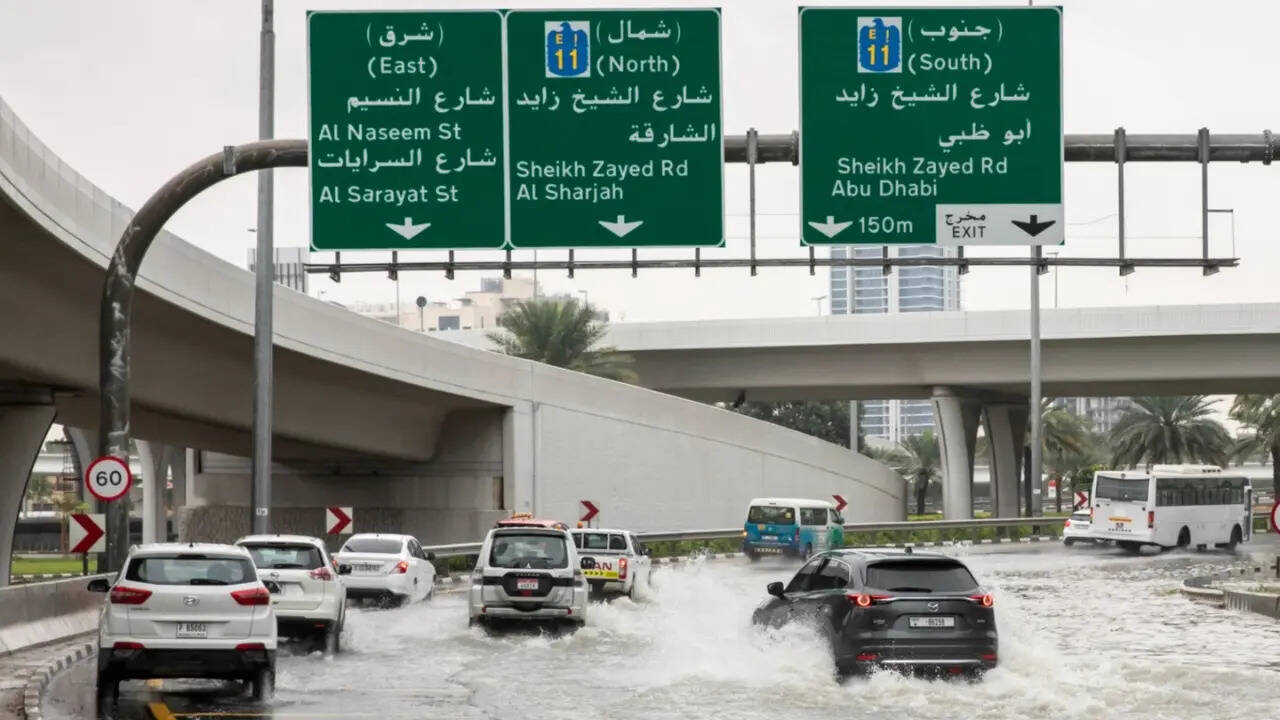
The sky over Dubai does not usually break, but when it does, the financial fallout is immediate and unforgiving. Following the catastrophic storms of April 2024, the UAE car insurance market underwent a fundamental, silent transformation. What used to be a simple choice between the "cheap" option and the "good" option has become a complex legal minefield where one wrong word on a claim form can cost you AED 40,000 in engine repairs.
The primary answer to the most pressing question is this: Third-Party Liability (TPL) insurance does not cover flood damage. Period. Only Comprehensive Insurance offers protection against "natural calamities," and even then, coverage is not a blanket guarantee. In 2026, insurers have tightened their grip on "negligence" clauses, meaning if you drove into a puddle that looked like a lake after a police warning was issued, your "comprehensive" policy might be as useful as a paper umbrella.
The Illusion of Full Protection
For years, UAE motorists viewed car insurance as a bureaucratic hurdle—a necessary paper to show at the Tasjeel center. The 2024 floods, which resulted in an estimated $3 billion in insured losses, ended that era of indifference. Today, the "Comprehensive" label is often a misnomer.
Under the UAE Unified Motor Vehicle Insurance Policy, "Natural Disasters" are defined as phenomena like floods, tornadoes, and hurricanes that lead to widespread damage. While most comprehensive policies include a "Natural Calamity" rider, the industry has introduced a "Negligence Pivot."
Insurers now scrutinize the exact moment of the loss. If your car was parked in a designated underground lot that flooded, you are likely covered. If you were filmed by a dashcam or a CCTV camera attempting to navigate a waterlogged wadi or a flooded street in Al Quoz against official advice, your claim will likely be rejected for "intentional exposure to risk." The distinction is binary: Unavoidable act of God vs. avoidable act of driver.
The Hidden Cost of the 2026 Premium Surge
The price of peace of mind is skyrocketing. Data from early 2026 shows that motor insurance premiums have climbed by 15% to 20% across the board. This isn't just corporate greed; it is a mathematical necessity. Global reinsurance markets—the companies that insure the insurance companies—have "hardened" their stance on the Gulf region. They no longer see the UAE as a low-risk desert.
The Breakdown of Modern Policy Pricing
- Agency Repair vs. Non-Agency: For a new car (less than 12 months old), agency repair is a standard right. After that, it becomes a luxury add-on. Opting for non-agency repair can save you 25% on premiums, but in a flood scenario, a "back-alley" garage might not have the diagnostic tools to properly clear the sensors in a modern EV or high-end German sedan.
- The Depreciation Trap: If your car is declared a "Total Loss" due to flood-induced engine hydro-lock, the insurer doesn't pay you what you paid for the car. They pay the Sum Insured minus depreciation. For a vehicle in its second year, that is a 5% hit; by the fifth year, you are looking at a 20% deduction before you even see a check.
- The Electric Vehicle Surcharge: Insurance for EVs in the UAE is now significantly more expensive. Why? Because salt-heavy floodwater and high-voltage battery packs are a volatile combination. A flooded Tesla isn't just a repair job; it is often a write-off.
Why Your Claim Might Be Dead on Arrival
The most common reason for claim rejection in the UAE isn't a lack of coverage—it’s a failure of process. The Central Bank of the UAE (CBUAE) and the Sanadak ombudsman have streamlined the dispute process, but they cannot save you from your own mistakes.
- The Engine Start Mistake: If your car stalls in water, do not attempt to restart it. Doing so causes "hydro-lock," where water enters the cylinders and shatters the engine components. Insurers view the initial flooding as the accident, and the restart attempt as "consequential damage" caused by the driver, which is almost always excluded.
- The Missing Police Report: In the UAE, no police report means no claim. During major storms, the "Saeed" app or the Dubai Police app becomes your most important tool. Without an official record of the incident location and time, the insurer has the legal right to ignore your file.
- The 13-Month Rule: UAE policies are issued for 13 months to allow a one-month grace period for registration. However, many drivers forget that the insurance coverage often ends at the 12-month mark, leaving the 13th month for registration purposes only. Driving during that 13th month without a renewal can leave you entirely exposed.
The New Reality of Roadside Assistance
In a desert climate, "Roadside Assistance" usually means a battery jump-start or a gallon of petrol. In the post-flood landscape, the most valuable add-on is Unlimited Towing.
Standard policies often cap towing distances or the number of recoveries. If thousands of cars are stranded simultaneously, the cost of private recovery can surge to AED 1,500 for a single trip. Ensuring your policy includes "Recovery from Off-Road" (if you drive an SUV) or "Extended Towing" is no longer optional for those living in Sharjah or the lower-lying areas of Dubai.
Navigating the Dispute
If an insurer rejects your flood claim, the battle isn't over, but it is uphill. The first step is a formal complaint to the insurer’s internal dispute unit. If they don't budge within 15 days, the case moves to Sanadak. This independent body was designed to protect consumers, but they rule based on the "Unified Policy" text. If the policy says "Excluding Natural Disasters" and you signed it to save AED 300, no ombudsman can rewrite the contract for you.
The brutal truth is that TPL insurance is a legal minimum that protects everyone except you. In a region where the "hundred-year storm" now seems to happen every eighteen months, the 2x price difference for a Comprehensive policy is no longer a premium—it is an essential tax on UAE residency.
Would you like me to compare specific premium rates for your vehicle model across the top five UAE insurers for 2026?