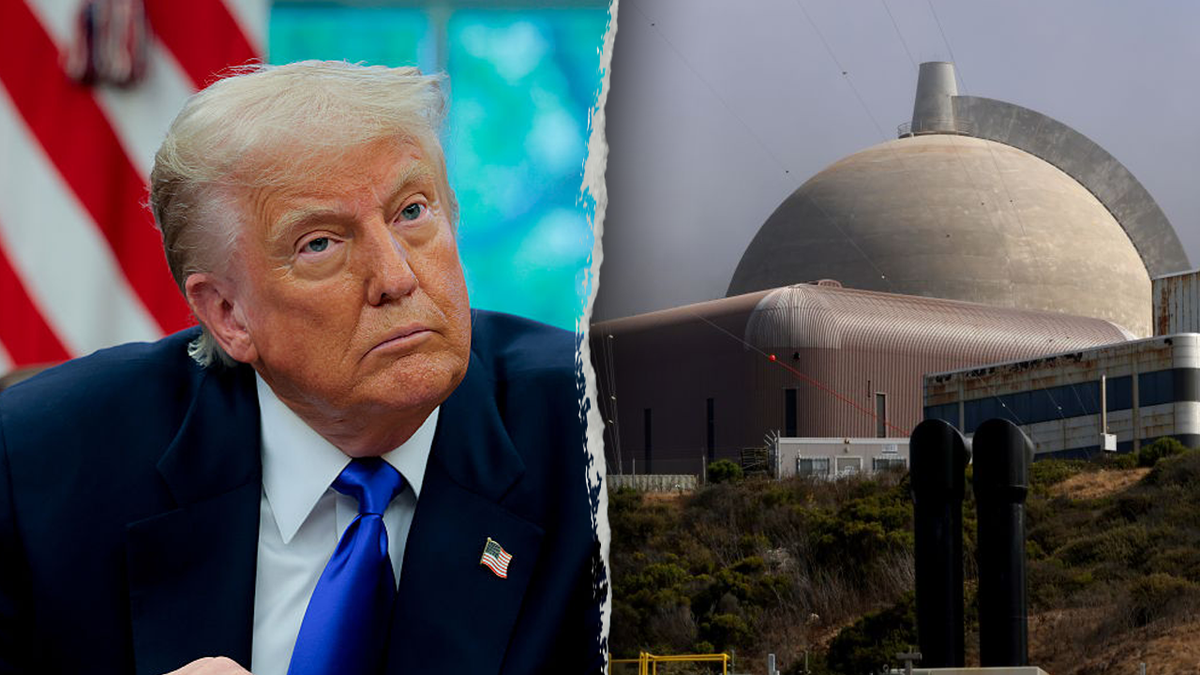
The rumors about a ground invasion in Iran aren't just whispers anymore. They're part of a loud, high-stakes conversation happening in the West Wing as Donald Trump weighs his most explosive military decision yet. We aren't talking about a few drone strikes or more economic sanctions that barely move the needle. We're talking about the boots-on-the-ground scenario everyone feared: an American mission to physically seize Iranian uranium.
It's a gamble that makes previous Middle East conflicts look like a warm-up. If the U.S. intel says Tehran is weeks away from a "breakout" toward a nuclear weapon, the White House has to decide if it'll watch from the sidelines or kick the door down. Honestly, the logistics are a nightmare. You don't just fly into Fordow or Natanz, grab some canisters, and fly out. These facilities are buried under mountains of reinforced concrete and defended by some of the most sophisticated air defense systems money can buy.
The Nuclear Breakout Clock is Ticking
To understand why this is even on the table, you have to look at the numbers. Iran has been spinning its IR-6 centrifuges at a terrifying pace. According to recent reports from the International Atomic Energy Agency (IAEA), their stockpile of 60% enriched uranium has grown enough that "breakout time"—the window needed to reach weapons-grade 90%—is now measured in days, not months.
Trump's previous "maximum pressure" campaign relied on squeezing the Iranian economy to force a better deal. It didn't work. Instead, the Iranian leadership dug in. Now, the President is staring at a map of a country three times the size of Iraq with a terrain that eats armies alive. He's asking his generals if a surgical strike is enough. The answer he’s getting back is likely "no." Air strikes can rubble a building, but they can't guarantee the destruction of material hidden hundreds of feet underground.
If you want the uranium, you have to go get it. And that means U.S. Special Operations Forces or a massive ground contingent.
Why Air Strikes Just Wont Cut It Anymore
Military planners have a saying: "The enemy gets a vote." Iran has spent the last two decades voting for deep, hardened bunkers. The Natanz enrichment plant is a prime example. Parts of it are deep enough that even the GBU-57 Massive Ordnance Penetrator—America’s biggest "bunker buster"—might not reach the centrifuges.
If a bomb can't reach the target, a human has to. This is where the risk of a "forever war" becomes a sudden, sharp reality. Deploying troops to seize nuclear material involves:
- Securing a perimeter in hostile, mountainous territory.
- Neutralizing the Iranian Revolutionary Guard Corps (IRGC) units stationed as guards.
- Extracting volatile chemical compounds like uranium hexafluoride without causing a radiological disaster.
- Getting everyone out before the entire Iranian military descends on the site.
It’s a Mission Impossible script, but with real body bags. If a single transport plane gets shot down, the U.S. is instantly in a full-scale war with a nation of 88 million people.
The Internal Battle for Trumps Ear
Inside the administration, the hawks and the skeptics are at each other's throats. You've got the "preventative strike" crowd who argues that a nuclear Iran is an existential threat to Israel and a total shift in global power. They believe the only way to stop the "Islamic Republic" from becoming a nuclear state is to physically remove their capability.
Then you've got the isolationist wing. These are the folks who helped get Trump elected on the promise of ending "stupid wars." They know that an invasion—even a "limited" one to seize uranium—is a trap. They're looking at the polls and seeing a country that's exhausted by Middle Eastern intervention. They’re worried that one wrong move in the Isfahan province could tank the U.S. economy and the President’s legacy in a single afternoon.
What Happens if the Mission Fails
Let’s be real for a second. War is chaos. If a team of Navy SEALs or Army Rangers enters a facility and fails to secure the material, or if the material is moved before they arrive, the U.S. is left with its hands in the air and a massive target on its back.
Iran isn't Iraq in 2003. They have a sophisticated drone program, a massive ballistic missile arsenal, and "proxy" forces like Hezbollah that can set the entire region on fire. A failed attempt to seize uranium wouldn't just be an embarrassment; it would be the starting gun for a global oil crisis. We'd see gas prices hit levels that would make the 1970s look like the good old days.
The Invisible Role of Cyber Warfare
While everyone's focused on the troop movements, there's a quiet war happening in the wires. Remember Stuxnet? That was the digital worm that wrecked Iranian centrifuges years ago. Trump is almost certainly being briefed on "non-kinetic" options. This means using hackers to fry the electronics or sabotage the cooling systems.
The problem? Iran learned their lesson. Their most sensitive systems are now "air-gapped," meaning they aren't connected to the internet. You can't hack a computer that isn't online unless you have someone on the inside to plug in a thumb drive. That brings us right back to the original problem: someone has to physically get close to the site.
The Geopolitical Fallout with Russia and China
This isn't happening in a vacuum. Vladimir Putin and Xi Jinping are watching. If Trump sends troops into Iran, he’s effectively handing Russia and China a massive opening. Russia has deep ties with Tehran, and China buys a lot of their oil. An American invasion would likely push these three into a formal military alliance that would challenge U.S. interests for the next fifty years.
You also have to consider the "nuclear umbrella." If Iran is attacked while they're this close to a bomb, they might just decide to sprint for the finish line. It's the ultimate "use it or lose it" scenario. If they think the Americans are coming to take the uranium, they might try to assembly a crude device as a last-ditch deterrent.
The Decision Nobody Wants to Make
Donald Trump hates being told what he can’t do. But he also hates being the guy who starts a long, messy conflict. This is the ultimate test of his "America First" doctrine. Does "America First" mean stopping a nuclear threat at any cost, or does it mean staying out of the desert at any cost?
The clock is ticking because enrichment doesn't stop for politics. Every hour those centrifuges spin, the pressure on the Oval Office grows. The decision to deploy troops to seize uranium would be the most consequential military order of the century. It’s a choice between a nuclear-armed adversary or a war that could redefine the globe.
Keep a close eye on the movement of carrier strike groups in the Persian Gulf and the rhetoric coming out of the State Department. If the talk of "red lines" starts getting specific about "material recovery," you’ll know which way the wind is blowing. This isn't just about security anymore; it's about the very definition of American power in a world that's increasingly tired of it.
If you’re tracking this, look for updates on IAEA access to the Karaj and Natanz sites. When those inspectors get kicked out, the window for diplomacy officially slams shut. That's the moment the troop deployment plans move from the "contingency" folder to the "active" desk.