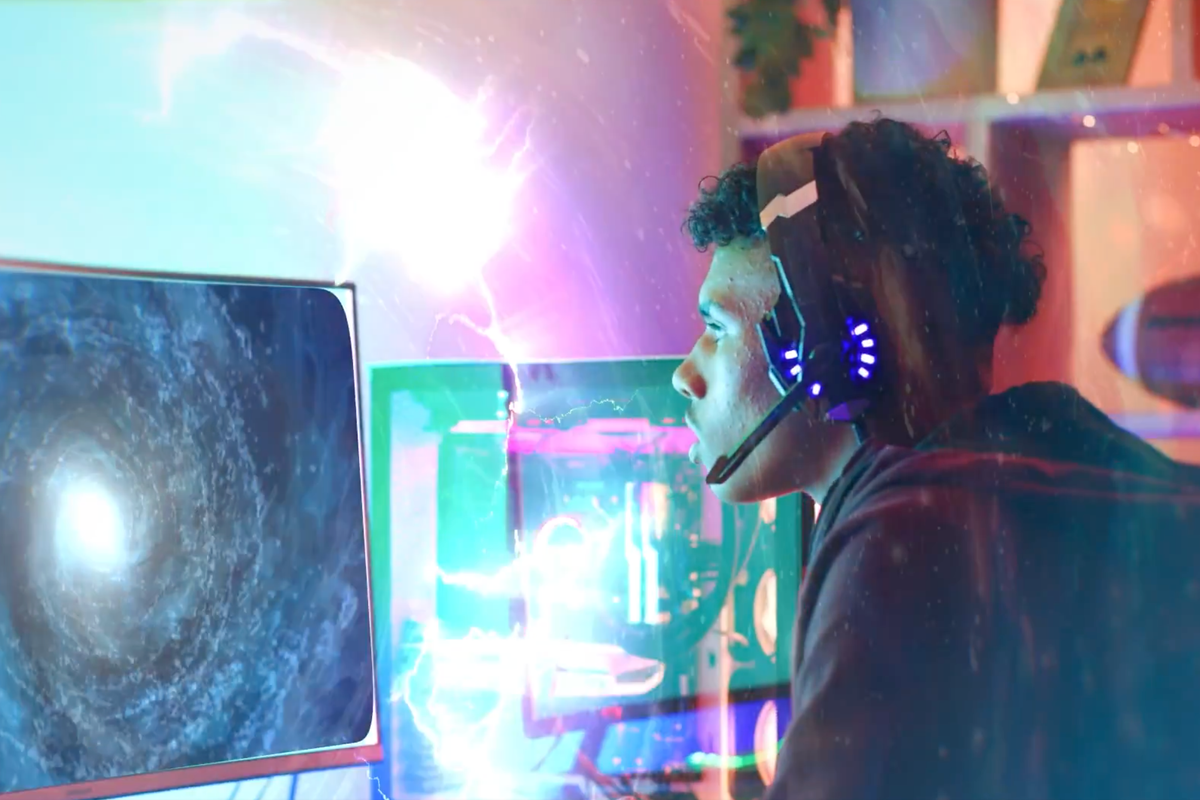
The FAA is in a tight spot, and honestly, it has been for years. If you’ve sat on a tarmac for two hours lately because of a "staffing shortage," you’ve felt the problem. We’re short about 3,000 air traffic controllers. It’s a crisis that’s been brewing since the 1981 strike, and the current hiring pipelines are basically broken. But the Trump administration is looking at a fix that sounds like a joke to your parents but makes perfect sense to anyone who’s ever played a flight sim: hiring gamers.
This isn't about letting kids with high scores fly planes from their bedrooms. It’s a calculated move to tap into a demographic that already possesses the spatial reasoning, rapid-fire decision-making, and stress tolerance that the job demands. The "Trump Team" is leaning into the idea that the skill set required to navigate a complex digital environment under pressure is exactly what the FAA needs right now.
The Air Traffic Control Crisis is Real
Let's look at the numbers because they’re brutal. Right now, the FAA has roughly 10,700 certified controllers. That sounds like a lot until you realize it’s nearly the lowest level in decades, and air traffic is hitting record highs. The current training pipeline is a bottleneck. Out of every 10,000 people who apply for the FAA Academy, only a fraction actually make it through the grueling process.
The washout rate is high. The job is notoriously stressful. You’re staring at a screen, managing multi-ton machines moving at 500 miles per hour, and a single mistake can be catastrophic. Most people can't handle the mental load. Gamers, on the other hand, spend their Friday nights doing exactly that for fun.
The Trump administration’s push to recruit from the gaming community recognizes that traditional recruiting is failing. We’ve been looking for pilots or "aviation enthusiasts," but maybe we should be looking for people who can process visual data at lightning speed.
Why Gamers are the Perfect Fit
If you think gaming is just "pushing buttons," you’re wrong. Modern gaming, specifically competitive titles or complex simulators, requires a level of cognitive agility that’s rare in the general population.
Spatial Awareness and Multi-Tasking
In an air traffic control tower, you aren't just looking at a flat screen. You’re building a 3D map in your head. You have to know where Flight A is relative to Flight B, and where both will be in five minutes.
Competitive gamers do this naturally. Whether it's a first-person shooter where you’re tracking enemies behind walls or a real-time strategy game where you're managing three different fronts at once, the mental architecture is the same. Gamers are trained to filter out white noise and focus on the data that matters. That’s the core of the controller job.
Stress Inoculation
The FAA Academy "screens" people for stress. Gamers screen themselves. If you’ve ever been in a high-stakes match where one wrong move costs your team the win, you know how to keep your heart rate down while your brain works overtime.
We see this in studies constantly. Research from institutions like the University of Rochester has shown that action video game players have improved attention spans and better hand-eye coordination. They make decisions faster without losing accuracy. That’s exactly the profile of a successful air traffic controller.
Breaking the FAA Training Bottleneck
The biggest hurdle isn't just finding people; it's getting them through the training. The FAA Academy in Oklahoma City is the only way in, and it’s a massive gatekeeper.
The new strategy involves modernizing this training. If the Trump team can integrate gaming-style simulations and VR into the curriculum, they can potentially speed up the certification process. Right now, it takes years to become fully certified at a major airport like O'Hare or JFK. By recruiting people who already speak the language of digital simulations, the administration hopes to slash that timeline.
There’s also the issue of the "Aviation Selection and Training Control" (AT-SACT) test. It’s a notorious exam that tests things like memory and math. Many gamers find these types of logic puzzles intuitive. They’ve been training for this their whole lives without realizing it.
The Pushback and the Reality Check
Of course, not everyone is on board. Traditionalists argue that "playing games" isn't the same as "saving lives." They’re right, but they’re missing the point. Nobody is suggesting we put a headset on a 19-year-old and tell them to clear a 747 for landing on day one.
The goal is to broaden the talent pool. For years, the FAA has struggled with a "one-size-fits-all" recruitment model that hasn't kept up with the times. The Trump administration is basically saying, "Let’s go where the talent is."
It’s also about changing the image of the job. For a long time, air traffic control was seen as a government desk job. Now, it’s being framed as a high-tech, high-intensity career for the digitally native generation.
What This Means for the Aviation Industry
If this works, it could change more than just the FAA. It could signal a shift in how we view vocational training across the board.
The aviation industry is desperate. Airlines are cancelling flights because there aren't enough controllers to manage the airspace. This costs the economy billions. By targeting gamers, the administration is attempting a "shortcut" that uses existing skills to fill a critical gap.
It’s a smart move. Honestly, it’s a move that should’ve happened a decade ago.
How to Get Involved
If you’re someone who spends hours in flight sims or thrives in high-pressure digital environments, the doors are opening. This isn't just talk; the recruitment drives are starting to reflect this shift.
- Monitor the FAA’s "Be ATC" Page: This is where the official hiring windows open. They only happen once or twice a year, and they’re short.
- Check the Entry Requirements: You usually need to be under 31 years old and a US citizen. You also need a combination of work experience and education, but the "gamer" push is aimed at making the initial screening more accessible to those with the right cognitive profile.
- Practice the AT-SACT: There are apps and simulators online specifically designed to help you pass the FAA’s entrance exam. If you’re a gamer, you’ll likely find the logic familiar.
The days of the FAA looking like a scene from a 1950s office are over. The future of the sky is digital, and it’s being built by the people who already live there. If you've got the nerves and the focus, you might just be the one to solve the nation’s flight delays. Don't wait for the next hiring window to close—start looking into the certification process now. Your hobby is finally becoming a resume builder.



