The heavy iron valves at a terminal in the Persian Gulf do not care about diplomacy. They are indifferent to the signatures on parchment in Washington D.C. or the whispered negotiations in Zurich. They only understand pressure. When the US Treasury Department issued a quiet directive recently, those valves didn’t change, but the invisible economic currents surrounding them shifted violently.
For a brief window—stretching until April 19, 2026—the world is witnessing a calculated pause in a decades-long financial war. The United States has temporarily eased sanctions on Iranian oil, permitting the sale of crude and refined petroleum products into the American market. It is a flickering green light in a sea of red.
To understand why this matters, you have to look past the ticker tape. You have to look at someone like Marcus, a fictional but very real composite of an independent logistics coordinator in Houston. For three years, Marcus has watched the global supply chain fray like an old rope. He manages the flow of fuel that eventually finds its way into the gas tanks of commuters and the heating systems of Northeast homes. To Marcus, "sanctions" aren't just a political tool; they are a kink in the garden hose. When the supply is choked, the pressure builds everywhere else.
Now, suddenly, the kink is being eased. But only for a moment.
The Mathematics of a Thaw
Economics is often treated as a dry science of spreadsheets, but at its core, it is the study of human desperation and desire. The US Treasury’s decision to grant this license isn’t an act of sudden friendship. It is a cold, hard maneuver designed to stabilize a global energy market that has been screaming for relief.
By allowing Iranian crude to flow legally into the US for this specific window, the government is attempting to shave cents off the gallon and dollars off the barrel. The world consumes roughly 100 million barrels of oil every single day. Even a small influx of "forbidden" oil can act as a sedative for a panicked market.
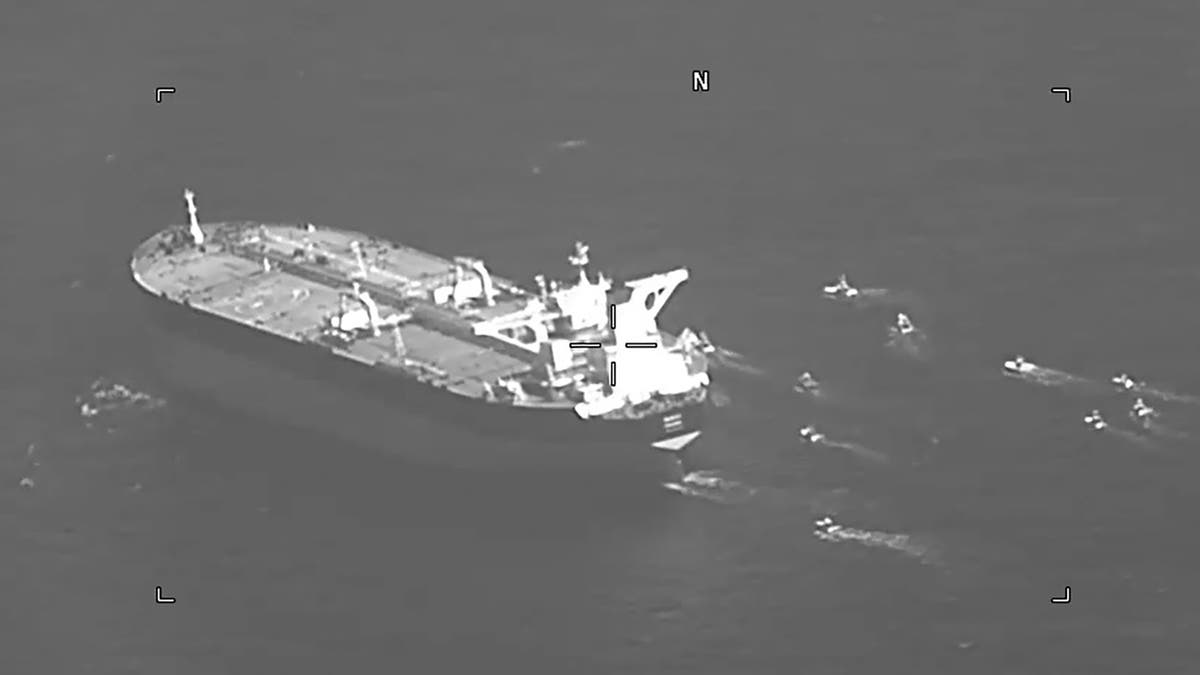
Consider the mechanics of the trade. Usually, Iranian oil moves through a "ghost fleet"—black-listed tankers that turn off their transponders and play a high-stakes game of hide-and-seek on the open ocean. This shadow economy is inefficient. It’s expensive. It’s dangerous. By temporarily bringing a portion of this trade into the light, the Treasury Department is effectively trying to lower the "risk premium" that every American pays at the pump.
The Ghost in the Machine
Why April 19? The date isn't arbitrary. In the world of international trade, sixty days is a heartbeat. It is just enough time to load a Very Large Crude Carrier (VLCC), sail it across the Atlantic, and begin the offloading process at a refinery in Louisiana or Texas.
This is a "bridge" policy. Imagine a hiker crossing a crumbling stone arch. The hiker knows the bridge won't hold forever, but they need it to get across the ravine of a specific seasonal demand spike. We are currently in that ravine. As the northern hemisphere shakes off the last of winter and prepares for the summer driving season, the demand for refined products—gasoline, diesel, jet fuel—surges.
The Treasury is playing a game of chicken with inflation. If they can flood the zone with enough supply now, they might be able to prevent a price spiral that could devastate the domestic economy. But the clock is ticking. Every sunrise brings us closer to the April 19 cutoff, and in the boardrooms of global energy giants, the anxiety is palpable. They are asking: what happens on April 20?
The Human Cost of the Invisible Wall
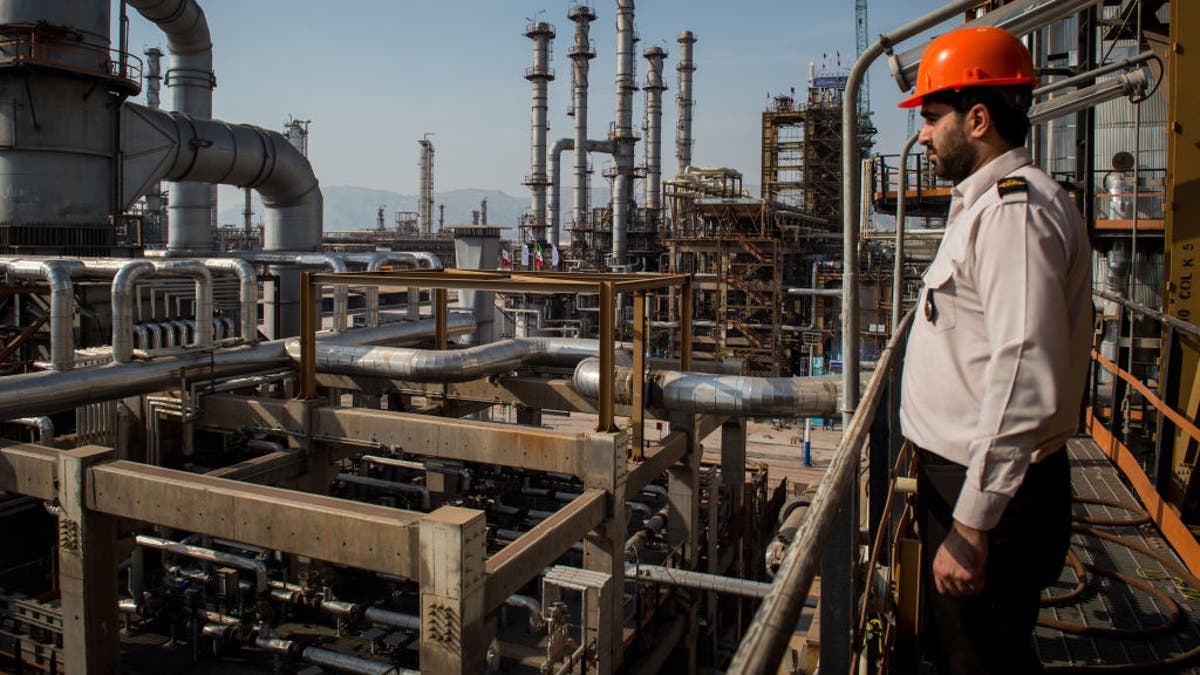
Behind every macro-economic shift is a human story of survival. In Tehran, a refinery worker named Omid (hypothetically) sees this news not as a geopolitical win, but as a chance for his paycheck to actually cover the cost of meat and medicine. For years, the sanctions have acted as a secondary atmosphere—a heavy, pressurized weight that makes every daily task twice as hard.
When the US permits these sales, even temporarily, it creates a momentary surge of hard currency into the Iranian system. It’s a lungful of air for a drowning man. But the cruelty of the "temporary" nature of this relief is that it prevents any real long-term planning. You cannot build a life on a sixty-day license. You cannot invest in infrastructure, or education, or healthcare when you know the door might slam shut again before the next moon cycle.
This is the hidden psychological toll of the sanctions regime. It creates a "survivalist" economy where everyone is looking for the short-term play because the long-term is a fog of uncertainty. The US uses this uncertainty as a lever. By granting a taste of the global market and then threatening to revoke it, they maintain a level of influence that no military strike could ever achieve.
The Refiner’s Dilemma
Back on the Gulf Coast, the technical reality of this decision hits the ground. Not all oil is created equal. Refineries are like giant, multi-billion dollar chemistry sets designed for specific "recipes." Some are built to process the light, sweet crude found in the Permian Basin of West Texas. Others are optimized for the heavy, sour crude that traditionally comes from places like Venezuela or Iran.
When the sanctions are in full force, these heavy-crude refineries have to scramble. They blend different oils, they pay premiums for distant supplies, and they run their equipment at sub-optimal levels. It’s like trying to run a Ferrari on low-grade lawnmower fuel.
The temporary easing allows these massive industrial cathedrals to breathe. For a few weeks, they can access the specific "grade" of oil their machines were born to process. Efficiency goes up. Costs go down. The "invisible stakes" here are the millions of moving parts in the American industrial machine that finally have the right lubricant.
A High-Stakes Game of Shadows
The move is not without its critics. To many, any easing of pressure on Tehran is seen as a surrender. They argue that the revenue generated in this window won't go to Omid the refinery worker, but will instead fund regional proxy conflicts and nuclear ambitions.
This is the central tension of modern statecraft. How do you punish a government without starving a population? How do you lower gas prices for a mother in Ohio without inadvertently strengthening a rival in the Middle East?
The Treasury Department operates in the gray. They understand that the global economy is not a series of isolated islands, but a single, pulsing organism. If you cut off one limb entirely, the whole body begins to fever. This temporary permit is an attempt to manage that fever. It is an admission that, despite all our talk of "energy independence," we are still deeply, inextricably tied to the output of lands thousands of miles away.
The Looming Deadline
As we approach the middle of April, the tension will shift from the docks to the desks of diplomats. The "temporary" nature of this permit is a ticking metronome in the background of every conversation.
Traders are already hedging their bets. Shipping companies are calculating whether it’s worth the risk to send a vessel if it might not clear customs before the deadline. The price of oil is no longer just a reflection of supply and demand; it is a reflection of a calendar.
If the permit is not extended, the ghost fleet will return to the shadows. The prices at the local station will tick upward, a few cents at a time, unnoticed by some but devastating to others. Marcus in Houston will go back to staring at disrupted schedules and broken logistics chains. Omid in Tehran will watch the value of his currency resume its slow, agonizing slide.
We live in an era where the most powerful weapons aren't fired from silos, but are typed into the Federal Register. A single paragraph in a Treasury document can move more wealth than a gold heist and impact more lives than a local election. This April 19 deadline is a reminder of how fragile our "normal" really is. We are all passengers on a ship where the fuel lines are controlled by people we will never meet, operating on a logic that prioritizes the stability of the system over the certainty of the individual.
The valves stay open for now. The oil flows, heavy and dark, through the veins of commerce. But the hand is already on the lever, waiting for the clock to strike midnight.