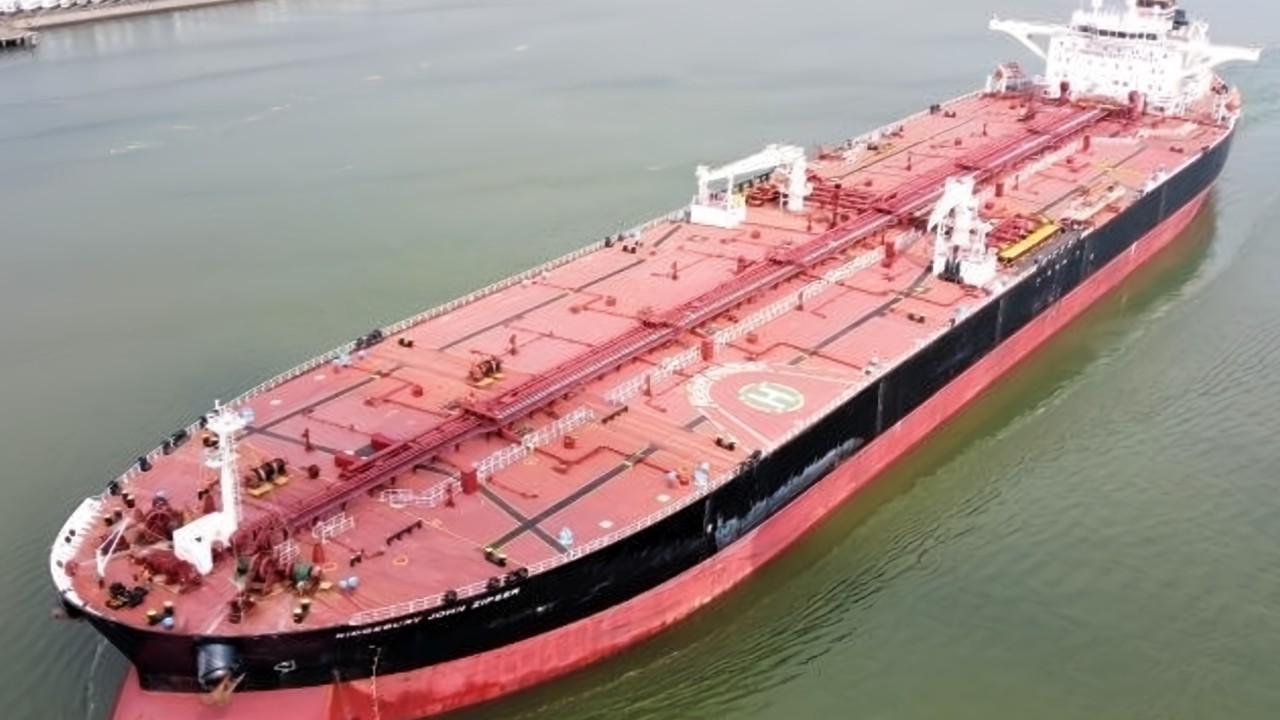
The Strait of Hormuz is no longer an international waterway. It has become a private canal, governed by a "pay-to-play" architecture that is rewriting the rules of global maritime trade in real time. For decades, the 21-mile-wide chokepoint operated under the fragile promise of innocent passage. That era ended when Tehran realized that controlling the flow of 20% of the world’s oil was more profitable than simply threatening to stop it. By establishing a selective access corridor—colloquially known among shipbrokers as the "Tehran Tollbooth"—Iran has effectively weaponized geography to reward its geopolitical allies and squeeze its enemies.
Malaysia is the latest beneficiary of this fragmented reality. Prime Minister Anwar Ibrahim’s recent confirmation that Malaysian vessels have secured "safe passage" through the Strait isn’t just a diplomatic win; it is an admission of a new, bifurcated global order. While tankers flying Western flags or carrying "hostile" cargo sit at anchor, Malaysian ships are moving through the Northern Corridor near Larak Island. This is not a gesture of goodwill. It is a calculated transaction rooted in years of Malaysia acting as a primary laundering hub for Iranian crude.
The Infrastructure of Selective Access
The mechanics of this blockade are sophisticated and discriminatory. Unlike traditional naval blockades that attempt to stop all traffic, Iran uses a "Safe Route" system managed by the Islamic Revolutionary Guard Corps (IRGC). This corridor leverages Russian-made satellite jamming systems and layered air defense networks on Larak Island to protect "friendly" vessels while leaving others exposed to naval mines or fast-attack boat harassment.
Data from the first week of April 2026 reveals the starkness of this reality. Daily vessel movements through the Strait have plummeted by 95%, dropping from a pre-war average of 138 ships to a mere trickle. On April 6, only 11 vessels made the transit. Every single one of them utilized the IRGC-controlled Northern Corridor. The ships allowed through were almost exclusively Chinese, Russian, Pakistani, or Malaysian. Meanwhile, two Qatari LNG carriers destined for Pakistan were forced to turn back because they lacked the specific Iranian clearance or "escort" status required for the passage.
This selective permeability creates a tiered market for global energy. If you are a "friend" of the regime, your insurance premiums remain manageable and your supply chains intact. If you are not, you are priced out of the market by risk alone.
The Malaysian Connection
To understand why Malaysia is receiving "special treatment," one must look at the ship-to-ship (STS) transfer data from the past three years. Malaysia has evolved into the central clearinghouse for the Iranian "dark fleet." In 2023, there were 280 documented instances of suspicious STS transfers involving Iranian oil in Malaysian waters. By 2025, that number exploded to 679.
The process is a masterpiece of maritime deception. Iranian tankers, often flying "flags of convenience" from nations like Panama or the Cook Islands, meet in the waters off the coast of Johor or Penang. They disable their Automatic Identification System (AIS) transponders, pump their cargo into a second vessel, and the oil is relabeled as "Malaysian Blend." This laundered crude is then sold to independent refineries in China.
Tehran does not forget its friends because those friends provide the regime’s financial lifeblood. By granting Malaysia safe passage today, Iran is securing its most vital export route for tomorrow. It is a protection racket where the currency is loyalty, and the penalty for neutrality is economic strangulation.
The Tollbooth Economy
The IRGC is no longer just a military force; it is a port authority with a $2 million entry fee. Reports from maritime intelligence firms indicate that passage through the "Safe Route" often requires more than just diplomatic alignment. Payments, sometimes totaling seven figures per transit, are being channeled through Chinese financial intermediaries.
The Iranian parliament is currently moving to formalize these "service fees," effectively turning a wartime emergency measure into a permanent tax on the global economy. This has created a bizarre, distorted market.
- India has recently resumed Iranian oil imports after a seven-year hiatus, a move largely seen as a price for access to the Strait.
- China continues to see its tankers pass through the corridor unmolested, often signaling "Chinese crew" on their AIS to avoid accidental targeting.
- Thailand and Pakistan are currently in high-level talks to secure their own slots in the daily transit queue.
The United States and its allies find themselves in a strategic trap. Striking the "Tollbooth" infrastructure on Larak Island risks a total closure of the Strait, which would send Brent crude well beyond its current $100-per-barrel mark. Yet, doing nothing allows Iran to cement its role as the gatekeeper of the Persian Gulf, a position that grants them more leverage than a nuclear program ever could.
The Death of the International Waterway
The long-term danger of the Malaysian "success story" is the precedent it sets. We are witnessing the end of the High Seas as a global common. In its place, we are seeing the rise of "sovereign corridors" where the right of passage is a commodity to be traded, not a principle to be defended.
When a Prime Minister has to "thank" a foreign leader for the "permission" to sail through international waters, the law of the sea is officially dead. Malaysia may have saved its immediate oil supply, but it has contributed to a world where every strategic chokepoint—from the Suez to the Malacca Strait—could eventually require a political litmus test for entry.
Shipowners are already adjusting. The "dark fleet" is no longer a fringe element of the shipping industry; it is becoming the blueprint for survival. If you want to move cargo in the 2026 economy, you don't need a better hull; you need a better friend in Tehran. The "Tehran Tollbooth" is open for business, and the price of admission is your sovereignty.