Economists love to mourn the "death of free trade" like they’re eulogizing a saint. They point at tariff anniversaries with trembling hands, citing consumer price indexes and supply chain disruptions as evidence of a looming dark age. They’re wrong. They are clinging to a 1990s textbook definition of efficiency that has failed every worker outside of a C-suite office.
The consensus view—that tariffs are a "tax on the consumer" and nothing more—is lazy. It ignores the structural rot that decades of unchecked "free" trade created. We didn’t have a free market; we had a subsidized surrender of industrial capacity. If you think the goal of an economy is simply to make plastic trinkets as cheap as humanly possible, then yes, tariffs are a disaster. But if you think an economy should provide national security, stable middle-class jobs, and a diversified industrial base, then tariffs are the most effective tool in the kit. Read more on a connected subject: this related article.
The Efficiency Trap
The standard critique of the Trump-era tariffs, and their continuation under subsequent administrations, focuses on the "deadweight loss." This is a theoretical construct where every dollar of tariff revenue supposedly destroys more than a dollar of economic activity.
I’ve sat in boardrooms where "optimization" was the only word spoken. For thirty years, we optimized for the lowest possible cost. We built "just-in-time" supply chains that were so lean they had no marrow. The moment a global crisis hit, they snapped. Further analysis by Forbes highlights related perspectives on the subject.
Free trade zealots argue that if Country A can make a widget for $5 and Country B makes it for $7, Country B should stop making widgets. It sounds logical until Country A decides to use that widget as a geopolitical cudgel. By focusing solely on the price tag, we ignored the cost of dependency. Tariffs aren't about raising prices; they are about internalizing the hidden cost of risk. We are finally paying the bill for decades of "cheap" imports that were subsidized by poor environmental standards and suppressed wages abroad.
The Great Consumer Myth
"Tariffs are a tax on American families." You hear this on every news cycle. It’s a half-truth used to scare people into supporting a status quo that has hollowed out the Midwest.
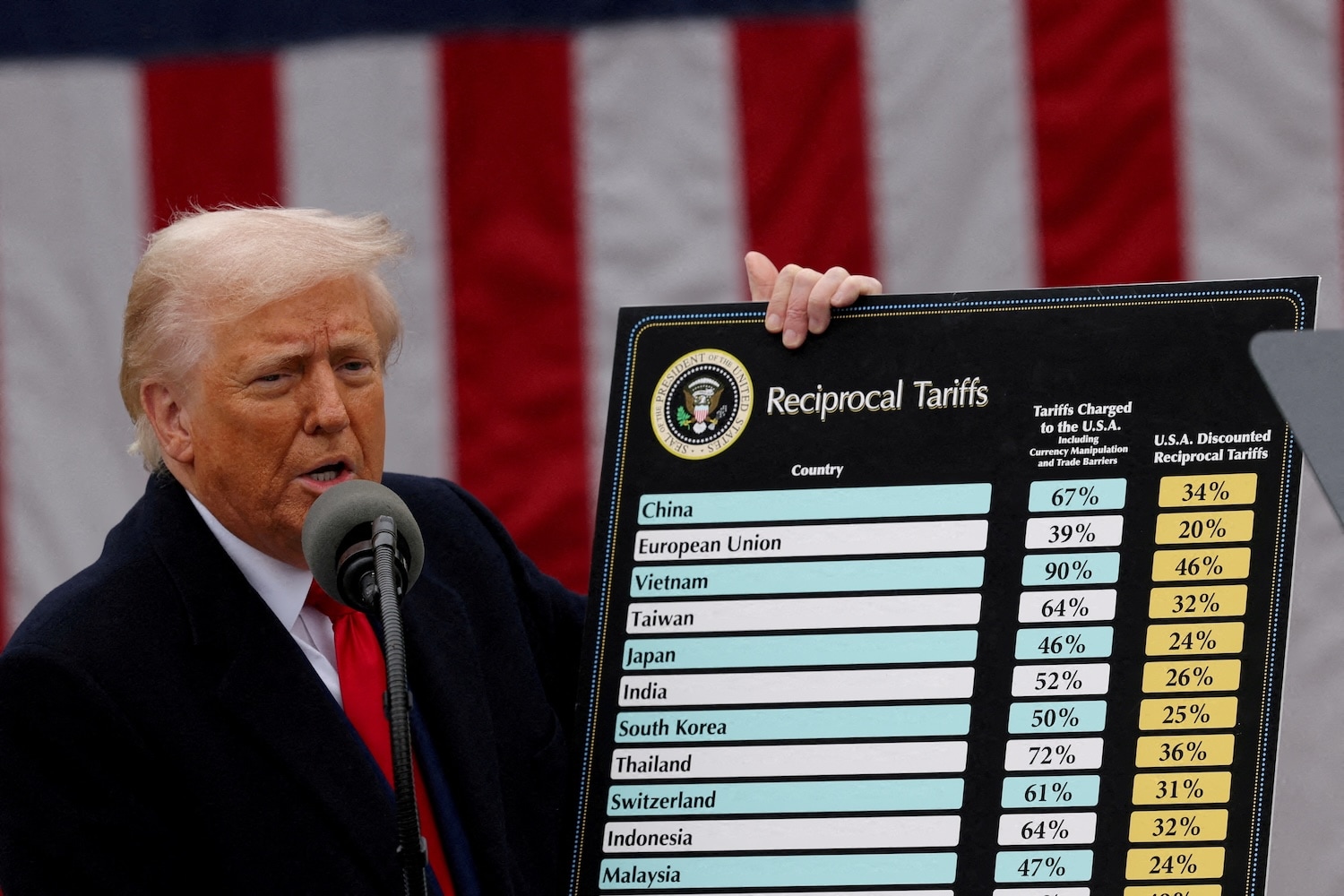
Let's look at the actual data. When the 25% steel tariffs were first implemented, the predicted "inflationary explosion" didn't happen. Why? Because global markets are not a vacuum. Producers often absorb the cost of a tariff to maintain market share. Currency values fluctuate. Importers switch to different suppliers.
More importantly, the "consumer" is also a "producer." A person who saves $20 a year on a toaster but loses a $60,000-a-year manufacturing job is not "winning" at economics. We have prioritized the convenience of the shopper over the dignity of the worker for too long. If a tariff causes a refrigerator to cost 3% more but ensures the factory stays in Ohio, that is a net win for the social fabric of the country.
Dismantling the Trade War Fear-Mongering
Critics argue that trade wars have no winners. This is objectively false. Trade wars have been the primary method of industrial development for every major power in history, including the United States in the 19th century and China in the 21st.
The U.S. didn't become a superpower by embracing laissez-faire globalism; it became a superpower through the American System—a cocktail of high tariffs, a national bank, and internal improvements. We are returning to our roots, not deviating from them.
The real danger isn't a trade war; it's a trade surrender. When you allow a systemic competitor to dump subsidized goods into your market, you aren't participating in "free trade." You are participating in a liquidation sale of your own future.
Why Your Supply Chain Logic is Broken
Most corporate logistics experts spent the last decade chasing "low-cost country sourcing." They failed to account for the fragility of those links.
Imagine a scenario where a company sources 100% of its microchips from a single geography because it's 10% cheaper. A tariff forces them to diversify. Suddenly, they have redundant suppliers in three different time zones. On paper, their "efficiency" dropped. In reality, their "resilience" skyrocketed.
Tariffs act as a friction that forces companies to think locally. This isn't "protectionism" in the pejorative sense; it's a strategic realignment. We are moving from an era of "Global Efficiency" to an era of "Regional Resilience."
The Hypocrisy of the Globalist Elite
It is fascinating to watch tech CEOs and hedge fund managers decry tariffs while they benefit from intellectual property protections that are, in themselves, a form of trade barrier. They want "free trade" for the labor they buy, but "protected trade" for the software they sell.
They complain that tariffs distort the market. Newsflash: The market is already distorted. It’s distorted by state-owned enterprises, currency manipulation, and forced technology transfers. To argue against tariffs in the face of these realities is to argue that the U.S. should play a game of poker while everyone else is playing with a marked deck.
The Hidden Benefit: Tax Reform
For over a century, the U.S. government was funded primarily through customs duties, not income tax. The shift to taxing productivity (income) rather than consumption (imports) was a massive mistake.
Tariffs are a "fair" tax because they are avoidable. If you don't want to pay the tariff, buy domestic. If you want the luxury of an imported Italian sports car, you pay the toll to support the infrastructure of the market you're selling into. By shifting the tax burden away from domestic labor and toward foreign-produced goods, you incentivize domestic investment.
The Hard Truth About "Prices Going Up"
Yes, some things will cost more. That is the point.
We have lived in a fantasy land of artificially deflated prices. We got used to buying clothes that were meant to be thrown away after three washes because they were "too cheap to fix." This consumption model is ecologically catastrophic and economically unsustainable.
If tariffs force us to buy fewer, higher-quality items made by people earning a living wage, that isn't a "cost." It’s a correction. It’s a return to a sane economy where value is measured by more than just the lowest common denominator on an Amazon search results page.
The Strategy for the New Era
If you’re waiting for the "anniversary" where we finally repeal all tariffs and go back to the 2005 status quo, you’re going to be waiting forever. The genie is out of the bottle. Both sides of the political aisle have realized that the old consensus was a suicide pact.
For business leaders, the advice is simple: Stop whining about the 10% or 25% duty and start rebuilding your domestic footprint.
- Vertical Integration: Control your own inputs.
- Automation: Use technology to offset the labor cost delta instead of fleeing to countries with zero labor laws.
- Niche Dominance: Focus on products where quality and proximity to the customer matter more than a razor-thin price margin.
The era of the globalist middleman is over. The era of the national producer has begun.
Stop looking at tariffs as a "tax" and start looking at them as a "re-shoring incentive." If you can't compete in a market without relying on ultra-cheap, subsidized foreign labor, maybe your business model wasn't that "efficient" to begin with. It was just a parlor trick played with someone else's misery.
The "anniversary we could have done without" wasn't the day the tariffs started. It was the day we decided that the price of a toaster was more important than the stability of our own economy. We are finally fixing that mistake. It’s going to be loud, it’s going to be messy, and it’s going to be expensive.
Good.