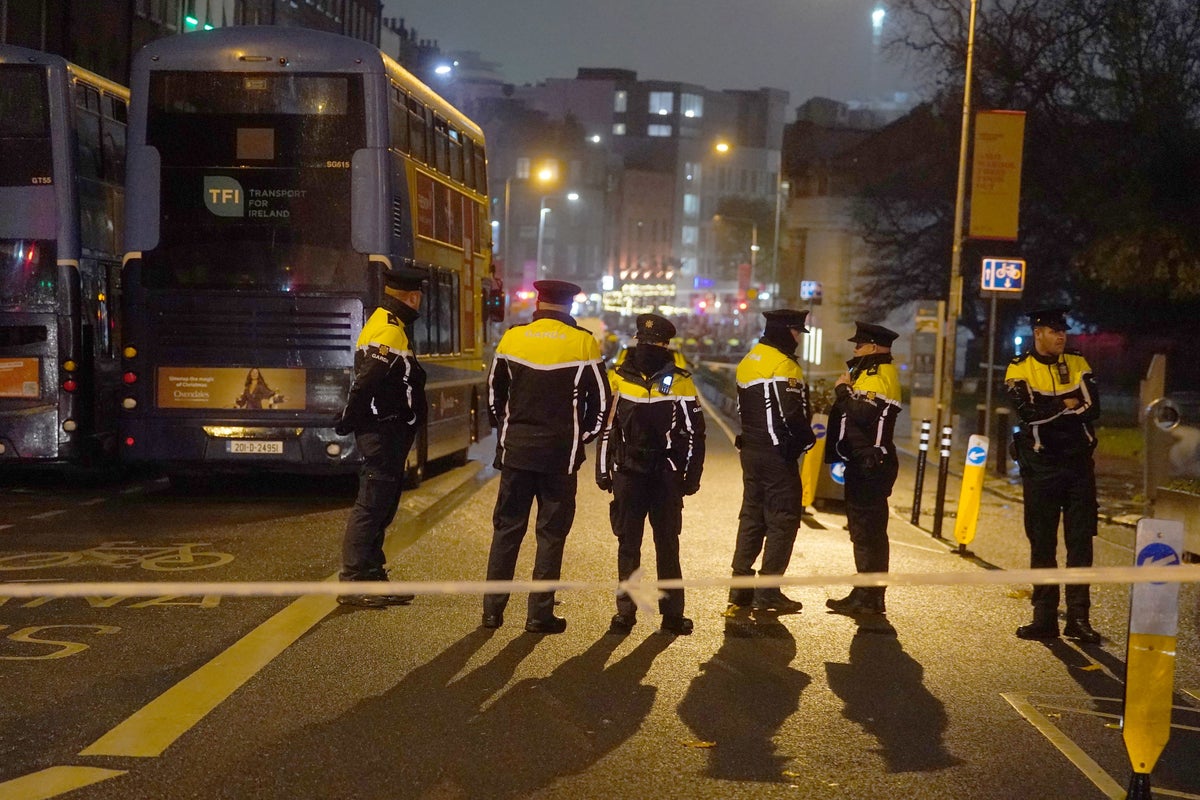
The fatal shooting of a 22-year-old San Francisco State University graduate by a private security specialist in San Francisco’s Fillmore District represents a critical failure in the Security-Public Safety Interface. While initial reports focus on the immediate violence and the arrest of the specialist, an analytical autopsy reveals a breakdown in the Triad of Private Defense: legal authorization, operational de-escalation training, and technical oversight. This incident serves as a primary data point for understanding the friction between private property enforcement and the escalating density of urban environments where private security is increasingly tasked with roles traditionally reserved for state actors.
The Mechanism of Lethal Escalation
The transition from a verbal dispute to a lethal discharge involves a sequence of failures within the Conflict Escalation Matrix. In this specific San Francisco incident, the suspect, an employee of a private firm, engaged in a confrontation that ended in the death of the victim on a Saturday night. To understand the root cause, one must map the Decision-Making Threshold that private security guards navigate. Unlike sworn law enforcement, who operate under the umbrella of qualified immunity and centralized oversight, private guards operate under Civilian Force Limitations.
The friction occurs when a security specialist perceives a threat. If the firm’s standard operating procedures (SOPs) prioritize asset protection over the Preservation of Life Hierarchy, the probability of a lethal outcome increases exponentially. We can categorize the failure points in this incident into three distinct silos:
- Proximal Cause: The immediate decision to unholster and discharge a firearm.
- Systemic Cause: The lack of a robust, audited training pipeline for the security specialist in high-stress urban environments.
- Governance Cause: The regulatory vacuum in California regarding the vetting and continuous psychological assessment of armed private contractors.
The Security-Asset Paradox
In the Fillmore District case, the "asset" being protected is often intangible—public order or a sense of safety for a specific property. This creates a paradox. When a security firm attempts to create a "safe" environment through the deployment of armed personnel, they simultaneously introduce a Lethality Risk Factor into the environment.
The victim, a recent SFSU graduate, represented a demographic that is theoretically the beneficiary of urban safety. The death of a "protected" class member by the "protector" indicates a total inversion of the security firm's intended value proposition. This is a failure of Tactical Resource Allocation. If the objective was to mitigate a dispute, the deployment of a firearm—a tool designed for lethal neutralization—was a mismatch for the task of conflict resolution.
The Technical Requirements for Armed Security (BSIS Standards)
In California, the Bureau of Security and Investigative Services (BSIS) mandates specific training for an armed guard card. However, these requirements are often criticized for focusing on technical proficiency (hitting a target) rather than Psychological Discernment.
- Firearms Qualification: Requires 14 hours of training plus 8 hours of range time.
- Powers to Arrest: An 8-hour course covering the legal basics of detention.
- Continuing Education: Mandatory semi-annual range qualifications.
The limitation of this framework is its binary nature. It teaches a guard how to shoot and when they are legally allowed to arrest, but it fails to address the Pre-Conflict Buffer Zone. This zone is where the majority of urban security failures occur. Without mastery of the Verbal Judo Framework—a method of de-escalation that redirects a subject’s energy toward compliance—the guard is left with only two options: passivity or physical force.
The Economic Model of Private Security Risks
Security firms operate on thin margins, often competing for municipal or private contracts based on cost-efficiency. This creates an Adverse Selection Problem. High-caliber specialists with extensive background in law enforcement or military special operations command higher salaries. To maintain profitability, firms may hire less experienced personnel, providing them with the minimum legal training required by the state.
This creates a hidden cost function for the city:
$$C_{total} = C_{contract} + P(L) \times V(L)$$
Where $C_{total}$ is the total social cost, $C_{contract}$ is the price of the security contract, $P(L)$ is the probability of a lethal event, and $V(L)$ is the value of a human life (often measured in multi-million dollar civil settlements).
When the probability of a lethal event is not factored into the initial contract, the city or the private entity is essentially gambling on the low frequency of catastrophic failures. The Fillmore shooting is the realization of that latent risk.
San Francisco’s Unique Urban Volatility
San Francisco presents a unique set of challenges for private security due to high population density and extreme socioeconomic disparity. The Fillmore District, specifically, is a high-traffic zone where private security often overlaps with public housing, luxury retail, and nightlife. This creates a Cross-Contextual Friction Point.
A security specialist trained for a static post at a warehouse will likely fail when placed in a dynamic, high-emotion urban setting. The skill set required for "Loss Prevention" (protecting goods) is fundamentally different from "Public Safety" (protecting people). The arrest of the 35-year-old security specialist suggests that his actions fell outside the scope of Justifiable Self-Defense, pointing to a failure in discerning the context of the threat.
Mapping the Legal Liability Chain
Following an arrest in such a high-profile case, the legal system initiates a Liability Cascade.
- Primary Liability: The shooter faces criminal charges (homicide or manslaughter).
- Secondary Liability: The security firm faces civil litigation for negligent hiring, training, or supervision.
- Tertiary Liability: The property owner or management company that hired the firm may be held liable under the theory of "Non-Delegable Duty," especially if the environment was known to be dangerous.
The defense will likely argue the Stand Your Ground principle or a reasonable fear of imminent bodily harm. However, the burden of proof for a private citizen (which a security guard essentially is) is significantly higher than that for a police officer. The "Reasonable Person Standard" applies, asking if a person with similar training and in a similar situation would have perceived a lethal threat.
Structural Solutions for Urban Private Security
To prevent a recurrence of the Fillmore tragedy, the industry must pivot toward a Data-Driven Security Model. This involves moving away from the "Guns and Gates" approach toward a more integrated, technology-first strategy.
- Mandatory Body-Worn Cameras (BWC): All armed private security in San Francisco should be required to wear BWCs with cloud-based, third-party auditing. This creates a Digital Oversight Loop that discourages unauthorized force.
- Psychometric Screening: Beyond basic background checks, guards in high-stress urban zones should undergo annual psychometric testing to identify high-risk traits like impulse control issues or extreme aggression.
- The "Observer-First" Protocol: Security firms should adopt a tiered response where armed personnel are the last line of defense, preceded by unarmed observers and technological surveillance (AI-driven video analytics).
The death of an SFSU graduate is not just a tragedy; it is a system failure. It highlights the danger of delegating public safety to private entities without the commensurate level of training, oversight, and accountability required for the management of lethal force.
The strategic play for municipalities is to mandate Umbrella Liability Insurance for security firms that scales with the lethality of their equipment. By increasing the insurance premiums for armed guards, the market will naturally shift firms toward hiring more highly trained, less volatile personnel, effectively pricing out the high-risk, low-training models that currently dominate the urban security landscape.