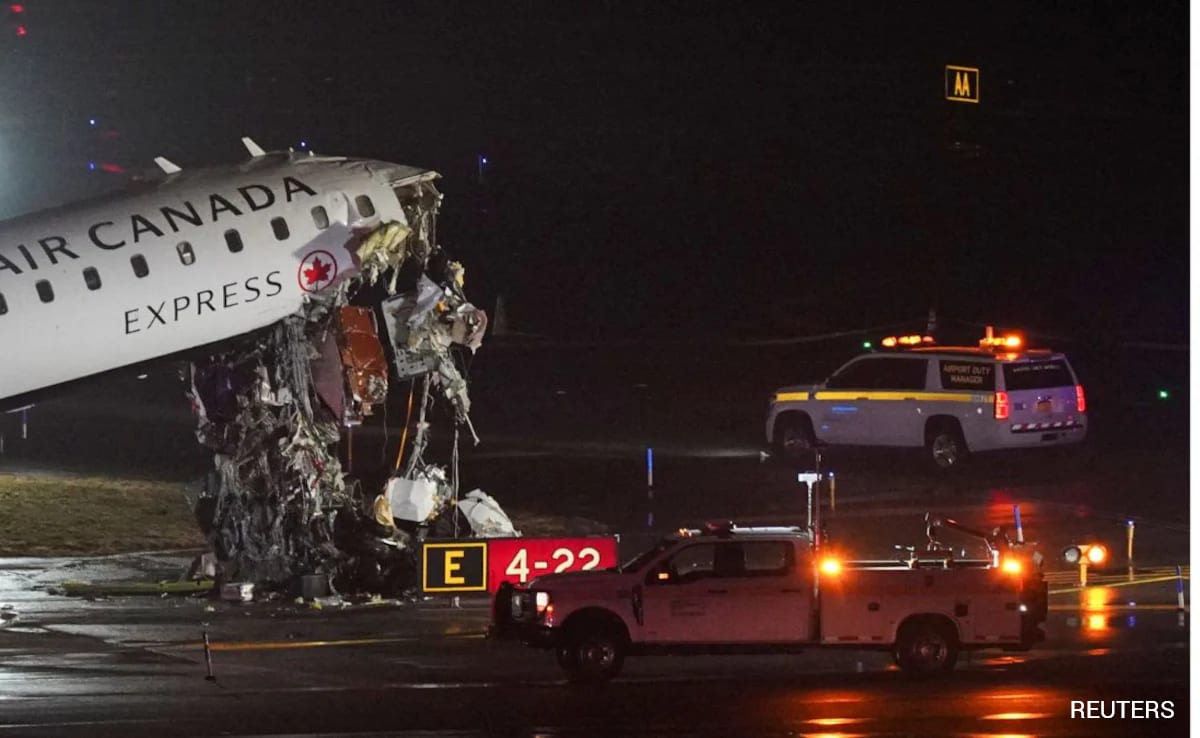
The survival of passengers during extreme clear-air turbulence (CAT) or sudden altitude loss is not a matter of chance but a function of structural physics and individual adherence to restraint protocols. When an aircraft drops several hundred feet in a matter of seconds, the cabin environment transforms into a high-velocity particle accelerator where unbelted occupants and loose galley equipment become ballistic hazards. Examining the mechanics of the Air Canada incident through the lens of human kinematics reveals that the injuries sustained—blunt force trauma, lacerations, and spinal compression—are the predictable outcomes of failing to maintain a closed-loop restraint system during a high-G event.
The Kinematics of Vertical Acceleration
Aviation safety is often discussed in terms of horizontal speed, yet the most significant risk to passenger integrity is vertical acceleration. In the 12 seconds preceding the stabilization of a distressed aircraft, the cabin experiences a rapid transition from positive to negative G-forces.
- The Negative G-Phase: As the aircraft drops, the floor effectively moves away from the passengers faster than gravity can pull their bodies down. For an unbelted passenger, this results in a "lofting" effect. They remain at their previous altitude for a fraction of a second while the ceiling of the aircraft descends upon them.
- The Impact Vector: The primary cause of "blood everywhere" scenarios is the secondary impact between the human cranium and the overhead stowage bins or PSU (Passenger Service Unit) panels. These surfaces are designed for structural integrity, not impact absorption.
- The Re-entry Phase: Once the aircraft stabilizes or begins a corrective climb, the occupants are slammed back into their seats or the floor with forces often exceeding 2.0 Gs. This phase accounts for the majority of spinal and lower-extremity fractures.
The severity of the Air Canada event highlights a critical misunderstanding of "seatbelt signs." Passengers often treat the illumination of the sign as a suggestion rather than a definitive safety boundary. In a pressurized tube traveling at 500 knots, the transition from laminar flow to severe turbulence occurs without visual warning, leaving zero reaction time for those standing or loosely restrained.
Structural Integrity vs. Human Vulnerability
Modern airframes, such as the Boeing 787 or Airbus A350, are engineered to withstand aerodynamic loads far beyond what the human body can endure. While the wings may flex several meters without failing, the interior cabin components are rigid.
The Projectile Coefficient
Every unsecured item in the cabin—a laptop, a glass of water, or a 200-pound human—becomes a projectile during a 12-second drop. The damage is quantified by the kinetic energy formula $KE = \frac{1}{2}mv^2$. Because velocity is squared, even a slight increase in the rate of descent exponentially increases the lethality of loose objects.
- Primary Projectiles: Unbelted passengers who strike the ceiling.
- Secondary Projectiles: Service carts and luggage that shift upon impact, creating a debris field.
- Tertiary Hazards: Fluid dynamics, such as spilled hot coffee or hydraulic leaks, which introduce thermal and chemical risks to an already compromised environment.
The psychological shock reported by survivors is a direct result of the sensory overload caused by these simultaneous mechanical failures. The visual of "blood on the ceiling" is a clinical indicator that the vertical displacement was sufficient to exceed the height of the cabin, forcing occupants into a hard-surface collision at peak velocity.
The Cognitive Gap in Passenger Safety
The disconnect between flight crew instructions and passenger compliance stems from a lack of "Risk Salience." Because severe turbulence is statistically rare, passengers develop a false sense of security during the "cruise" phase of a flight.
The Normalcy Bias
When the 12-second event begins, the human brain typically undergoes a three-stage response:
- Delay: The refusal to accept that the aircraft is in distress.
- Deliberation: Attempting to find a logical explanation (e.g., "It's just a small bump").
- Decisive Action: This usually comes too late, often occurring only after the first impact has already taken place.
To bridge this gap, airline safety briefings must shift from procedural checklists to a focus on the physics of the environment. If passengers understood that a seatbelt is not just for takeoff but is a tether preventing them from becoming a projectile in a vacuum-like drop, compliance rates would likely mirror those of high-performance automotive environments.
Operational Limitations of Detection Technology
A common misconception is that pilots can "see" all turbulence on radar. While Doppler weather radar is excellent at detecting precipitation-related disturbances, Clear Air Turbulence (CAT) remains largely invisible.
The mechanism of CAT involves wind shear—rapid changes in wind speed and direction over short distances—often occurring at the edges of jet streams. Because there is no moisture to reflect radar waves, the only way a pilot knows CAT is present is through Pilot Reports (PIREPs) from aircraft ahead of them. In the Air Canada case, if the aircraft was the first to hit a specific pocket of unstable air, the flight deck would have had no technological warning to relay to the cabin.
The Role of Predictive Modeling
Aviation meteorology is moving toward more robust predictive models, yet the localized nature of these "air pockets" means that 100% avoidance is impossible. The strategy must therefore shift from avoidance to mitigation. This involves:
- Active Suspension Systems: Research into wing-load alleviation systems that can react in milliseconds to counteract vertical gusts.
- Cabin Material Science: Replacing hard plastic PSU panels with energy-absorbing composites to reduce head injury scores (HIC) during impacts.
- Digital Tethering: Smart seatbelts that can alert the flight deck to unbuckled passengers during high-risk flight phases.
Trauma Management in a High-Altitude Environment
Once the 12 seconds of chaos subside, the flight shifts into a mass-casualty triage scenario. The challenges of managing "blood everywhere" at 35,000 feet are compounded by space constraints and limited medical supplies.
- Triage Bottlenecks: Flight attendants are trained in basic first aid, but they are not trauma surgeons. In a severe event, the ratio of injured passengers to trained responders is often 30:1.
- Equipment Accessibility: Automated External Defibrillators (AEDs) and Enhanced Medical Kits (EMKs) are localized. If the turbulence occurs during a meal service, the aisles may be blocked by debris or overturned carts, delaying life-saving interventions.
- Communication Latency: Relaying the exact nature of injuries to ground-based medical consultants (like MedLink) is hindered by the adrenaline and chaos of the immediate aftermath.
The survivor accounts of "blood everywhere" are not hyperbolic; they describe the reality of scalp lacerations, which bleed profusely due to high vascularity. In a pressurized cabin, managing these injuries requires immediate pressure application, which is difficult if the aircraft is still experiencing moderate chop or if the responders themselves are injured.
Engineering a Solution for Non-Laminar Events
The ultimate defense against turbulence-related injuries is a shift in the "Seatbelt Sign" culture. Data suggests that 90% of all turbulence-related injuries occur to passengers who have their seatbelts unfastened while the sign is on, or who have them fastened so loosely that they slide out during negative-G maneuvers.
- Mandatory Tethering: Airlines should consider a "Fastened at All Times" policy that is enforced with the same rigor as the smoking ban.
- Redesigning the Lap Belt: The current two-point lap belt is effective for horizontal deceleration but offers zero protection against "submarining" or lateral shifting. A three-point or four-point harness, while less comfortable, would virtually eliminate the "lofting" deaths and injuries seen in extreme CAT.
The Air Canada incident serves as a violent reminder that the cabin is a laboratory of physics. Every loose object, including the human body, is subject to the laws of motion. When the aircraft's lift is momentarily negated by atmospheric instability, the only thing keeping a passenger from a life-altering head injury is a few inches of nylon webbing.
Prioritize the "low and tight" seatbelt configuration regardless of the weather forecast. Ensure all personal electronics are tethered or stowed when not in active use. In the event of a sudden drop, tuck your chin to your chest and brace against the seat in front of you to minimize the travel distance of your head during the inevitable rebound.