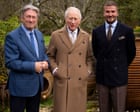
The partnership between King Charles III and David Beckham for the Chelsea Flower Show represents a calculated fusion of institutional legitimacy and global commercial reach. This is not a mere celebrity endorsement; it is the integration of two distinct high-value brand architectures—the British Monarchy and Beckham Brand Holdings—into a single marketing engine designed to maximize public engagement and philanthropic ROI. By analyzing this collaboration through the lens of brand equity transfer and ecosystem signaling, we can identify the specific mechanics that transform a seasonal horticultural event into a multi-platform strategic asset.
The Architecture of Brand Equity Transfer
The collaboration operates on a model of reciprocal validation. The King provides Institutional Legitimacy, an asset characterized by historical continuity and non-partisan authority. David Beckham contributes Mass-Market Salience, defined by a high-velocity digital footprint and cross-generational appeal. When these two assets intersect, they create a third, synthesized value: Relevance Capital.
The transfer functions via three primary vectors:
- Demographic Bridge-Building: The Royal Horticultural Society (RHS) Chelsea Flower Show traditionally captures an older, affluent demographic. Beckham’s involvement acts as a low-friction entry point for younger, digitally-native cohorts who perceive the monarchy as culturally distant but Beckham as a lifestyle benchmark.
- Philanthropic Signal Amplification: The partnership centers on the King’s Foundation. Using Beckham as a "founding ambassador" converts abstract charitable goals into tangible, personality-driven narratives.
- Horticultural De-stigmatization: By framing gardening through the lens of mental health and masculine hobbyism (supported by Beckham’s public interest in beekeeping and rural life), the partnership expands the addressable market for the Chelsea Flower Show.
The Operational Mechanics of the Chelsea Team
The "Chelsea Team" is a functional unit that operates under a specific resource allocation strategy. In this context, the team is not just designing a garden; they are constructing a narrative environment. The inclusion of Beckham serves as a high-visibility node in a network of artisans, architects, and horticulturists.
The division of labor in such a high-stakes environment follows a strict hierarchy:
- The Patron (The King): Sets the vision and provides the "Crown Seal" of approval, ensuring the project aligns with long-term royal sustainability agendas.
- The Ambassador (Beckham): Functions as the primary communications interface, leveraging a social media following exceeding 80 million to bypass traditional media gatekeepers.
- The Technical Lead: Usually a Gold Medal-winning designer who manages the biological and structural constraints of the site.
This structure mitigates the risk of "Celebrity Dilution"—where the presence of a famous figure overshadows the underlying cause. By embedding Beckham into the team rather than positioning him as a solo attraction, the King’s Foundation maintains control over the project's intellectual integrity.
Economic and Cultural Feedback Loops
The Chelsea Flower Show operates as a micro-economy within the broader British luxury and tourism sectors. The "Beckham Effect" on this micro-economy can be quantified through media value equivalents and ticket demand elasticity.
The feedback loop functions as follows:
- Announcement Phase: Initial spike in search volume and brand mentions. This creates a "scarcity" perception for tickets and corporate hospitality packages.
- Engagement Phase: Behind-the-scenes content (e.g., Beckham visiting the Highgrove gardens or working with the King’s Foundation students) builds narrative momentum.
- Execution Phase: The physical presence at the show generates a concentrated burst of high-resolution imagery for global syndication.
This cycle produces a "Halo Effect" for the King’s Foundation. It transitions from a "niche royal charity" to a "high-profile social enterprise," increasing its attractiveness to corporate sponsors and high-net-worth donors who seek association with both the Crown and the Beckham brand.
Risk Assessment: The Fragility of Alignment
While the logic of the partnership is sound, it is subject to the Constraint of Authenticity. If the collaboration feels manufactured, the "Institutional Legitimacy" of the King is compromised, and the "Mass-Market Salience" of Beckham is viewed as cynical.
The primary risks include:
- Over-Commercialization: The Royal Family must maintain a distance from Beckham’s various commercial endorsements (whisky, fashion, sports). Any perceived overlap creates a "Brand Contamination" risk for the Monarchy.
- Operational Friction: The rigid protocols of royal engagement often clash with the high-speed, content-first requirements of a global celebrity team.
- Subject Matter Mismatch: Beckham must demonstrate genuine technical curiosity or personal investment in the horticultural project to satisfy the discerning "Expert" audience of the RHS.
The mitigate these risks, the partnership relies on Narrative Anchoring. This involves grounding the collaboration in shared values, specifically the King’s lifelong commitment to environmentalism and Beckham’s well-documented transition into a rural, "gentleman farmer" persona. This alignment reduces cognitive dissonance for the audience.
The Logic of Sustainable Craftsmanship
The Chelsea project is specifically designed to highlight the King’s Foundation’s work in traditional crafts and sustainable architecture. This is a deliberate move to shift the public perception of "luxury" from "expensive and flashy" to "durable and artisanal."
Beckham’s role here is to serve as a student of these crafts. By showing a global icon learning from master stonemasons or woodworkers, the Foundation elevates the status of vocational training. This is a classic Social Engineering Play: using high-status individuals to rebrand low-status (but critical) labor sectors.
Quantitative Impact on the King's Foundation
The success of this partnership should not be measured in "likes" but in the Acquisition of New Donor Segments.
The Foundation’s growth strategy likely involves:
- International Expansion: Leveraging Beckham’s popularity in the US and Asia to attract international funding for UK-based educational programs.
- Corporate Synergy: Attracting luxury brands that previously felt the Royal Family was too traditional, but find the Beckham-Royal hybrid to be a perfect "modern-heritage" fit.
- Educational Throughput: Increasing the number of applicants to the Foundation’s craft programs by making the vocational path appear "aspirational."
The Tactical Playbook for Future Collaborations
The King-Beckham model provides a template for institutional-celebrity partnerships. The blueprint requires:
- Shared Infrastructure: Both parties must have a common goal that is larger than their individual brands (in this case, environmental stewardship and craft).
- Defined Boundaries: A clear understanding of where the celebrity's influence begins and the institution's authority ends.
- Content Synchronization: A coordinated release of media that satisfies both the prestige press (Telegraph, Times) and the digital-first platforms (Instagram, TikTok).
The integration of David Beckham into the King’s Chelsea Flower Show team is a sophisticated exercise in Network Effect Optimization. It leverages the structural stability of the British Monarchy to provide a foundation for Beckham’s modern celebrity, while Beckham provides the Monarchy with the necessary cultural velocity to remain relevant in a fragmented media environment.
The final strategic move for the King’s Foundation will be the "Legacy Conversion." Once the Chelsea Flower Show concludes, the physical assets of the garden—and the media assets generated—must be redeployed into permanent educational facilities or community projects. This ensures that the temporary surge in brand equity is converted into permanent social and institutional value. The partnership succeeds not by winning a gold medal at Chelsea, but by ensuring the King's Foundation becomes the default partner for global philanthropists looking for a blend of heritage and contemporary influence.