The current US-Iran friction point is not a series of isolated tactical skirmishes but a structural failure of conventional deterrence models. When administrative transitions occur in Washington, the geopolitical risk profile shifts from a state of managed friction to a high-entropy environment where signaling becomes noisy and miscalculation becomes the default. The "trap" often cited by foreign policy observers is a specific psychological and kinetic mechanism: the exhaustion of US escalation options against a decentralized adversary that gains asymmetric value from regional instability.
The Triad of Iranian Asymmetric Leverage
To understand the current friction, one must quantify the three specific levers Tehran utilizes to offset US conventional superiority. These are not merely "influences" but functional components of a regional strategy designed to force the US into a binary choice between total withdrawal or a high-cost, low-yield kinetic engagement.
1. The Proxy Attrition Variable
The primary mechanism is the use of non-state actors to execute deniable operations. By decoupling the act of aggression from the state actor, Iran creates a legal and political buffer. The US response function is traditionally calibrated for state-on-state conflict; applying it to proxies results in a "value-asymmetry" problem. The cost of a single US interceptor missile (often exceeding 2 million dollars) versus the cost of a localized drone or rocket (frequently under 20,000 dollars) creates a fiscal burn rate that favors the insurgent.
2. Geographic Chokepoint Utility
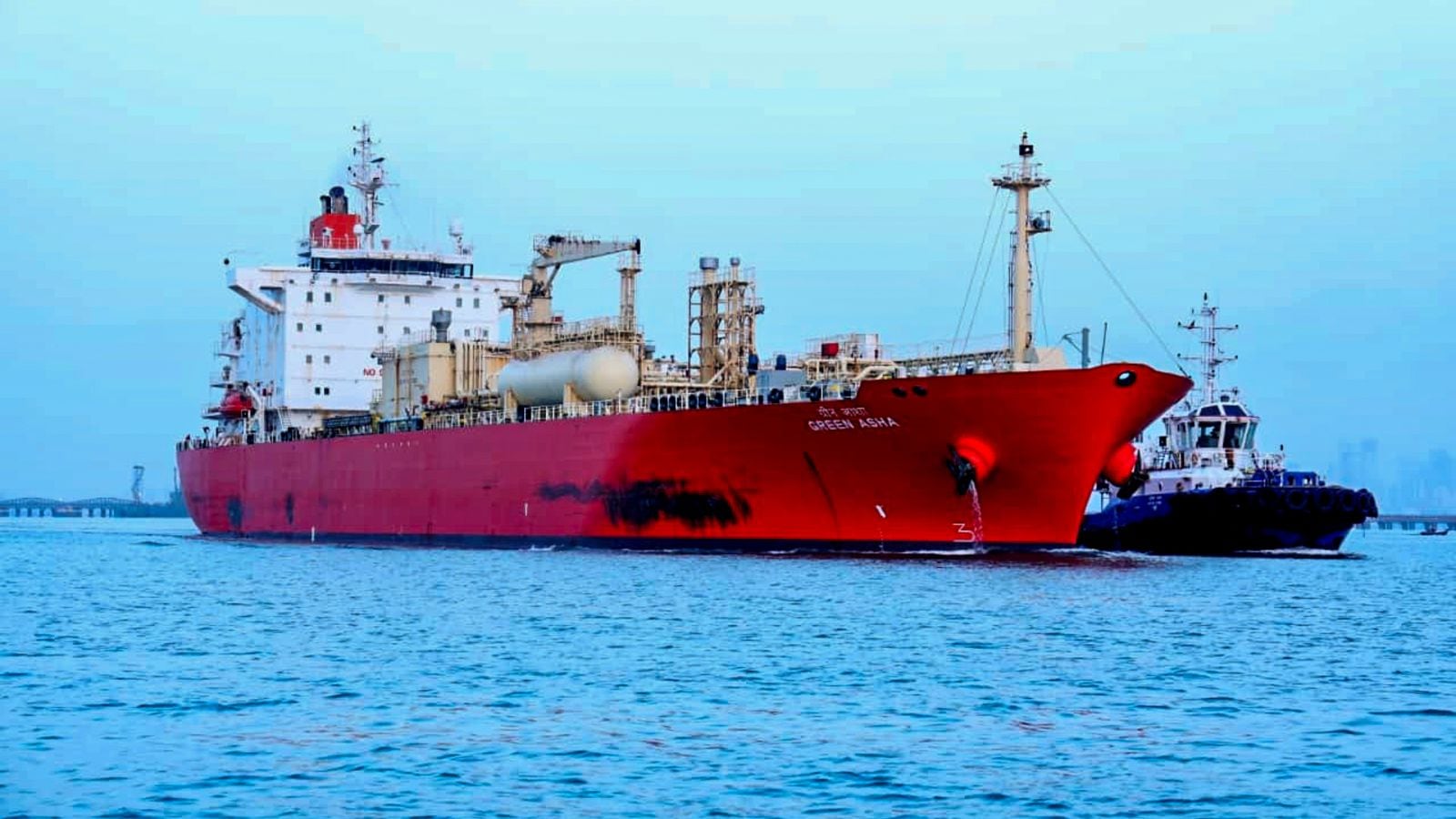
The Strait of Hormuz and the Bab el-Mandeb represent physical bottlenecks where Iranian influence can disrupt global energy markets with minimal resource expenditure. This creates a "Global Economic Tax" that Iran can levy at will. The mere threat of closure increases insurance premiums for maritime shipping, effectively weaponizing global inflation against US domestic interests.
3. The Nuclear Latency Buffer
Iran has moved from a quest for a weapon to a state of "nuclear latency." This is a strategic position where the country possesses the technical expertise, material, and delivery mechanisms to assemble a device on a shortened timeline, without actually crossing the threshold that would trigger a pre-emptive strike. This latency acts as a glass ceiling on US escalation; if Washington pushes too hard via sanctions or kinetic strikes, Tehran can credibly threaten to close the final gap in its nuclear program.
The Feedback Loop of Failed Signaling
Strategic clarity is the bedrock of deterrence. When the US provides ambiguous signals—threatening "decisive action" while simultaneously leaking concerns about regional escalation—the adversary interprets this as a lack of domestic political will. This creates a feedback loop of escalating provocations.
The Iranian strategy team views US internal polarization as a tactical window. They anticipate that a divided US government will be hesitant to commit to a long-term conflict, leading them to test the "red lines" established by both current and incoming administrations. This testing phase is designed to map the exact threshold of US tolerance. If the US fails to respond to a small-scale attack, the threshold moves. If the US responds disproportionately, Iran uses the incident to consolidate domestic support and alienate US regional allies who fear the spillover effects of a full-scale war.
Structural Constraints on the Trump Transition Team
The incoming administration faces a reality significantly different from the 2016-2020 term. The "Maximum Pressure" campaign of the past relied on a specific set of global economic conditions and a less integrated "Axis of Resistance." Today, three primary constraints limit the effectiveness of a simple return to previous policies:
- Sanctions Saturation: The marginal utility of additional sanctions has diminished. Most high-value Iranian sectors are already isolated. Further sanctions often drive the Iranian economy deeper into shadow markets and strengthen its trade ties with Beijing and Moscow, creating a sanctions-resistant bloc.
- The Intelligence Gap: As Iranian operations move further into decentralized proxy networks and encrypted communication channels, the ability of the US to provide "high-confidence" attribution in real-time decreases. This delay in attribution prevents the rapid, decisive response necessary for deterrence.
- Regional Re-alignment: Middle Eastern allies, specifically Saudi Arabia and the UAE, have begun a process of "hedging." They are pursuing diplomatic de-escalation with Tehran to protect their own economic diversification projects (such as Vision 2030). A US policy that demands these allies take a hard-line stance creates friction between Washington and its regional partners.
The Cost Function of Kinetic Escalation
If the US moves toward a kinetic solution, the cost-benefit analysis shifts into a high-risk territory. A limited strike on Iranian infrastructure carries the risk of a "Horizontal Escalation." In this scenario, Iran does not respond directly to the strike but instead activates its entire network of proxies across Lebanon, Iraq, Yemen, and Syria simultaneously.
The US military is capable of winning any direct engagement, but the operational requirement to defend multiple fronts against swarm tactics and missile volleys would require a surge of assets that would compromise US readiness in the Indo-Pacific theater. This is the "trap" in its purest form: forcing the US to over-commit resources to a secondary theater at the expense of its primary strategic competitor, China.
Quantifying the "Desperation" Narrative
The competitor’s claim that the US is "walking into a trap" relies on the assumption that US policy is reactive rather than proactive. However, a data-driven view suggests that what looks like desperation is often a "Decoupling Strategy." The US is attempting to reduce its exposure to Middle Eastern volatility to focus on high-tech manufacturing and Pacific security.
Tehran’s goal is to prevent this decoupling. By creating "crises" that demand US attention, Iran ensures it remains a central pillar of US foreign policy, thereby maintaining its relevance and its ability to extract concessions. The trap is not the war itself, but the attention and resource diversion required to avoid the war.
The Credibility Deficit and the Escalation Ladder
To restore deterrence, the US must move up the escalation ladder in a way that is both sustainable and credible. This requires a shift from "Retaliatory Strikes" to "Proactive Neutralization."
- Kinetic Precision: Instead of striking empty warehouses or low-level proxy fighters, the US must target the logistical and financial nodes that allow the IRGC (Islamic Revolutionary Guard Corps) to project power. This increases the internal cost to the Iranian state without necessarily requiring a massive troop deployment.
- Cyber-Financial Integration: The next phase of pressure is likely to be the integration of offensive cyber operations with financial intelligence. Disruption of the digital infrastructure that manages Iranian shadow oil exports would be more effective than physical blockades, which carry higher risks of maritime conflict.
- Diplomatic Isolation of the Proxies: Separating the proxies from their host populations in Iraq and Lebanon through targeted economic support for sovereign state institutions can degrade the environment in which Iranian influence thrives.
Tactical Reality vs. Strategic Goal
The immediate danger lies in the "Transition Gap." Adversaries historically use the period between a US election and the inauguration to create "facts on the ground." Iran may attempt to accelerate its enrichment program or execute a significant proxy strike to test the resolve of the President-elect before he takes office.
The incoming team's rhetoric suggests a return to "Peace Through Strength," but the execution requires a nuanced understanding of the modern Iranian state. It is no longer a monolithic entity but a complex network of ideological and economic interests. A strategy that fails to differentiate between the IRGC's regional ambitions and the broader Iranian state's survival instincts will likely result in the very quagmire it seeks to avoid.
The most effective play is not a broader war, but the systematic degradation of the IRGC’s "Return on Investment." If the cost of maintaining proxies exceeds the geopolitical benefit they provide, the network begins to fracture from within. This requires a persistent, low-boil pressure rather than a high-heat explosion that triggers a regional conflagration.
The US must adopt a "Counter-Asymmetric" posture. If Iran uses cheap drones to drain US coffers, the US must use high-frequency cyber and electronic warfare to neutralize those drones at a fraction of the cost of an interceptor. If Iran uses deniability to avoid consequences, the US must use transparent, unclassified intelligence releases to strip that deniability away in the court of global opinion.
The strategic imperative is to refuse the binary choice of "Total War" or "Total Withdrawal." The middle path—a sustained, technologically superior attrition of Iranian assets—is the only way to close the trap without falling into it. Success will be measured not by the absence of tension, but by the US's ability to maintain that tension at a level that Iran can no longer afford to sustain, while the US continues its primary shift toward the Pacific.