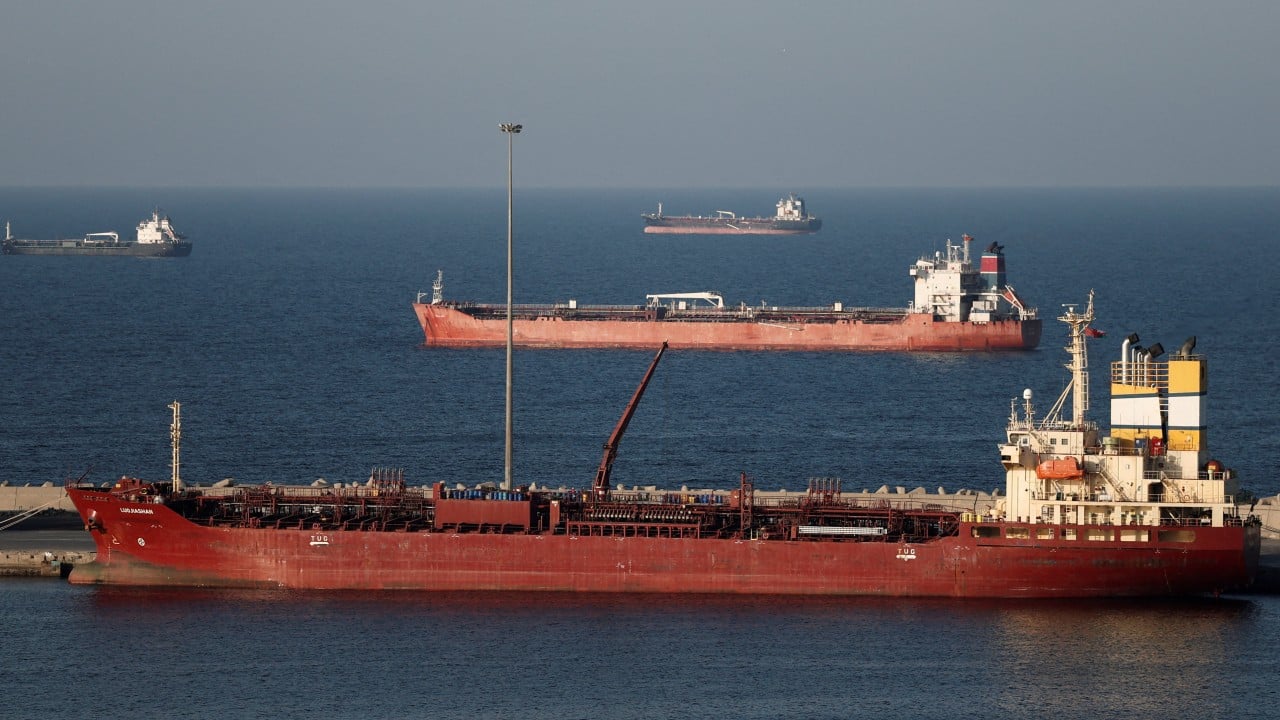
The diplomatic friction between Malaysia and Singapore regarding the Strait of Hormuz is not a mere dispute over maritime rhetoric; it is a fundamental clash between two distinct economic risk-containment strategies. While the Strait of Hormuz facilitates the passage of approximately 21% of global petroleum liquids consumption, the specific exposure of Southeast Asian nations to this chokepoint varies based on their domestic energy security architectures and their varying degrees of reliance on the "freedom of navigation" doctrine as a diplomatic tool.
The Bifurcation of Maritime Security Postures
The tension stems from a core disagreement on the utility of international intervention in the Persian Gulf. This divergence can be mapped through three primary variables:
- Energy Import Elasticity: Singapore maintains a high-density refining hub architecture, necessitating a rigid, predictable flow of crude. Malaysia, as a net exporter of certain petroleum products but an importer of others, possesses a different buffer capacity.
- Sovereignty vs. Multilateralism: Malaysia’s stance prioritizes the autonomy of regional states to manage their own security without external "lectures," a position rooted in a long-standing commitment to non-alignment. Singapore, conversely, views international maritime law (UNCLOS) as a survival imperative, seeing any threat to any global chokepoint as a direct threat to its status as a global transshipment node.
- The Cost of Neutrality: For Malaysia, aligning with Western-led naval coalitions carries domestic political risks and complicates its relationship with Middle Eastern partners. For Singapore, the cost of silence is higher than the cost of participation, as its economy is predicated on the absolute sanctity of global trade routes.
The Economic Mechanics of Chokepoint Dependency
The Strait of Hormuz operates as a "single point of failure" for global energy markets. To quantify the impact of this friction, we must look at the Maritime Risk Premium (MRP). When regional powers like Malaysia and Singapore disagree on the management of such chokepoints, the resulting diplomatic ambiguity increases the cost of shipping insurance and freight rates for the entire ASEAN bloc.
The Refining Vulnerability Matrix
Singapore’s Jurong Island represents one of the world's most sophisticated integrated refining and petrochemical complexes. Its operational continuity depends on the Just-In-Time (JIT) delivery of specific crude grades, many of which originate from the Persian Gulf.
- Storage Limitations: Despite significant underground rock caverns, Singapore’s strategic reserves are designed for short-term shocks, not prolonged disruptions of the Hormuz artery.
- Re-export Obligations: As a hub, Singapore does not just consume energy; it processes and re-exports it. A disruption in Hormuz forces Singapore to invoke force majeure clauses, damaging its reputation as a reliable market maker.
Malaysia’s energy profile is more insulated but structurally complex. As the custodian of PETRONAS, Malaysia has significant domestic upstream assets. However, its downstream sector still relies on Middle Eastern crudes for specific refinery configurations. The Malaysian "refusal to be lectured" is a signal that it values its strategic autonomy and its specific diplomatic ties in the Islamic world over the rigid adherence to Western-led maritime security frameworks.
The Logic of Disagreement: A Game Theory Perspective
The standoff can be analyzed through a non-zero-sum game. Singapore perceives maritime security as a Global Public Good. In this view, every seafaring nation must contribute to the "policing" of chokepoints to prevent a "Tragedy of the Commons" where the route becomes too dangerous for commercial traffic.
Malaysia applies a Regional Autonomy Framework. From this perspective, the presence of external naval powers often serves as a provocateur rather than a stabilizer. Kuala Lumpur’s logic suggests that regional tensions in the Middle East should be solved by Middle Eastern actors, and that Southeast Asian involvement only imports volatility into the ASEAN zone.
Logistics and the Displacement of Risk
When Singapore advocates for "negotiation" or international oversight of the Strait, it is attempting to externalize its security costs. By involving a coalition of nations, the burden of protecting Singapore-bound tankers is shared.
Malaysia’s resistance to this "negotiation" is based on the Principal-Agent Problem. If Malaysia agrees to a framework dictated by Singapore’s security needs, it becomes an "agent" to Singapore’s "principal" interests, potentially at the expense of its own bilateral relationships with Iran or other Gulf states.
Tactical Bottlenecks in Diplomacy
The lack of a unified ASEAN voice on the Hormuz issue creates a secondary bottleneck: Regional Security Fragmenting.
- Intelligence Gaps: When the two most significant maritime powers in the Malacca Strait are not aligned on the Hormuz Strait, intelligence sharing regarding vessel tracking and threat assessment becomes siloed.
- Escalation Dominance: If a crisis occurs in Hormuz, the lack of a pre-existing diplomatic consensus between Kuala Lumpur and Singapore prevents a rapid, coordinated economic response to stabilize regional fuel prices.
Structural Implications for the Malacca Strait
The irony of the Malaysia-Singapore dispute over Hormuz is the "Mirror Effect." The Malacca Strait is the second most vital chokepoint in the world. The arguments Malaysia uses to keep "external" powers out of Hormuz-related discussions are the same arguments it uses to maintain sovereignty over the Malacca Strait.
Singapore, however, is consistent in its logic: whether it is Hormuz or Malacca, it favors internationalized security regimes because its tiny landmass and lack of natural resources make it an "extreme outlier" in terms of trade-to-GDP ratio.
The Fragility of the Status Quo
The current friction exposes the fragility of the "ASEAN Way" when confronted with extra-regional crises. The mechanism of "non-interference" works when the crisis is internal to a member state, but it fails when the crisis is a global systemic shock like a blockade of Hormuz.
- Contractual Rigidities: Long-term supply contracts often do not account for the diplomatic gridlock between transshipment hubs (Singapore) and neighboring coastal states (Malaysia).
- Insurance Escalation: Lloyd’s of London and other insurers monitor these diplomatic rifts. A lack of cooperation between regional neighbors signals a higher "geopolitical friction" score, which translates directly into higher premiums for vessels traversing the region.
The Strategic Path Forward: Decoupling Security from Rhetoric
To resolve this impasse, the focus must shift from "lectures" on sovereignty to a Functionalist Integration of energy security.
- Establishment of a Joint Energy Resilience Taskforce: Rather than debating the legality of naval patrols in Hormuz, the two nations should focus on the technicalities of "Inter-ASEAN Grid Connectivity" and "Petroleum Sharing Agreements." If Malaysia can guarantee supply to Singapore during a Hormuz crisis, Singapore’s need to advocate for international intervention diminishes.
- Strategic Petroleum Reserve (SPR) Harmonization: Developing a coordinated draw-down policy for emergency reserves would provide a market-based stabilization mechanism that does not require naval escalation.
- Data-Transparent Maritime Corridors: Using blockchain-based vessel tracking that is transparent to both governments can reduce the "fog of war" and prevent the misinterpretation of ship movements that often triggers diplomatic spats.
The current trajectory suggests that as long as Singapore views Hormuz through the lens of existential survival and Malaysia views it through the lens of sovereign autonomy, the two will remain at a deadlock. This deadlock is not merely a verbal disagreement; it is a structural inefficiency in the Southeast Asian energy market that increases the "Asia Premium" paid for every barrel of oil.
The move away from emotive language—refusing "lectures"—toward a quantified, risk-based alignment on energy logistics is the only method to prevent this diplomatic rift from becoming a permanent tax on regional growth. The strategic play is not to win the argument on international law, but to build enough domestic and regional energy redundancy that the status of the Strait of Hormuz becomes a secondary, rather than a primary, concern for Southeast Asian stability.