Geopolitics is a theater of the absurd where the loudest voices usually understand the least about the plumbing. The mainstream press is currently obsessed with a singular, panicked narrative: Donald Trump is racing against a ticking clock to "exit" the Iran confrontation before a total shutdown of the Strait of Hormuz breaks the global economy.
They are wrong. They are fundamentally, mathematically wrong.
The "lazy consensus" assumes that a closure of the Strait is the ultimate doomsday device—a move so catastrophic that any administration would surrender its entire foreign policy framework just to avoid it. This ignores the brutal reality of modern energy logistics and the quiet shifts in global power that have made the "Hormuz Threat" more of a paper tiger than a steel trap.
We aren't watching a race to prevent a shutdown. We are watching the final stages of the Strait's irrelevance.
The Crude Oil Myth That Won't Die
Every pundit loves to cite the statistic: 20% of the world’s petroleum passes through that narrow 21-mile wide waterway. They frame it as a juggernaut that, if stopped, sends $100 oil to $300 overnight.
I’ve sat in rooms where energy traders laugh at this linear thinking. Markets don't react to physical shortages in 2026 the way they did in 1973. We live in an era of strategic reserves, redundant pipelines, and—most importantly—the American shale boom that has fundamentally decoupled the U.S. consumer from Persian Gulf whims.
While the "experts" scream about supply shocks, they ignore the Habshan–Fujairah pipeline in the UAE and the Petroline in Saudi Arabia. These are not minor bypasses; they are massive structural detours designed specifically to make the Strait of Hormuz a secondary concern. Saudi Arabia can already move over 5 million barrels per day directly to the Red Sea, bypassing the "choke point" entirely.
The crisis isn't about physical oil. It’s about the insurance premiums on the tankers. If you want to understand the conflict, stop looking at naval charts and start looking at Lloyd’s of London rate hikes.
Why Iran Cannot Afford Its Own Threat
The most irritating part of the current "exit" narrative is the assumption that Iran holds all the cards. This is a fundamental misunderstanding of economic suicide.
Iran’s economy is a hollowed-out shell, kept upright by a handful of gray-market buyers and a desperate need for hard currency. Closing the Strait doesn't just block the world; it blocks Iran. It is the equivalent of a man holding a gun to his own head and demanding the neighbors turn down their music.
If the IRGC (Islamic Revolutionary Guard Corps) actually mines the Strait, they aren't just "showing strength." They are incinerating their last remaining revenue streams. China, Iran's primary customer, isn't going to pat them on the back for spiking the cost of Chinese manufacturing. Beijing values stability above all else. The moment Iran shuts the gate, they lose their only powerful patron.
Trump knows this. The administration isn't "eyeing an exit" out of fear. They are waiting for the bluff to be called because they know the house always wins when the opponent is playing with a hand of zeros.
The Great LNG Pivot
If you want to find the real vulnerability, look at gas, not oil. But even here, the narrative fails.
The world is currently in the middle of a massive liquefaction boom. Qatar uses the Strait for its LNG exports, yes. But the United States and Australia have spent the last decade building a wall of supply that makes a Persian Gulf outage survivable.
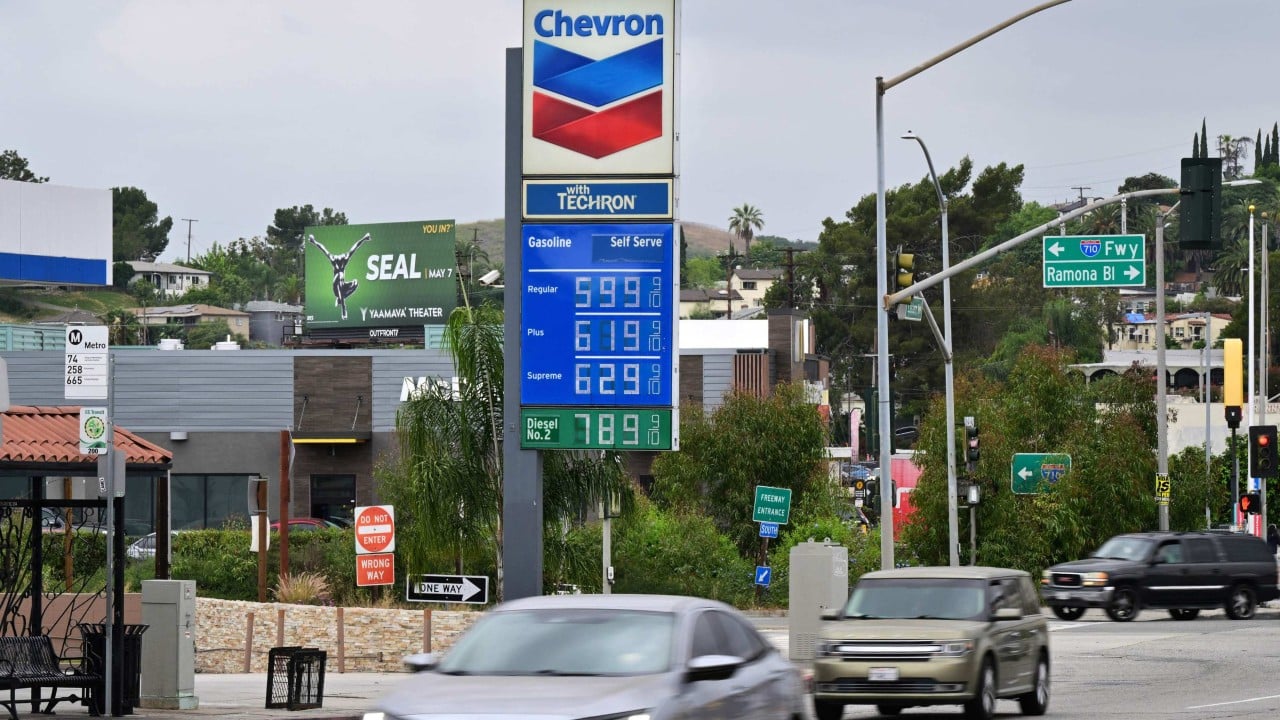
The "People Also Ask" section of the internet is obsessed with: "Will gas prices hit $10 if Hormuz closes?"
The honest answer? Maybe for forty-eight hours of speculative panic. Then the reality hits: the world has more stored energy than at any point in human history. The "shutdown" is a psychological weapon, not a physical one. When you realize the monster under the bed is just a pile of laundry, the fear evaporates.
The Logistics of a Failed Blockade
Let’s run a thought experiment. Imagine a scenario where Iran attempts a "total" shutdown.
They use swarming fast boats, naval mines, and shore-to-ship missiles. In the 1980s "Tanker War," this was a nightmare. In 2026, it’s a target-rich environment for directed-energy weapons and carrier-based drone swarms.
The technological gap between the blockading force and a modern carrier strike group is no longer a matter of degrees; it’s a matter of species. We are talking about an era where Aegis combat systems can track and neutralize hundreds of simultaneous contacts. The idea that a few speedboats can hold the global economy hostage is a relic of 20th-century thinking.
The Hidden Advantage of a Crisis
Here is the take that will make the "stability" crowd lose their minds: A temporary shutdown of the Strait might actually be the best thing for Western long-term interests.
Why? Because it forces the final, painful divorce from Middle Eastern energy dependency.
Every time there is a "flare-up" in the Gulf, capital flows into domestic renewables, nuclear research, and North American extraction. A shutdown would be the ultimate catalyst. It would turn "energy independence" from a campaign slogan into a mandatory survival tactic.
If Trump is "eyeing an exit," it isn't because he’s scared of a shutdown. It’s because he knows the region is becoming a strategic distraction. The real game is in the Pacific. The real threat is the silicon supply chain, not the carbon one.
We are obsessed with a 20th-century choke point while the 21st-century's arteries are being built elsewhere.
The Reality of the "Exit"
The media frames the "Iran exit" as a retreat. In reality, it is a pivot toward efficiency.
Holding a massive military footprint in the Gulf to protect a waterway that is increasingly redundant is bad business. It's an overhead cost that no longer provides a return on investment. The contrarian truth is that the U.S. doesn't need the Strait of Hormuz to be open as much as the rest of the world thinks we do.
We are the world's largest producer. We are insulated. The "shutdown" is a problem for Europe and Asia. By "exiting," the U.S. isn't running away; it's handing the bill to the people who are actually using the service.
The Death of the Petrodollar Bogeyman
You'll hear the "experts" moan about the death of the petrodollar if the Gulf stays in turmoil. This is another ghost story.
The dollar’s dominance isn't rooted in where the oil flows; it’s rooted in the depth of U.S. capital markets and the lack of a viable alternative. You can't replace the dollar with a currency that isn't liquid (the Yuan) or a currency that doesn't exist (the BRICS fantasy).
A Hormuz shutdown doesn't break the dollar. It makes the dollar a safe haven. When the world goes to hell, everyone buys Treasuries. It’s the ultimate irony: the very chaos the pundits fear only serves to strengthen the American financial hegemony they claim is ending.
Stop Watching the Water
The Strait of Hormuz is a distraction.
The real conflict is happening in the cyber domain, in the semiconductor labs of Austin and Hsinchu, and in the satellite corridors above our heads.
If you are waiting for a naval battle to signal the start of a global shift, you’ve already missed the war. The "shutdown" is a ghost story told by people who want to keep you invested in an obsolete map.
Trump isn't looking for an exit because he’s out of moves. He’s looking for an exit because he’s finished with the tutorial level and the real game is happening on a different continent.
The Strait is closing? Let it. The world has already moved on.