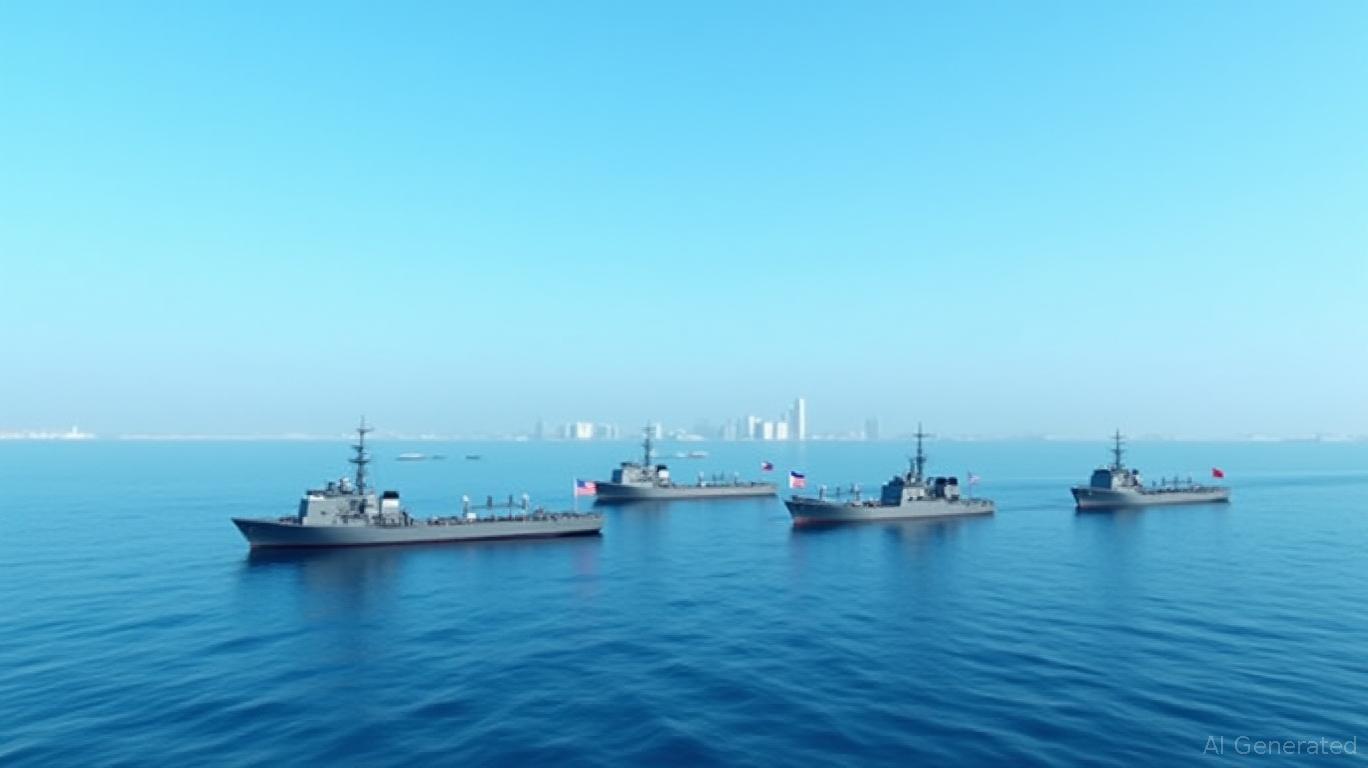
The era of the "open sea" in the Persian Gulf ended at 2:00 AM in Islamabad. After 21 hours of grueling, failed negotiations between the U.S. and Iran, President Donald Trump did what the markets feared most: he effectively nationalized the world’s most critical chokepoint. By ordering the U.S. Navy to "immediately" begin a blockade of the Strait of Hormuz, the administration is moving beyond the aerial campaign that defined March and into a direct, physical confrontation with every vessel attempting to navigate the waterway.
This is no longer a localized war between the U.S., Israel, and Iran. It is a fundamental rewriting of maritime law. Trump’s directive targets any ship that has paid a "toll" to Tehran, a move designed to bankrupt the Islamic Republic but one that also puts the U.S. in the unprecedented position of policing international waters against its own allies.
The All or None Doctrine
The strategic shift is a response to Iran’s "toll" system—a desperate but effective extortion racket where Tehran charges merchant vessels upwards of $1 million for safe passage. By declaring that no ship paying these fees will have safe passage from the U.S. Navy, Trump is forcing a binary choice on the global shipping industry. You either fund the Iranian war effort or you risk interdiction by the world’s most powerful fleet.
The U.S. Navy is not just clearing mines anymore. It is now acting as a gatekeeper. For decades, the Strait of Hormuz was governed by the principle of transit passage, allowing all ships to move through the territorial waters of Oman and Iran so long as they remained "continuous and expeditious." That principle is dead. In its place is a U.S.-enforced filter that aims to starve Iran of its final $15 billion in annual maritime revenue.
A Ghost Fleet and a Global Shortage
The numbers are staggering. Before the March 2026 conflict began, the Strait moved 21 million barrels of oil per day—roughly 20% of global consumption. Today, that flow has been reduced to a trickle of "dark fleet" tankers and Chinese-flagged vessels.
The economic fallout has moved past the speculative phase and into a "grocery supply emergency" for the Gulf Cooperation Council (GCC) states. Countries like the UAE and Qatar, which rely on the Strait for 80% of their caloric intake, are now witnessing a systemic collapse of their logistics models. While Saudi Arabia has attempted to pivot to the East-West Pipeline (Petroline) to reach the Red Sea, its 5 million barrel-per-day capacity is a bucket against a forest fire.
The real investigative story lies in the "Sino-Ocean" phenomenon. To bypass the threat of Iranian drones, tankers are now broadcasting AIS (Automatic Identification System) signals identifying themselves as "CHINA OWNER_ALL CREW." It is a digital camouflage intended to shield them from Iranian IRGC attacks, but under Trump’s new blockade rules, this camouflage may now make them a target for U.S. boarding parties looking for evidence of Iranian toll payments.
The NATO Fracture
Perhaps the most significant casualty of the blockade is the Atlantic alliance. When Trump called for a multilateral naval coalition in mid-March, the rejection was swift and stinging. Germany, Spain, and Japan have signaled they will not participate in a blockade they view as an illegal escalation.
German Defense Minister Boris Pistorius’s comment—"this is not our war"—reflects a deep European resentment. Europe is currently facing its second major energy crisis in three years, with gas storage levels at a perilous 30% and Dutch TTF benchmarks doubling. By blockading the Strait, the U.S. is not just strangling Iran; it is effectively rationing the energy supply of its own partners to force a diplomatic outcome they never agreed to.
Tactical Reality vs Political Rhetoric
Can the U.S. Navy actually hold a blockade in a 21-mile-wide channel? Veteran commanders know the math is grim. Iran’s strategy doesn't require a traditional navy; it relies on asymmetric saturation. Even with the assassination of Alireza Tangsiri and the sinking of the IRIS Dena, the IRGC retains thousands of shore-based anti-ship missiles and "smart" mines.
A blockade requires U.S. destroyers to remain in fixed or predictable patrol boxes. This makes them sitting ducks for the very drones and missiles that have already driven insurance premiums to "unquoteable" levels. The Navy is "sweeping the strait," but you cannot sweep a coastline lined with mobile launchers.
The administration’s gamble is that the Iranian economy will fracture before a U.S. hull is breached. But with China continuing to provide a backstop for Iranian exports and Russia providing satellite intelligence to Tehran, the "maximum pressure" of 2026 is meeting a much more resilient eastern bloc than it did in 2018.
This is the brutal truth of the new blockade: the U.S. is no longer just protecting the flow of oil. It is actively stopping it to win a war of attrition. In doing so, it has turned the world’s most important economic artery into a private toll road where the currency isn't dollars, but total geopolitical alignment.
The blockade starts today. The global recession likely follows tomorrow.