Twenty countries signing a piece of paper to "secure" the Strait of Hormuz isn't a strategy. It is a security theater production with a bloated budget.
The common narrative, pushed by outlets like WION and echoed by every risk assessment firm in London and D.C., is simple: global trade is under threat from regional actors, and the only solution is a massive, multi-national naval presence. They want you to believe that more gray hulls in the water equals lower insurance premiums and stable oil prices.
They are wrong.
Adding more warships to a 21-mile-wide choke point doesn't solve the problem of asymmetric warfare. It creates a target-rich environment. I have spent years analyzing maritime logistics and supply chain chokepoints, and I can tell you that the "coalition" model is a relic of 20th-century naval doctrine being applied to a 21st-century drone and mine reality.
The Mathematical Impossibility of Total Protection
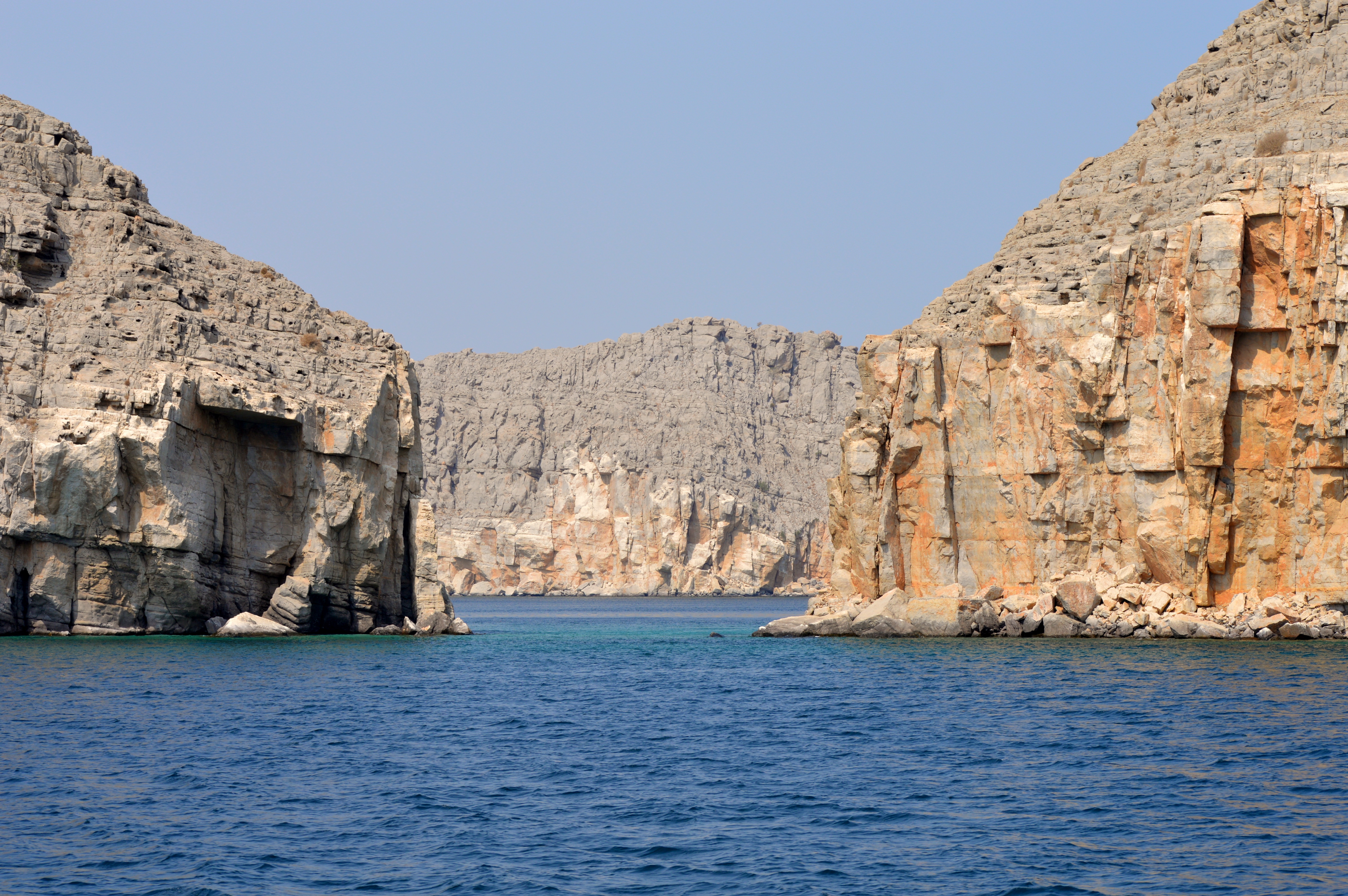
Let's look at the geometry of the Strait. At its narrowest, the shipping lanes are only two miles wide in each direction, separated by a two-mile buffer. You are funneling the world’s energy supply through a straw.
The "lazy consensus" suggests that naval escorts provide a "shield." In reality, a $2 billion destroyer is an inefficient tool for swatting away a $20,000 loitering munition or a swarm of fast-attack crafts launched from hidden coastal coves.
Consider the sheer volume of traffic. Roughly 20% of the world’s liquid petroleum passes through this gap daily. You cannot escort every tanker. If you try to group them into convoys, you create a "sitting duck" scenario. You slow down the entire global supply chain, increase fuel burn, and create massive backlogs at discharge ports.
The industry likes to talk about "freedom of navigation" as if it is a static state achieved by parking a boat. It isn't. It is a dynamic negotiation of risk. By militarizing the Strait to this degree, the coalition isn't de-escalating; it is providing the very friction that jittery oil markets use to justify price spikes.
The Insurance Myth
Ask any broker at Lloyd’s of London what actually happens when a "protection force" arrives. Does the War Risk Surcharge vanish? No. It often increases.
Insurance underwriters don't care about the political "pledge" of twenty nations. They care about the "Expected Loss" formula:
$$E = P \times L$$
Where $P$ is the probability of an incident and $L$ is the magnitude of the loss.
When you introduce twenty different navies with different Rules of Engagement (ROE), different communication protocols, and varying levels of crew training into a cramped waterway, the probability of a "kinetic event"—even an accidental one—goes up. A trigger-happy lieutenant on a small frigate can start a regional conflict that shutters the Strait for weeks. The underwriters know this. They aren't betting on the navies; they are betting against the chaos those navies bring.
The Wrong Weapon for the Wrong War
The competitor article treats the Strait of Hormuz like a classic naval battlefield. It isn't. It is a theater of deniability.
Modern disruption in the Strait doesn't look like the Battle of Midway. It looks like:
- Magnetic Limpet Mines: Attached by divers or small boats in the dark. A carrier strike group is useless against a guy in a wetsuit.
- GPS Spoofing: Altering the perceived location of a tanker so it "accidentally" wanders into territorial waters. You can't shoot a radio wave with a deck gun.
- Cyber-Interdiction: Shutting down the automated systems of a VLCC (Very Large Crude Carrier) until it becomes a 300,000-ton floating hazard.
The "pledge" of support mentioned by WION focuses on "maritime security," but it ignores the digital and asymmetric reality. If these twenty countries wanted to secure the route, they wouldn't send more ships. They would invest in hardened, redundant PNT (Positioning, Navigation, and Timing) systems and localized tug-support networks that don't rely on vulnerable satellite links.
The "Middleman" Tax
We need to talk about who actually pays for this.
The cost of maintaining a multi-national naval task force is astronomical. Taxpayers in the member nations foot the bill for the deployment. Meanwhile, the shipping companies pass the increased operational costs (conveyance delays, extra security personnel, increased fuel) directly to the consumer.
You are paying a "security tax" at the pump for a naval presence that, in many cases, is actually making the route more volatile by baiting regional adversaries into proving they can still disrupt the flow despite the blockade.
Why "Diversification" is a Fantasy
Whenever the Strait gets tense, "experts" start talking about pipelines. They point to the East-West Pipeline in Saudi Arabia or the Abu Dhabi Crude Oil Pipeline.
Here is the brutal truth: these pipes cannot handle the volume. The East-West line has a capacity of roughly 5 million barrels per day. The Strait moves over 20 million. You cannot "bypass" the Strait of Hormuz.
The only real solution isn't "more ships" or "more pipes." It is a fundamental shift in energy dependency and the acceptance that some risks cannot be "policed" away. The obsession with "securing" the route via military might is a sunk-cost fallacy on a global scale. We keep throwing more hardware at a problem that is fundamentally political and geographic.
A Better Way to Manage the Risk
If you are a stakeholder in maritime trade, stop looking at the naval charts and start looking at your contracts.
- Stop Relying on Just-In-Time: The Strait of Hormuz is the death knell for JIT logistics. If your business model collapses because a tanker is delayed by 72 hours due to "security screenings," your model was already broken.
- Invest in On-Board Autonomy: The weakest link in maritime security is often human panic. Systems that can maintain station-keeping and course-correction under electronic warfare conditions are worth more than a dozen escort frigates.
- Demand Transparency on ROE: Shipping giants should be demanding to know exactly when a coalition ship is authorized to fire. Uncertainty is the enemy of trade. If the "twenty countries" can't agree on a unified command structure—and they won't—then the coalition is a liability.
Imagine a scenario where a commercial tanker is approached by an unidentified fast craft. Under Country A’s rules, the escort fires a warning shot. Under Country B’s rules, they wait for a visual weapon confirmation. Under Country C’s rules, they attempt electronic jamming first. In that hesitation—or that aggression—the ship is lost, or a war starts. This isn't a "secure" environment. It is a powder keg with twenty different people holding matches.
The WION report and its ilk want to reassure you that the "adults are in the room" and the ships are on the way. Don't buy it. The presence of a massive naval coalition in the Strait of Hormuz is a symptom of failure, not a badge of security.
Stop asking if the Strait is "safe." It hasn't been safe for forty years. Start asking why we are still pretending that a 20-nation parade of warships can stop a drone launched from a pickup truck.
Accept the volatility. Price it in. Move on.