The Grand Illusion of "Maritime Security"
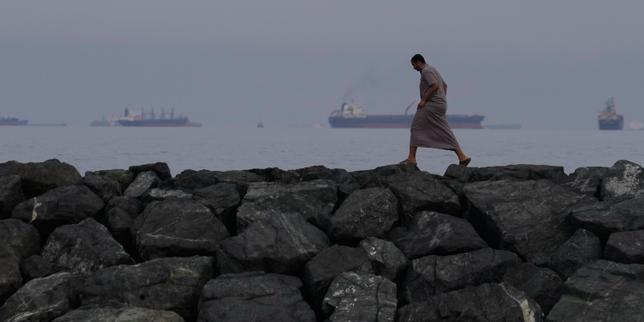
Western capitals are dusting off their naval charts again. France, the United Kingdom, and a handful of eager-to-please allies have announced they are "ready to contribute" to securing the Strait of Hormuz. The headlines read like a call to arms for global stability. The reality? It is a performance of power by nations that can no longer afford the ticket price.
The consensus view—the one being spoon-fed to you by legacy media—is that a naval presence in the Persian Gulf prevents an oil price shock and keeps the "artery of the world" open. This is a fundamental misunderstanding of 21st-century energy logistics and asymmetric warfare. We are watching a 19th-century solution being applied to a 2026 problem.
I’ve spent two decades watching departments of defense burn through billion-dollar budgets to protect "choke points" that are increasingly irrelevant to their own national interests. When France sends a frigate to the Gulf, they aren't protecting French oil; they are subsidizing the energy security of China and India while pretending to hold the keys to a kingdom that moved out years ago.
The Math of the Choke Point Doesn't Add Up
Let’s dismantle the "global economic collapse" myth. Yes, roughly 20% of the world’s liquid petroleum passes through that narrow strip of water between Oman and Iran. But the knee-jerk reaction—that a closure equals a permanent $200 barrel—ignores how markets actually breathe.
- Strategic Reserves are Not Ornaments: The IEA mandates that member countries hold 90 days of net oil imports. We aren't living in 1973. The infrastructure to weather a short-term supply disruption exists.
- The Invisible Pipeline Network: The East-West Pipeline in Saudi Arabia and the Abu Dhabi Crude Oil Pipeline can bypass the Strait entirely, moving millions of barrels per day directly to the Red Sea or the Gulf of Oman.
- The Demand-Side Buffer: A price spike doesn't just sit there. It destroys demand. High prices are the best cure for high prices.
By sending warships, the West isn't lowering the risk of conflict; it is providing Iran with more high-value targets for their "swarm" tactics. A $2 billion destroyer is a liability, not an asset, when it’s sitting in a bathtub surrounded by $50,000 suicide drones and shore-to-ship missiles.
The Sovereignty Trap
When the UK or France talks about "securing" the Strait, they use the language of international law. They talk about "freedom of navigation" as if it’s a holy sacrament. But they are operating in a legal gray zone that benefits no one but the insurers at Lloyd’s of London.
Iran views the Strait of Hormuz as its "internal waters" or at least its "territorial sea" under the 1982 UN Convention on the Law of the Sea (UNCLOS). While the West argues for "transit passage," Iran has never ratified UNCLOS. They play by different rules. When a European coalition enters these waters, they aren't "policing" a global commons; they are trespassing in a backyard owned by a homeowner who is currently holding a shotgun.
Why France and the UK Are Actually There
This isn't about oil. It’s about relevance.
Post-Brexit Britain is desperate to prove "Global Britain" isn't just a marketing slogan written on the side of a bus. France wants to maintain its status as the only EU power with true "blue water" reach. They are using your tax dollars to buy a seat at a table where the US and China are already playing for much higher stakes.
I have sat in rooms where "maritime security" was used as a blanket term for "we need to justify our naval procurement budget." If they don't send the ships to the Gulf, the public might start asking why they have the ships at all.
The Asymmetric Nightmare
Imagine a scenario where a "contribution" to security actually triggers the catastrophe it aims to prevent. A nervous sonar operator on a French frigate misidentifies a fishing dhow. A shot is fired. Within ten minutes, the Strait is littered with "smart" mines that cost less than a used car but can cripple a supertanker.
The West is bringing a knife to a ghost fight. You cannot "secure" a waterway that is within range of thousands of mobile, land-based missile launchers hidden in the Zagros Mountains. The presence of Western warships doesn't deter Iran; it gives them a hostage. Every sailor sent to the Strait is a bargaining chip for Tehran in the next round of nuclear negotiations.
The Brutal Reality of Energy Independence
The irony of this naval posturing is that the very countries sending the ships are the ones screaming loudest about the "green transition."
If France and the UK were serious about the Strait of Hormuz not being a threat, they would stop trying to guard the oil and start making the oil unnecessary. You cannot claim to be "decoupling" from fossil fuels while simultaneously risking a third world war to protect a transit route for those same fuels. It is a massive cognitive dissonance that the defense industry is more than happy to ignore as long as the contracts keep flowing.
Stop Asking if the Strait is "Safe"
The question isn't whether the Strait is safe. It’s whether it’s your job to make it safe.
- China is the primary destination for the oil flowing through Hormuz.
- India is the secondary destination.
- The US is a net exporter of energy.
Why is Europe—a continent currently obsessed with its own strategic autonomy—playing the role of the neighborhood security guard for Asian energy consumers?
It is a vanity project disguised as a security mission. It is a relic of an era where "showing the flag" meant something. In the age of hypersonic missiles and cyber-warfare, showing the flag is just giving the enemy a better coordinate.
The most "secure" thing the West could do is leave. Let the regional powers—Saudi Arabia, Iran, the UAE—negotiate their own transit rights. Let the primary buyers—China and Japan—pay for the security.
Instead, we are watching a group of nations with shrinking navies and ballooning debts try to play "world police" in a theater that has already moved on to a different play.
The Strait of Hormuz is a ghost. Stop trying to catch it. Stop funding the theater.
Take the frigates home. If the oil stops flowing, the market will fix it faster than a carrier strike group ever could. The "ready to contribute" crowd isn't saving the world; they are just making sure they are the first ones to get hit when the lights go out.