The headlines are dripping with the kind of sentimental rot that makes real historians cringe. "The Mystery Solved." "A Hero’s Plane Returns." For eighty years, we’ve been told that Richard Bong’s P-38 Lightning, "Marge," was a ghost haunting the Papua New Guinea jungle. Now that a team from Pacific Wrecks and the Richard I. Bong Veterans Historical Center has located the crash site, the media is treating it like the Shroud of Turin.
They’re wrong. If you liked this piece, you should look at: this related article.
The discovery isn't a victory for history; it’s a masterclass in how we fetishize scrap metal while ignoring the grim, mechanical reality of the Pacific Theater. Finding "Marge" doesn’t change a single fact about Bong’s 40 kills or his tragic death in a P-80 shooting star. It’s a heap of oxidized aluminum that has more in common with a soda can than a monument.
If we want to actually honor the "Ace of Aces," we need to stop looking at wreckage and start looking at the cold, hard logistics that defined his career. For another angle on this story, see the latest coverage from TIME.
The Myth of the Virgin Aircraft
The biggest lie in the "Marge" narrative is the idea of the "personal" plane. In the frantic, muddy reality of the Fifth Air Force, the idea that a pilot had one soulmate aircraft they flew into every battle is a Hollywood fiction.
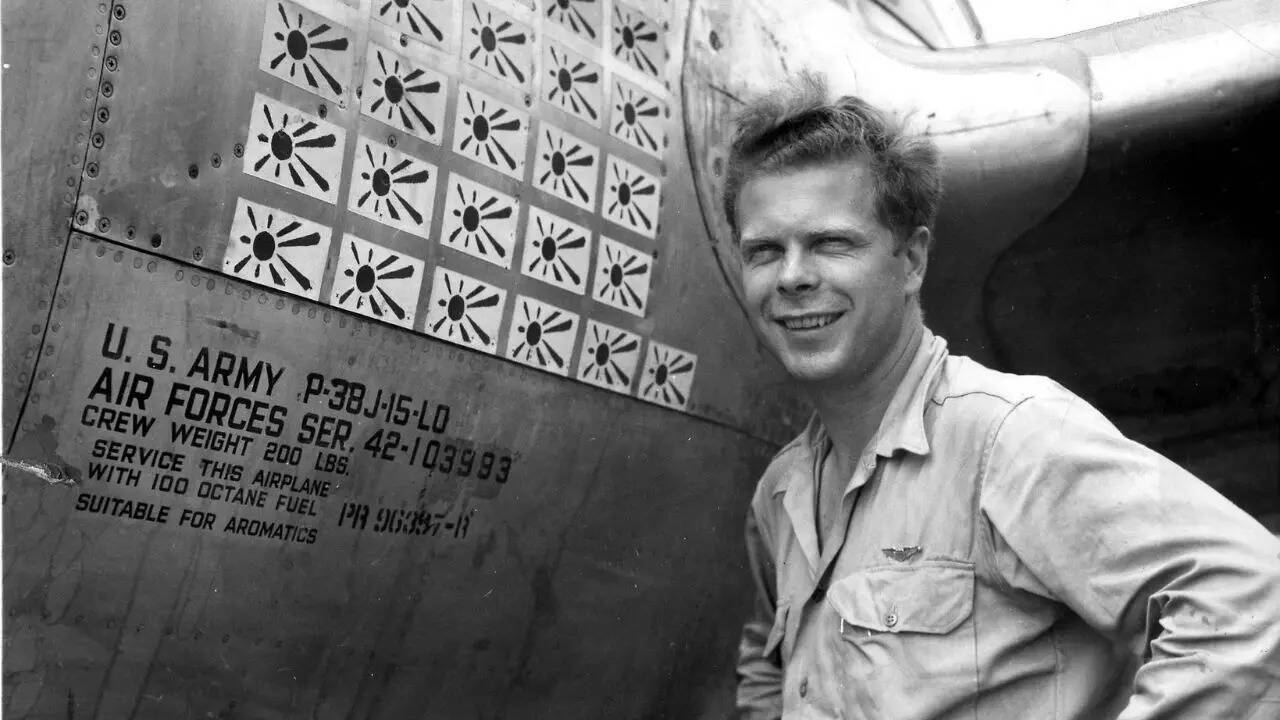
Richard Bong didn't "own" Marge. He flew it, yes. He famously had the portrait of his girlfriend, Marjorie Vattendahl, pasted on the nose. But on the day Marge crashed—March 24, 1944—Bong wasn't even in the cockpit.
Thomas Malone was flying it. He experienced engine failure, bailed out, and the plane pancaked into the canopy.
When you find the wreckage of Marge, you aren't finding the vessel of Bong’s glory. You’re finding the evidence of a mechanical failure during a routine flight. By the time this plane hit the dirt, Bong had already moved on to other airframes. He scored his 26th and 27th kills—the ones that broke Eddie Rickenbacker’s WWI record—in a completely different P-38.
We are obsessed with the "missing" status of this specific plane because it has a name and a face on the nose. This is sentimentalism masquerading as archeology.
Aluminum is Not an Archive
The "People Also Ask" sections of the internet are currently buzzing with questions about whether the plane will be "restored" or "returned home." These questions are fundamentally flawed.
Why Restoration is Often a Form of Vandalism
When a plane sits in a tropical jungle for 80 years, the chemistry of the site changes. You aren't looking at a machine anymore; you're looking at a chemical reaction.
- Intergranular Corrosion: The high-strength 24S-T aluminum alloy used in P-38s is prone to "exfoliation." The metal literally delaminates like an old book.
- Soil Ph: The volcanic soil of Papua New Guinea is acidic. It doesn’t preserve; it consumes.
- Microbiological Degradation: Jungle fungi eat the sealants and insulation.
To "restore" Marge would require replacing 95% of the original material. You’d end up with a brand-new plane built around a few original data plates and a scarred wing spar. That’s not a historical artifact. That’s a replica with a high price tag.
I have seen organizations burn millions of dollars "restoring" wreckage into a shiny museum piece that looks like it just rolled off the Lockheed assembly line in Burbank. In doing so, they erase the very thing that makes the wreck significant: the story of its decay and the violence of its end.
The P 38 Was a Nightmare Not a Dream
The competitor articles love to wax poetic about the "Fork-Tailed Devil." They treat the P-38 as this elegant, unbeatable machine.
Let’s get real. The P-38 was a logistical and physiological disaster for much of the war.
If you were a pilot in the Pacific, the P-38 was a cockpit of extremes. In the high altitudes where the Lightning thrived, the temperature could drop to $-40^{\circ}C$. The P-38 had notoriously bad heaters. Pilots arrived at the end of long missions with frostbite and numb limbs, expected to dogfight nimble Japanese Oscars and Tonys.
Then there’s the "compressibility" issue. In a steep dive, the P-38 would accelerate so fast that the airflow over the wings reached supersonic speeds. This caused the center of pressure to shift, pinning the elevator and making it impossible to pull out of the dive.
$$M = \frac{v}{a}$$
When that Mach number ($M$) approached the critical threshold, the plane became a lawn dart. Many pilots died discovering this flaw. Richard Bong succeeded not because the P-38 was a perfect tool, but because he was a freak of nature who could handle a temperamental, twin-engine beast that wanted to kill him just as much as the enemy did.
By focusing on the "lost" plane, we ignore the terrifying reality of the pilots who had to wrangle these machines.
The Ethics of Jungle Souvenirs
There is a dirty secret in the world of warbird recovery: it’s often about the money.
A P-38 with a "Bong" pedigree is worth millions to private collectors. While the Pacific Wrecks team is reputable and focused on preservation, the media frenzy they spark encourages a "gold rush" mentality.
I’ve spent years watching "aviation enthusiasts" strip crash sites of their serial number plates and instruments. They call it "saving history." It’s actually looting. Every time a part is removed from a site like the one in the Papua New Guinea jungle without rigorous, slow-motion archeological mapping, we lose the context.
- Was the landing gear down?
- What was the position of the coolant flaps?
- Did the engines show signs of fire before impact?
These are the questions that matter. Knowing that a piece of metal is "Marge" is a trivia point. Knowing why it fell is history.
The Ace of Aces Deserves Better Than a Scavenger Hunt
Richard Bong was a man who hated the spotlight. He was a farm boy from Wisconsin who just happened to be the most lethal deflection shooter in the history of the United States Air Force. When he was sent home to sell war bonds, he was miserable. He wanted to be back in the cockpit, testing the limits of technology.
He died testing the P-80, the dawn of the jet age. His death on August 6, 1945, was overshadowed by the bombing of Hiroshima, which happened on the same day.
If we want to honor Bong, we should be studying his tactics—the way he used the P-38’s twin-engine redundancy to survive hits that would have downed a P-51. We should be looking at the 5th Air Force’s "Special Projects" that kept these planes flying in some of the most inhospitable conditions on Earth.
Instead, we’re cheering because we found some crumpled wings in the dirt.
Stop Asking if it Can Fly
The most common question following this discovery is: "Will we ever see Marge fly again?"
This question is an insult to the reality of the Pacific war. To make that wreck fly would be an act of taxidermy. You’d be stretching the skin of a dead hero over a modern skeleton.
The value of the Marge wreck isn't in its potential to be a showpiece at an Oshkosh airshow. Its value is in its stillness. It is a grave marker for a mechanical era that was defined by brutal attrition.
We found the plane. Great. Now leave it alone.
Stop trying to turn every piece of wartime wreckage into a commercial opportunity or a feel-good news cycle. The "mystery" wasn't that the plane was missing; we knew it went down in that general area. The "mystery" was why we think finding it changes anything.
Richard Bong isn't in that jungle. He isn't in the rusted engines or the shattered canopy. He’s in the flight logs, the combat reports, and the tactical shifts that defined aerial warfare in the 20th century.
The obsession with the physical object is a distraction from the human cost. We’ve become a culture of "pickers" and "collectors" who value the husk of the history more than the lesson.
Marge is exactly where she belongs: consumed by the jungle, a part of the earth, far away from the cameras and the auction blocks.
Leave the scrap metal in the mud. Read a book instead.