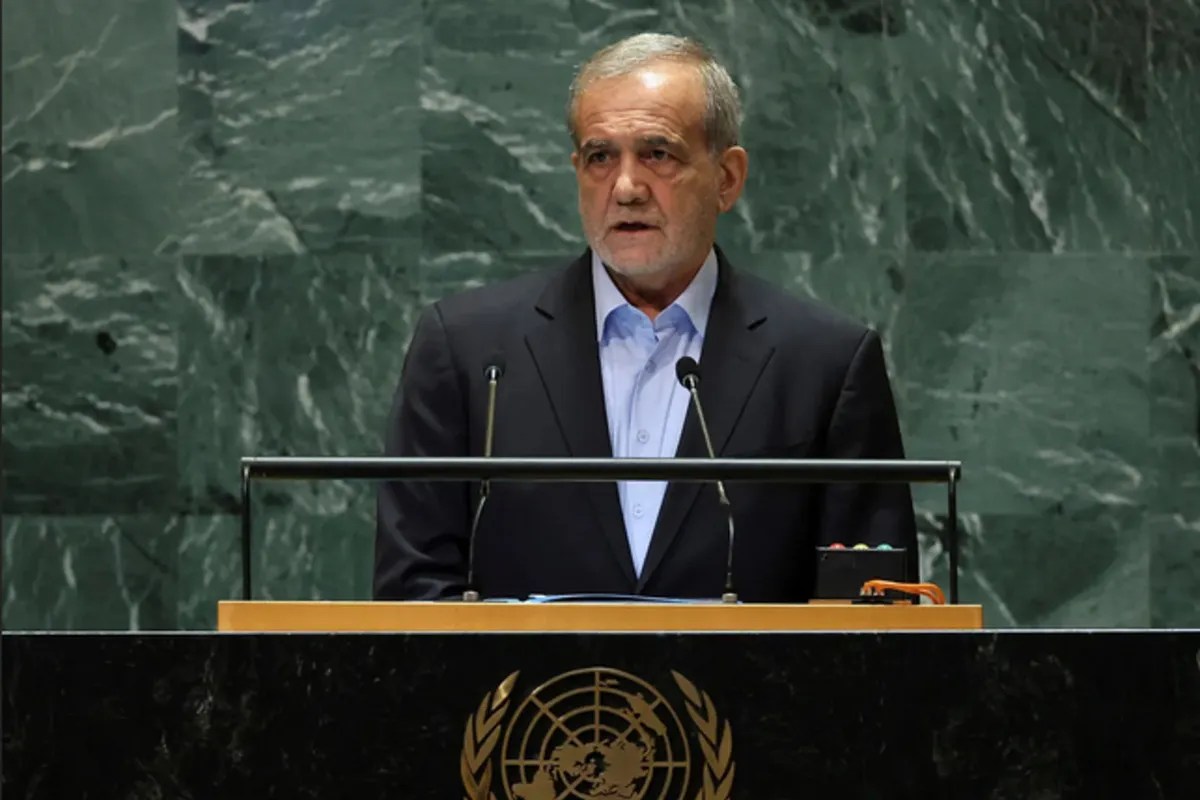
The air in Tehran during the transition of seasons carries a specific weight. It is a mixture of mountain chill and the heavy, metallic scent of a city that has spent decades learning how to breathe through the narrow straw of international sanctions. Inside the halls of power, the atmosphere is even tighter. Masoud Pezeshkian, a heart surgeon by trade, knows exactly what a body looks like when it is under extreme pressure. He knows when a pulse is racing out of fear and when it is steady because of a quiet, internal resolve.
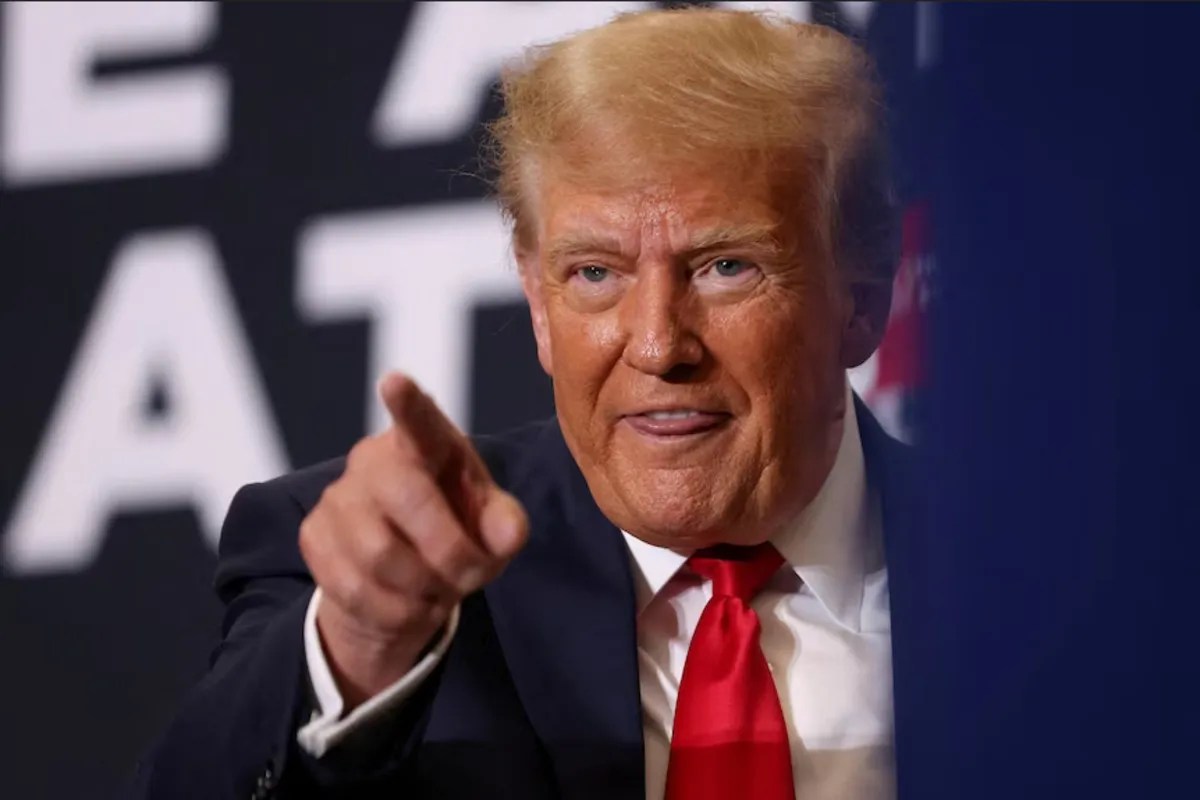
Recently, the global stage has felt like an operating room where the lights have started to flicker. The rhetoric coming from Washington—specifically from the looming shadow of a second Trump administration—has been anything but subtle. Threats of "maximum pressure" are back on the table. The language of fire and fury has been dusted off. Yet, Pezeshkian didn't flinch.
He spoke to the world not as a firebrand cleric or a career general, but as a man who has held human hearts in his hands. His message was simple. We do not fear threats. We answer on the battlefield.
The Calculus of Defiance
To understand why a surgeon-turned-president would choose such blunt language, you have to look past the headlines and into the grocery bags of ordinary Iranians. Imagine a father in Isfahan. Let’s call him Reza. Reza works two jobs, yet he watches the price of meat rise by 15% in a single month. He has heard the name "Trump" more often than the names of his own cousins. To Reza, American threats aren't a geopolitical game; they are the reason his children’s shoes are two sizes too small.
Pezeshkian is acutely aware that his people are tired. But he also knows that the Persian identity is built on a foundation of centuries-old resilience. When he says that Iran does not fear threats, he is speaking to Reza. He is telling his own people that their dignity is not for sale, even if the price of oil is being squeezed by a foreign power's hand.
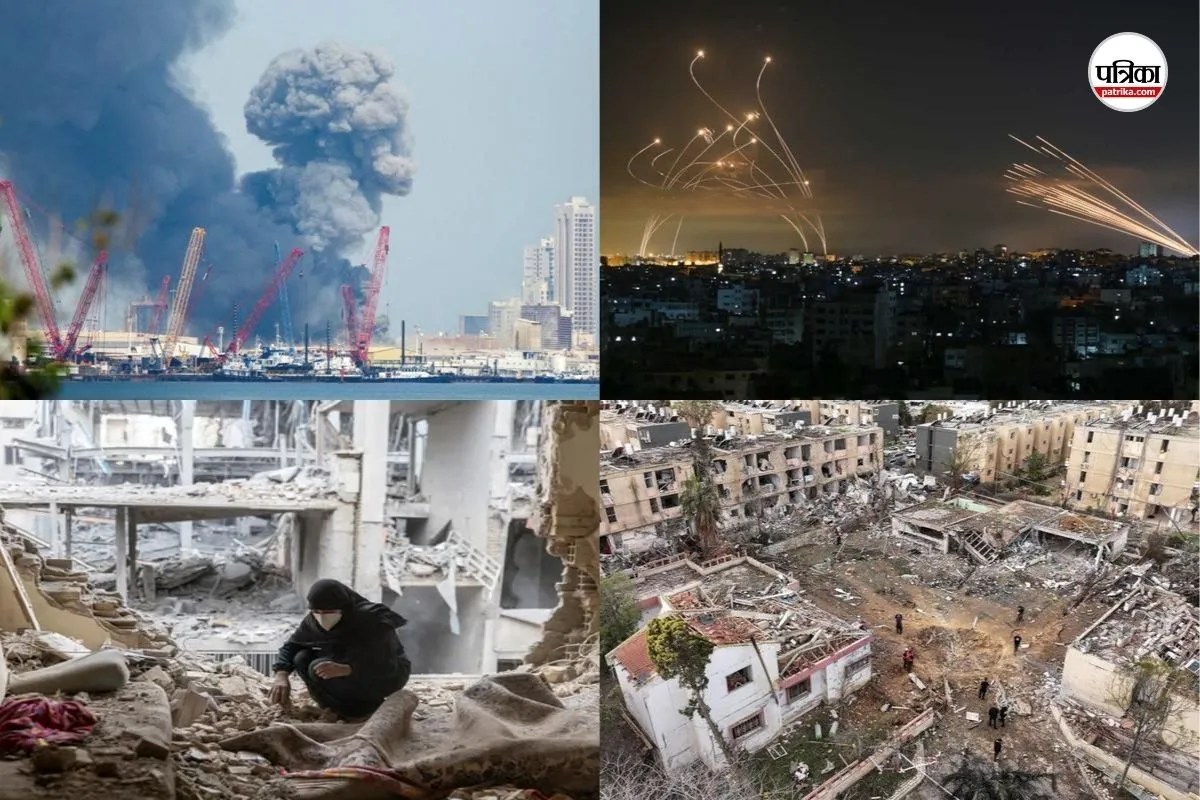
Consider the mechanics of the "battlefield" Pezeshkian mentioned. It isn't just a stretch of desert or a series of missile silos. It is a complex, shifting landscape of regional influence. It is the Persian Gulf, where a single incident can send global oil prices into a tailspin. It is the network of alliances that Iran has painstakingly woven through Iraq, Syria, and Lebanon.
The Ghost of 2018
The current tension is rooted in a history that feels like yesterday. In 2018, the United States walked away from the JCPOA, commonly known as the Iran Nuclear Deal. For a moment, it felt like the world was exhaling. Then, the door slammed shut. The sanctions returned with a vengeance.
Pezeshkian has seen this cycle before. He knows that the "maximum pressure" campaign was designed to bring the Iranian economy to its knees and force a regime change or a new, more restrictive deal. It did neither. Instead, it hardened the resolve of the hardliners and made the moderates look naive.
Now, with the possibility of a Trump return, the question is whether the same tactics will yield different results. Pezeshkian is betting everything that they won't. He is signaling to the international community—and specifically to his own domestic rivals—that he is not a man of compromise at any cost.
He is a doctor. He understands that some infections require surgery, not just a bandage.
The Invisible Stakes of a Cold War
The "battlefield" also exists in the realm of technology and energy. Iran has spent years diversifying its trade, looking East toward China and Russia. The more the West pushes, the more Iran pulls into the orbit of its neighbors. This isn't just about survival; it's about a fundamental shift in how the world's gears turn.
Think of the Strait of Hormuz. It is a narrow choke point where roughly 20% of the world’s petroleum passes. If the rhetoric turns into reality, this waterway becomes the most expensive piece of ocean on the planet. Pezeshkian’s "two-word" response to threats isn't just bravado. It is a reminder that Iran holds the keys to a very large and very volatile room.
The human cost of this standoff is immense. Yet, there is a strange, cold comfort in the certainty of it. Both sides know the rules of this game. Trump uses the language of the dealmaker, pushing until something breaks. Pezeshkian uses the language of the surgeon, waiting for the patient to stabilize before making a move.
The Pulse of the People
In the winding alleys of the Grand Bazaar, the news travels fast. The traders, who have seen dynasties rise and fall, don't look at the charts; they look at the President's eyes. When Pezeshkian stands firm, the Bazaar breathes.
There is a subtle power in refusing to be bullied. It is a psychological shield that protects the national spirit from the corrosive effects of economic warfare. Pezeshkian is trying to convince the world—and perhaps himself—that Iran is more than just a target on a map. It is a country that has existed for millennia and will exist long after the current crop of politicians has retired to their golf courses or their lecture halls.
The risk, of course, is that a surgeon can also be a gambler. If the battlefield he speaks of becomes literal, the casualties won't be political careers or stock prices. They will be people.
The Final Cut
Pezeshkian’s defiance is a calculated move in a high-stakes chess match. He is telling the world that Iran is not a submissive player waiting for its fate to be decided in a boardroom in Washington.
The sun sets over the Alborz Mountains, casting long, purple shadows across Tehran. The city continues to pulse, a heart that has learned to beat even when the blood is thin.
The threats will keep coming. The rhetoric will escalate. But as Pezeshkian knows, once the incision is made, there is no going back. You have to finish the operation. You have to believe that the body can heal itself, no matter how much it has been cut.
Would you like me to analyze how this diplomatic standoff might specifically impact global oil prices and the energy sector?