The world is held together by a strip of salt water no wider than the distance between two suburban malls.
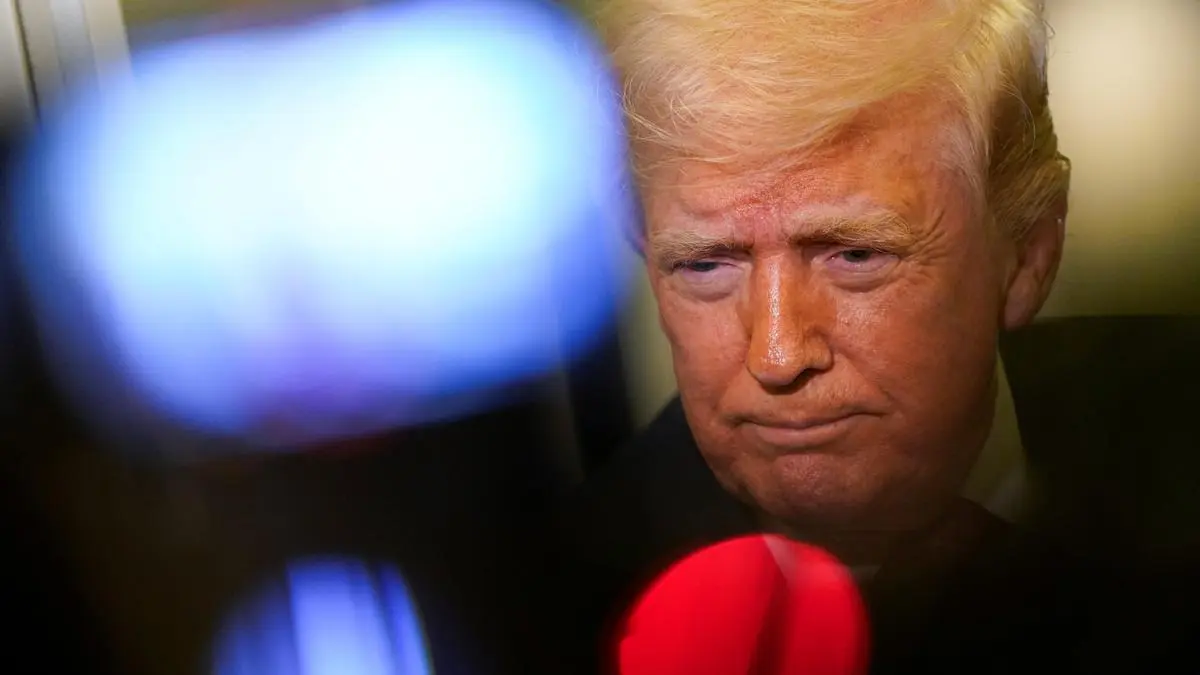
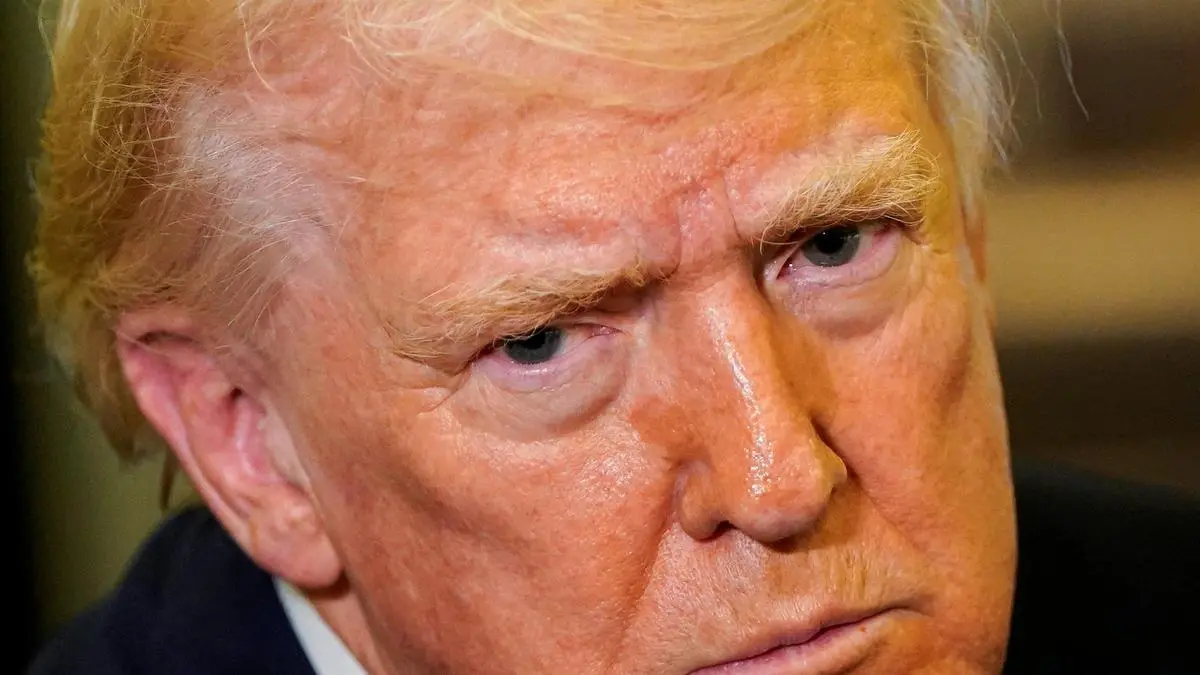
If you stood on the jagged cliffs of Oman's Musandam Peninsula, you could almost imagine reaching out to touch the Iranian coastline on the horizon. This is the Strait of Hormuz. It is a geological fluke, a narrow throat through which the industrial lifeblood of the modern world must pass every single day. When the President of the United States issues a warning to Iran about keeping this passage open, he isn't just talking about naval maneuvers or regional hegemony. He is talking about the price of a gallon of milk in Ohio and the stability of the power grid in Tokyo. Expanding on this topic, you can find more in: Why the Green Party Victory in Manchester is a Disaster for Keir Starmer.
One fifth of the world's liquid energy flows through this chink in the armor of global trade. It is the ultimate choke point.
The Invisible Vein
Consider a hypothetical supertanker named the Solaris. It is a steel leviathan, longer than three football fields, sitting deep in the water under the weight of two million barrels of crude oil. As the captain navigates the inbound and outbound shipping lanes—each only two miles wide—he is operating in a space where there is no room for error. To his left and right are the most contested waters on the planet. Analysts at USA Today have provided expertise on this trend.
If those lanes close, the Solaris becomes a floating island of useless wealth.
When political tensions spike, the math of the global economy changes instantly. We often treat "geopolitics" as an abstract game played by men in suits in Washington and Tehran. It feels distant. But the Strait of Hormuz is the physical bridge between a diplomat’s threat and your bank account. The moment a threat is leveled to mine the waters or seize a vessel, insurance premiums for ships like the Solaris skyrocket. Those costs don't vanish into the ether. They trickle down, cent by cent, until they hit the pump at your local gas station.
The United States maintains a massive naval presence in the Fifth Fleet specifically to ensure this sixteen-mile squeeze remains a highway rather than a graveyard. It is a high-stakes standoff where the primary weapon is the threat of total economic paralysis.
The Ghost of 1988
This isn't a new friction. History has a way of repeating itself in these waters, often with more fire and steel. During the late stages of the Iran-Iraq War, the "Tanker War" turned the Persian Gulf into a shooting gallery. Iran and Iraq both targeted commercial vessels to dry up their enemy’s' revenue.
The U.S. responded with Operation Praying Mantis after an American frigate, the USS Samuel B. Roberts, nearly sank after hitting an Iranian mine. That day in 1988 remains the largest surface engagement for the U.S. Navy since World War II. It proved a singular, brutal point: once the flow of oil is interrupted, the transition from "diplomatic disagreement" to "kinetic warfare" happens in a heartbeat.
When the current administration warns Iran today, they are invoking the ghost of that era. They are reminding the world that the "freedom of navigation" is not an organic right provided by nature. It is a condition maintained by the constant, expensive presence of grey-hulled warships.
The Fragility of the "Just-in-Time" World
We live in a "just-in-time" civilization. We don't keep massive stockpiles of resources because efficiency dictates that everything should arrive exactly when it is needed. This efficiency is a miracle of the modern age, but it comes with a terrifying fragility.
The Strait of Hormuz is the ultimate test of that fragility.
If Iran were to follow through on its periodic threats to "close" the Strait—perhaps by scuttling ships in the narrowest channels or using swarms of fast-attack boats to harass tankers—the global supply chain wouldn't just slow down. It would fracture.
- Oil Prices: Analysts estimate a full closure could send crude prices soaring past $200 a barrel within weeks.
- Market Panic: Global stock markets, which loathe uncertainty, would likely see a historic sell-off as transportation and manufacturing costs become unpredictable.
- The Domino Effect: Countries like South Korea, India, and Japan, which rely almost exclusively on Middle Eastern oil passing through Hormuz, would face immediate industrial shutdowns.
This is why the rhetoric matters. A "warning" from the White House is a signal to the markets as much as it is a message to a foreign adversary. It is an attempt to project a sense of order over a geography that is naturally chaotic.
The Human Toll of the Choke Point
Beyond the spreadsheets and the carrier strike groups, there is a human element that often gets lost. Think of the merchant mariners. There are thousands of them—mostly from the Philippines, India, and Eastern Europe—who spend months at a time on these tankers.
For them, the Strait of Hormuz isn't a strategic interest. It's a place where they have to stand watch for suspicious small craft. It's a place where the air is thick with heat and the tension is high enough to snap a cable. When a President warns of "action," these are the people who feel the shadow of that action first. They are the frontline of a war that hasn't started yet, caught between the tectonic plates of two world powers.
We have become accustomed to the idea that the world is flat and that goods move effortlessly across borders. But the Strait of Hormuz is a reminder that the world is actually very jagged. It is a reminder that our entire way of life depends on a few miles of water remaining peaceful.
The pressure in the Strait is rising. The rhetoric is sharpening. And while the ships continue to pass through the sixteen-mile squeeze for now, every captain on the water knows that peace in the Gulf is as thin as the hull of a tanker.
In the end, it isn't about the oil. It’s about the terrifying realization that the most powerful nations on Earth are beholden to a single, narrow gate, and someone is always reaching for the key.
The sun sets over the Musandam Peninsula, casting long, dark shadows across the water, and for another night, the lights of the tankers continue to flicker, moving slowly through the dark, hoping the gate stays open.