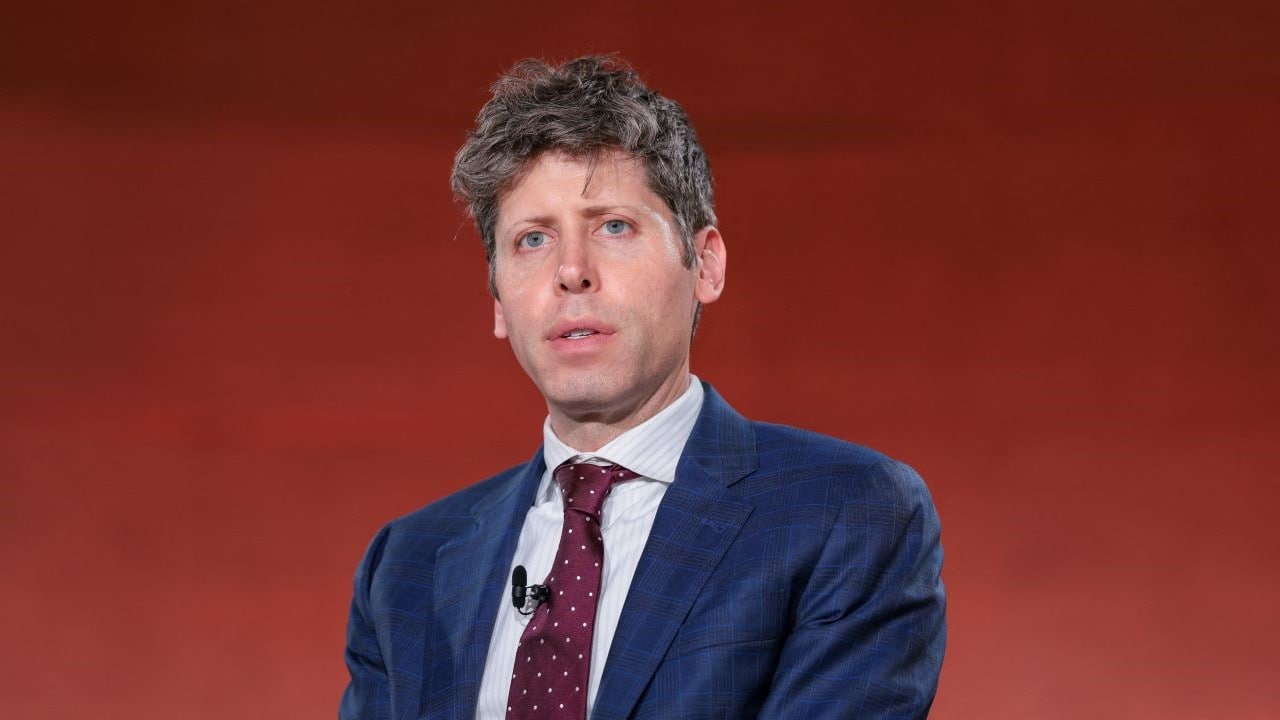
The protests at Sam Altman’s $27 million Russian Hill residence are not merely about noise or property lines. They represent the first physical manifestation of a profound, existential anxiety regarding the speed of artificial intelligence development. Demonstrators are targeting the OpenAI CEO because he has become the singular face of a movement that many fear will lead to mass unemployment, the erosion of human agency, and a radical shift in the social contract. By bringing the fight to his doorstep, activists are attempting to pierce the corporate veil and hold an individual personally accountable for technology that feels increasingly out of control.
Security around Altman has tightened to levels usually reserved for heads of state. This escalation marks a turning point in the Silicon Valley narrative. The tech founder is no longer the quirky visionary celebrated at TED talks; he is now viewed by a growing segment of the public as a high-stakes gambler playing with the future of the species.
The end of the digital ivory tower
For decades, the titans of Silicon Valley operated with a level of physical anonymity that their peers in New York or Washington D.C. could only envy. You could walk past a tech billionaire in a Palo Alto coffee shop and never know it. That era is dead.
The hostility directed at Altman’s home is a symptom of a much larger disconnect between the creators of AI and the people who will live with its consequences. While OpenAI executives discuss "alignment" in theoretical terms within the glass walls of their Mission District headquarters, the people outside are looking at their shrinking bank accounts and the looming shadow of automation.
The neighborhood around Altman’s home has become a proxy battlefield. When activists from groups like "Pause AI" gather on these steep sidewalks, they aren't just holding signs. They are demanding that the personal peace of the tech elite be disrupted in the same way they believe AI will disrupt the lives of the working class. It is a calculated move to make the abstract feel visceral.
The philosophy of the pause
To understand why Altman specifically has become the lightning rod, you have to look at the ideological rift within the AI community. On one side, you have the "accelerationists" who believe that the benefits of AGI (Artificial General Intelligence) are so great that any delay is a moral failure. On the other, you have the "doomers" or "safetyists" who argue that we are building a god we cannot control.
Altman occupies a complicated middle ground that satisfies almost no one. He speaks frequently about the risks of AI, even testifying before Congress about the need for regulation. Yet, under his leadership, OpenAI has shifted from a non-profit research lab to a commercial powerhouse fueled by billions from Microsoft.
Critics see this as a dangerous double game. They argue that Altman is using the language of safety to capture the regulatory process, ensuring that only large, well-funded companies can navigate the red tape he helps create. This perceived hypocrisy turns a policy debate into a personal grievance. If the man leading the charge says the technology is potentially "lights out" for humanity, people naturally wonder why he is still pressing the accelerator.
Real estate as a target for class rage
San Francisco has a long history of tech-related protests, from the "Google Bus" blockades of 2013 to the more recent attacks on Waymo’s self-driving taxis. However, targeting a private residence is a significant escalation in tactics. It signals that the grievances have moved beyond corporate policy and into the realm of class warfare.
Altman’s home is an architectural marvel, a sprawling compound that represents the extreme wealth generated by the current tech boom. In a city where the housing crisis is a constant, bleeding wound, the sight of a multi-million dollar fortress owned by the man accelerating the automation of labor is a bridge too far for many.
The protesters are using a tactic known as "home-fronting." The logic is simple: if your work makes our lives feel insecure, we will make your home life feel insecure. This isn't about property damage. It's about psychological pressure. They want Altman to feel the weight of the public’s fear every time he walks out of his front door.
The security industrial complex moves in
The response to these protests has been a massive surge in private security spending. Altman’s protection detail is now a constant presence, featuring armored vehicles and sophisticated surveillance tech. This creates a feedback loop. The more security he adds, the more he appears like a detached autocrat, which in turn fuels more resentment and more protests.
This "bunker mentality" is spreading throughout the valley. Other executives at Meta, Google, and Anthropic are watching the situation at Altman’s house with growing unease. They are realizing that the old rules of corporate PR don't apply to AI. You can't just release a white paper or a blog post to calm these fears.
We are seeing the birth of a new kind of activism that treats tech leaders as political figures rather than business managers. In politics, your home is often the site of protest because you are a public servant. The activists at Altman’s gate are asserting that because his technology will govern our lives, he is a public servant whether he likes it or not.
Looking past the picket lines
If we look beyond the shouting and the signs, the fundamental question remains: how much power should one person have over the trajectory of human development? The protests are a crude way of asking for a seat at the table.
OpenAI has attempted to address this with initiatives like "collective alignment," where they seek public input on how AI should behave. But for the people standing on the sidewalk in Russian Hill, these efforts feel like a patronizing afterthought. They don't want to help "align" the machine; they want to know why the machine is being built so fast in the first place.
The legal protections for homeowners in California are robust, and it is unlikely that these protests will physically stop Altman from continuing his work. However, the reputational damage is harder to quantify. Every time a photo of a protest at his home goes viral, it reinforces the image of a man besieged by the very people he claims to be helping.
The transparency gap
One of the primary drivers of this hostility is the opacity of OpenAI’s current operations. The transition from a transparent, open-source-aligned entity to a secretive corporate giant has left a vacuum of trust. When people don't know what is happening behind closed doors, they imagine the worst.
Altman has mastered the art of the "vibe check"—using his soft-spoken, thoughtful demeanor to deflect hard questions about data scraping, copyright, and the potential for AI to be used in autonomous weaponry. But "vibes" aren't enough when the stakes are this high. The protesters are demanding hard data and a slower pace, two things that are currently at odds with OpenAI’s business model.
The irony of the urban tech mogul
There is a distinct irony in the fact that Altman chooses to live in the heart of San Francisco, a city that is the epicentre of the very problems AI is accused of exacerbating. He could easily retreat to a secluded estate in Woodside or an island in the Pacific. By staying in the city, he remains a visible part of the community, but that visibility now comes with a price.
The tension in Russian Hill is a microcosm of the global struggle to come. As AI moves from the laboratory into the fabric of everyday life, the friction between the innovators and the impacted will only intensify. The protests at Altman's home are not an isolated incident; they are the opening credits of a much longer and more volatile era of civil unrest.
The shifting definition of accountability
We are witnessing a shift in how the public defines corporate responsibility. In the past, if a company made a bad product, you just didn't buy it. But you can't "opt out" of the impact of AGI. If it changes the economy, your job is at risk whether you use ChatGPT or not. This creates a sense of powerlessness that inevitably turns into anger.
Altman is the first to feel this because he has positioned himself as the visionary architect of this new world. He has accepted the accolades, the magazine covers, and the influence that comes with being the "Oppenheimer of our time." Now, he has to accept the scrutiny and the loss of privacy that comes with that role.
The security guards at his gate can keep the protesters back, but they can't stop the questions from getting inside. The more OpenAI pushes toward the "Singularity," the more the physical world will push back. This is no longer a debate happening on Twitter or in research papers. It is happening on the streets, in the neighborhoods, and at the front doors of those who hold the keys to the future.
The strategy of the activists is to ensure that Altman never forgets that his decisions have human consequences. Every megaphone blast and every chanted slogan is a reminder that the world is watching, and it is not necessarily cheering. The siege of Russian Hill is a warning shot to the rest of the industry. The era of the untouchable tech genius is over.
Move the conversation from the boardroom to the street, and the power dynamic changes instantly. The man who can command a billion-parameter model still has to drive through a crowd of people who fear him. That is a reality no amount of code can fix.
The goal of this movement is to force a slowdown through friction. If every day involves navigating a gauntlet of protestors and managing a private security army, the cost of "moving fast and breaking things" becomes personal. It is a primitive but effective form of regulation.
As the capabilities of GPT-5 and beyond begin to surface, the intensity of these confrontations will likely scale in proportion to the technology's power. Altman’s home is just the beginning. The boundary between the digital revolution and the physical world has finally dissolved.