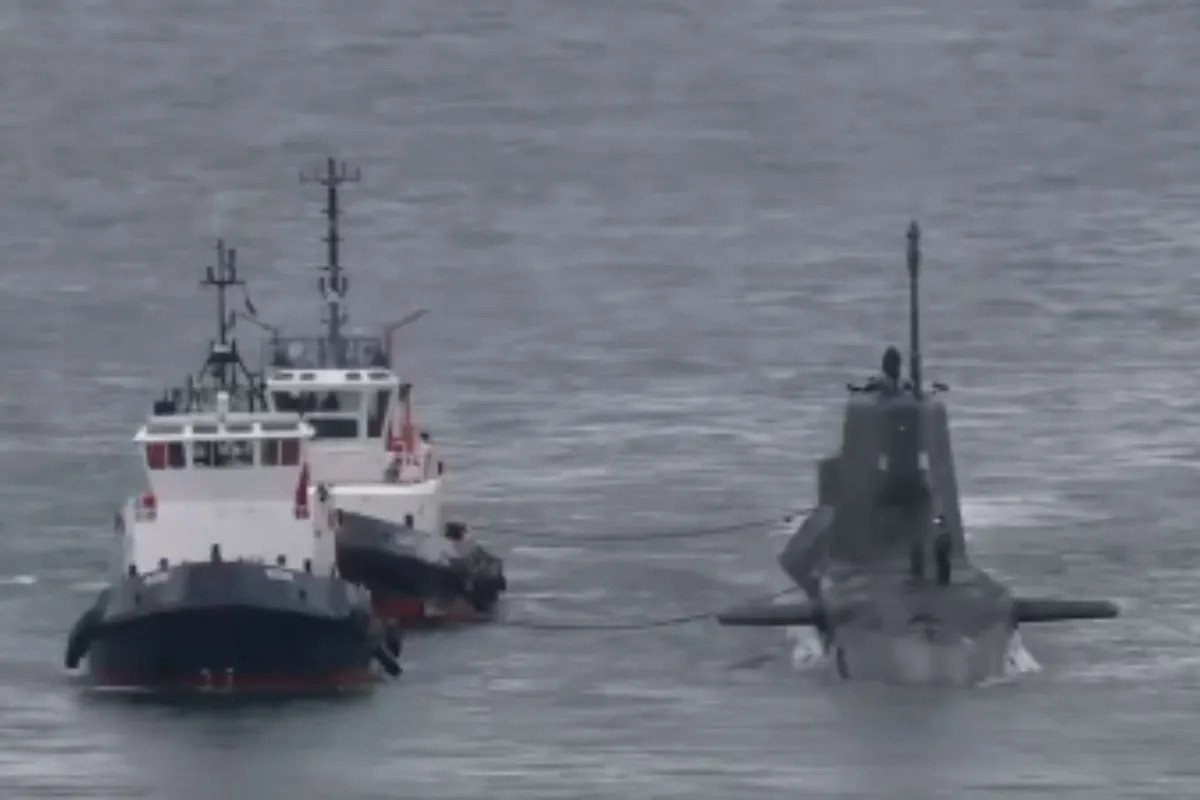
The water in the Strait of Hormuz is rarely still. It is a restless, shimmering turquoise that hides a jagged floor of rock and history. On the surface, the world’s energy pulse beats through the hulls of massive tankers, lumbering like steel whales toward the open sea. But lately, the air above these waves has grown heavy. It is the kind of stillness that precedes a desert storm—a thick, electric tension that vibrates in the marrow of the sailors stationed there.
They know something is beneath them. Discover more on a connected subject: this related article.
The reports filter in through clinical headlines: a nuclear-powered submarine has reached the mouth of the Persian Gulf. To a casual observer, it is a data point in a geopolitical ledger. To the men and women on the frigid decks of nearby destroyers, it is a hundred-thousand-ton ghost. It is a predator that does not breathe, does not surface, and does not announce its intentions until the game is already over.
The Strait of Hormuz is a choke point. It is a narrow throat of ocean where twenty percent of the world’s oil must pass. If that throat is squeezed, the lights go out in cities thousands of miles away. Factories go silent. The price of bread rises. This is not a theoretical exercise in military posturing; it is the physical manifestation of a global nerve ending. When a nuclear submarine enters these waters, it isn't just a boat. It is a statement. Additional analysis by Reuters delves into similar perspectives on the subject.
Imagine a young officer on a regional patrol boat, squinting against the glare of the Arabian sun. He knows his radar won't find what’s coming. These modern leviathans are designed to be quieter than the background noise of the ocean itself. They mimic the sound of snapping shrimp and the low-frequency groan of the shifting seabed. The officer feels a primal chill because he understands that the most dangerous weapon in the world is the one you cannot see, even when you know exactly where it is.
The arrival of such a vessel—likely an American Ohio-class or a similar behemoth—changes the math of the Middle East instantly. These machines are marvels of terrifying engineering. A nuclear reactor sits at their heart, allowing them to stay submerged for months, limited only by the amount of food the crew can cram into the galley. They are independent planets, orbiting the dark corners of the Earth's crust.
Why now?
The "why" is written in the smoke over distant battlefields. As tensions between regional powers and global interests reach a boiling point, the submarine serves as a silent tether. It is a reminder that while drones may buzz in the sky and missiles may arc across the sand, the deep water remains the ultimate high ground.
Consider the sheer scale of the mechanics involved. A nuclear submarine like the ones currently moving toward the Iranian coast isn't just about torpedoes. Many are outfitted with Tomahawk cruise missiles—dozens of them. Each one is a scalpel capable of hitting a specific window from a thousand miles away. This isn't a blunt instrument. It is a surgical threat draped in a shroud of invisibility.
There is a psychological weight to this kind of deployment that standard news reports often skip. When a carrier strike group moves, everyone sees it. The flight deck is a hive of activity, the wake is miles long, and the radar signature is the size of a mountain. A carrier is a shout. A submarine is a whisper in a dark room. It forces an adversary to look at the empty water and wonder if they are being watched at that very second. It creates a state of permanent, exhausting paranoia.
The stakes are invisible until they are catastrophic.
The Strait is barely twenty-one miles wide at its narrowest point. In naval terms, that’s a hallway. Navigating a massive, nuclear-powered vessel through such a space, amidst the clutter of civilian traffic and the prowling fast-boats of regional navies, is a feat of extraordinary nerves. The crew lives in a world of red light and sonar pings. They do not see the sun. They do not smell the salt air. They exist in a metal tube, balanced against the crushing weight of the sea and the explosive volatility of international diplomacy.
If a single mistake is made—a collision, a misunderstood signal, a nervous finger on a trigger—the ripple effect wouldn't just be local. It would be a systemic shock to the global heart. We live in a world where our daily lives are tethered to the stability of places we have never visited. The phone in your pocket, the fuel in your car, and the stability of your bank account are all, in some small way, linked to the quietness of the Strait of Hormuz.
This latest move isn't just a reaction to local skirmishes. It is a piece of a much larger, older puzzle. It is about the control of flow. Throughout history, power has belonged to those who control the gates. The Strait is the ultimate gate. By placing a nuclear-powered sentinel at that gate, the message is sent: the gate stays open, but the price of entry has just become immeasurably higher.
Critics argue that such deployments only escalate the risk. They see the arrival of the submarine as a match being brought into a room filled with gasoline fumes. There is truth in that fear. Diplomacy is a fragile thing, often built on face-saving measures and slow deliberations. The presence of a silent killer beneath the waves leaves very little room for error. It turns a diplomatic standoff into a high-stakes staring contest where one side is wearing a blindfold.
Yet, from the perspective of the strategists in distant capitals, the submarine is the only thing keeping the peace. It is the doctrine of deterrence in its purest, most liquid form. It says: "We are here. We are listening. We are ready." It is a paradox of modern warfare that the most violent tools are often used to ensure that nobody fires a shot.
The sun begins to set over the Gulf, turning the water into a sheet of hammered gold. The tankers continue their slow, rhythmic march. On the surface, it looks like any other day in one of the most volatile regions on Earth. But deep below, where the light doesn't reach and the temperature drops to a steady, biting cold, a shadow moves.
It is a silent, nuclear-powered ghost, carrying the weight of a dozen nations on its back. It doesn't care about the headlines. It doesn't care about the politics of the surface. It only cares about the mission, the depth, and the silence. As long as that shadow remains, the world holds its breath, waiting to see if the silence will hold or if the ghosts will finally speak.
The ocean has a way of swallowing secrets, but some secrets are too large to stay hidden forever. In the Strait of Hormuz, the water is no longer just water. It is a theater of the unseen, and the play has only just begun.